
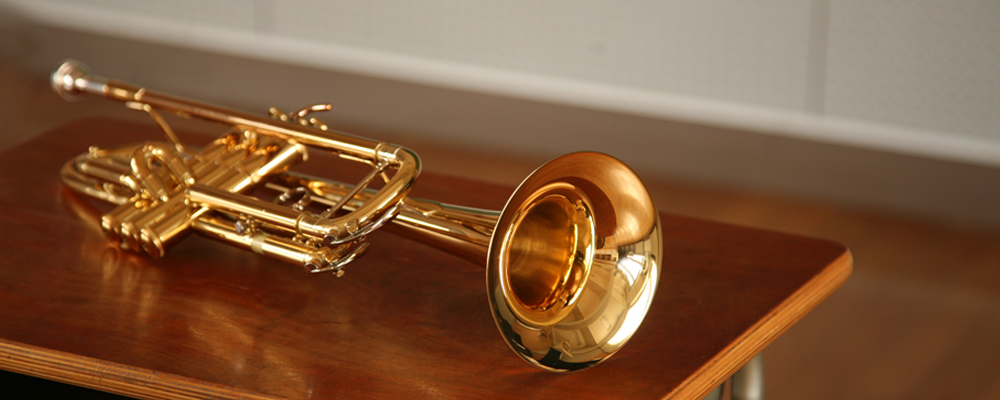
How a Trumpet is Made
Manufacturing the bell
Traditional method of construction—beating the bell into shape with a hammer
A fan-shaped piece of brass (an alloy consisting of 70% copper and 30% zinc) approximately 0.5 mm thick is beaten into a rounded shape and the two edges are welded together. In this traditional method of construction, a skilled craftsman beats the rounded tube into a bell shape using a hammer. This is a one-off construction method and is used for top-quality custom or pro-model instruments.

The hammering process
Spinning process involving power and technique
The spinning process involves pushing the bell onto the core bar using a spatula as the two are rotated together. This is extremely demanding physical labor and—like the hammering process—is carried out by the sure hand of a craftsman.
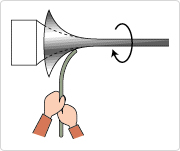
Spinning
A special metal used for bending?
In order to enable the bell stem to maintain its roundness when it is bent, a special metal is poured into it beforehand. The stem is then bent into shape when the metal has cooled and hardened.
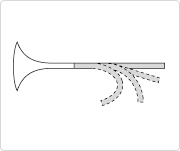
U-bend
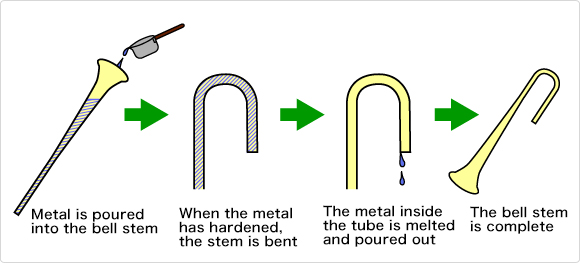
Bending the bell stem
Applying a logo to the finished bell
Finally, the Yamaha logo is precisely applied to the bell using a computer.
Musical Instrument Guide: Trumpet Contents
Structure
How the Instrument is Made
Choosing an Instrument
Care and Maintenance
Trivia
- Trumpeters in Bach's time alternated between instruments with a variety of ranges when performing
- The keyed trumpet-the fruit of the evolutionary process
- Famous trumpet works—Concertos, part 1
- Famous trumpet works—Concertos, part 2
- Famous trumpet works—Solos
- Is a Flugelhorn a horn? Or a trumpet?
- The highest note a trumpet can produce
- Aida trumpets for the Grand March
- The secret of the trumpet's traditional tone: small impurities!?