
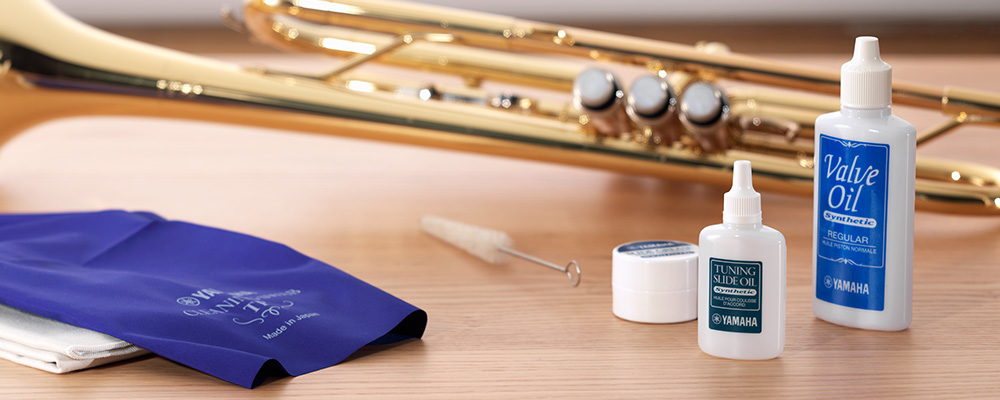
Care and Maintenance of a Trumpet
Care and maintenance after playing
First remove moisture from the slides
Remove each slide carefully while holding down the corresponding piston, as shown in the diagram. A popping sound indicates that you are not removing the slide properly. Extract the moisture from the slide that you have removed. Remove the moisture from the body of the trumpet as well, via the water key. Use a cleaning swab to help remove water and dirt from inside the body more effectively.
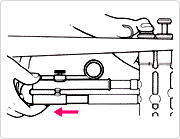
*Although brass and nickel silver—the materials used for slides—are extremely resistant to corrosion, there is a risk of progressive corrosion if moisture remains in a slide for a long time.
*When removing a slide, be careful to hold down the corresponding piston.
Lubricating with valve oil
Undo the cap screw in the valve casing and slowly extract the piston upwards halfway, without allowing it to rotate. Now apply two or three drops of piston oil to the piston. Retighten the cap screw and move the piston up and down two or three times to work in the oil.
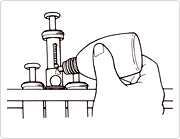
Valves can become sticky if not properly lubricated, so be sure to clean and oil them regularly.
Removing dirt from the surface of the instrument
Before replacing the instrument in its case, wipe its surface lightly with a polishing cloth to remove any dirt.
Darkening of the silver finish
Trumpets finished with silver plating will darken even if polished meticulously every day. This is caused by a natural reaction between the silver metal and the sulfur content in air and perspiration, and does not affect the performance of the instrument. Polishing with silver cleaner will help if you wish to make the instrument look cleaner. You can also use a silver cloth, which is a cloth that has been soaked in silver polish. When using silver polish, apply only a little polish to the cloth and then rub it gently over the instrument in a thin layer.
Musical Instrument Guide: Trumpet Contents
Structure
How the Instrument is Made
Choosing an Instrument
Care and Maintenance
Trivia
- Trumpeters in Bach's time alternated between instruments with a variety of ranges when performing
- The keyed trumpet-the fruit of the evolutionary process
- Famous trumpet works—Concertos, part 1
- Famous trumpet works—Concertos, part 2
- Famous trumpet works—Solos
- Is a Flugelhorn a horn? Or a trumpet?
- The highest note a trumpet can produce
- Aida trumpets for the Grand March
- The secret of the trumpet's traditional tone: small impurities!?