Stretch Sensor Technology
GummiStra®
What is Stretch Sensor Technology?
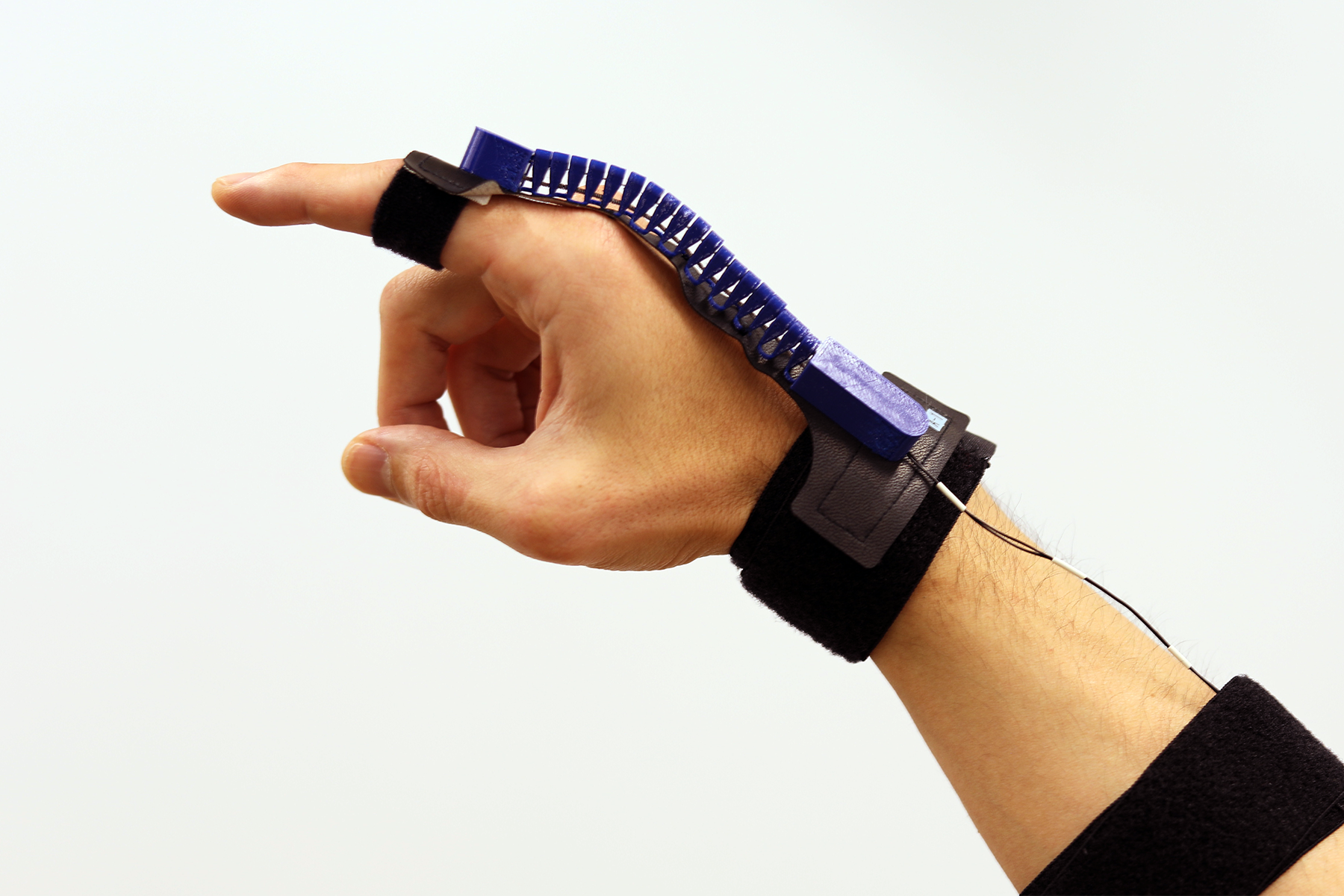
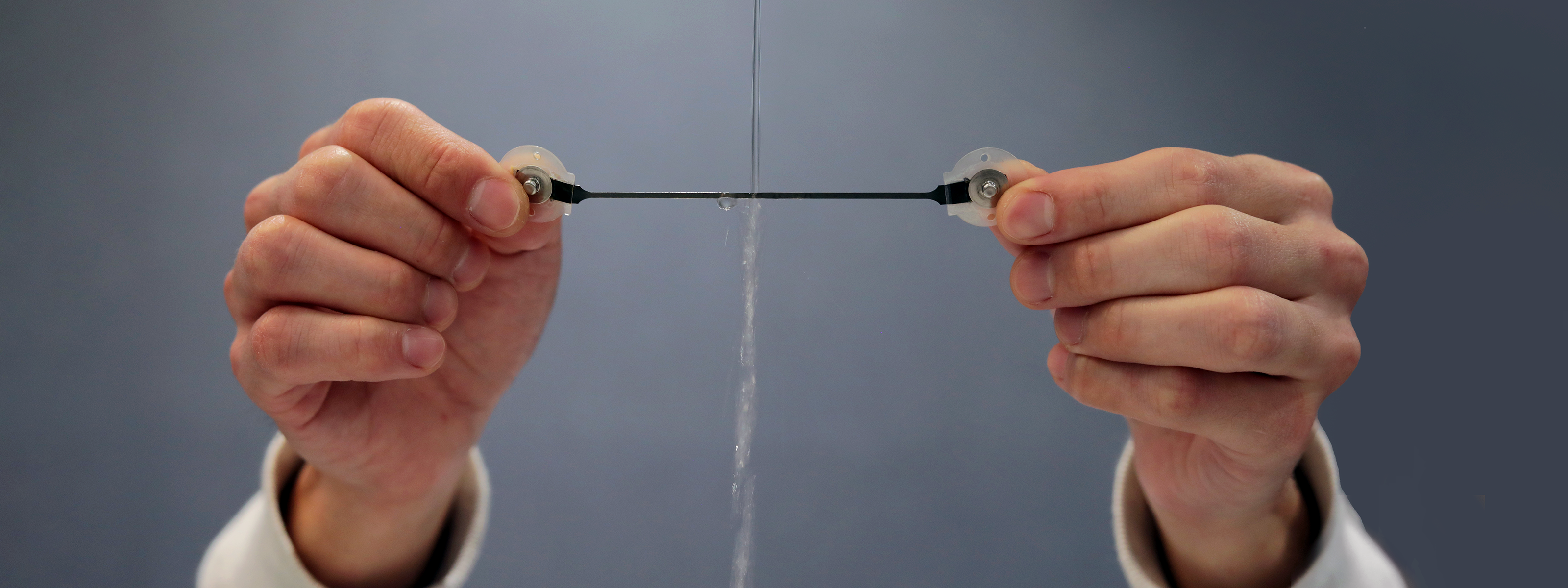
Yamaha is developing GummiStra, a sensor that precisely measures the movements of human fingers, arms, and other body parts to gain a deeper understanding of human actions, including those related to musical instrument performance. This sensor is extremely thin and flexible, and it stretches and contracts like rubber. The electrical properties of this material change as it stretches and contracts, allowing it to be used as a sensor to detect movement. When attached to a specific part of the body, the sensor contracts in response to movement at that location, allowing direct measurement of everything from subtle motions to dynamic actions.
We believe this sensor will allow us to accurately measure movements that were previously difficult to capture directly with conventional sensors or motion capture systems—such as finger movements during a piano performance or breathing patterns during a wind instrument performance. Beyond applications in musical instrument performance, we believe that anyone will be able to use this technology to efficiently improve their training and acquisition of physical skills in fields such as sports and healthcare.

Sensor that Measures Movement
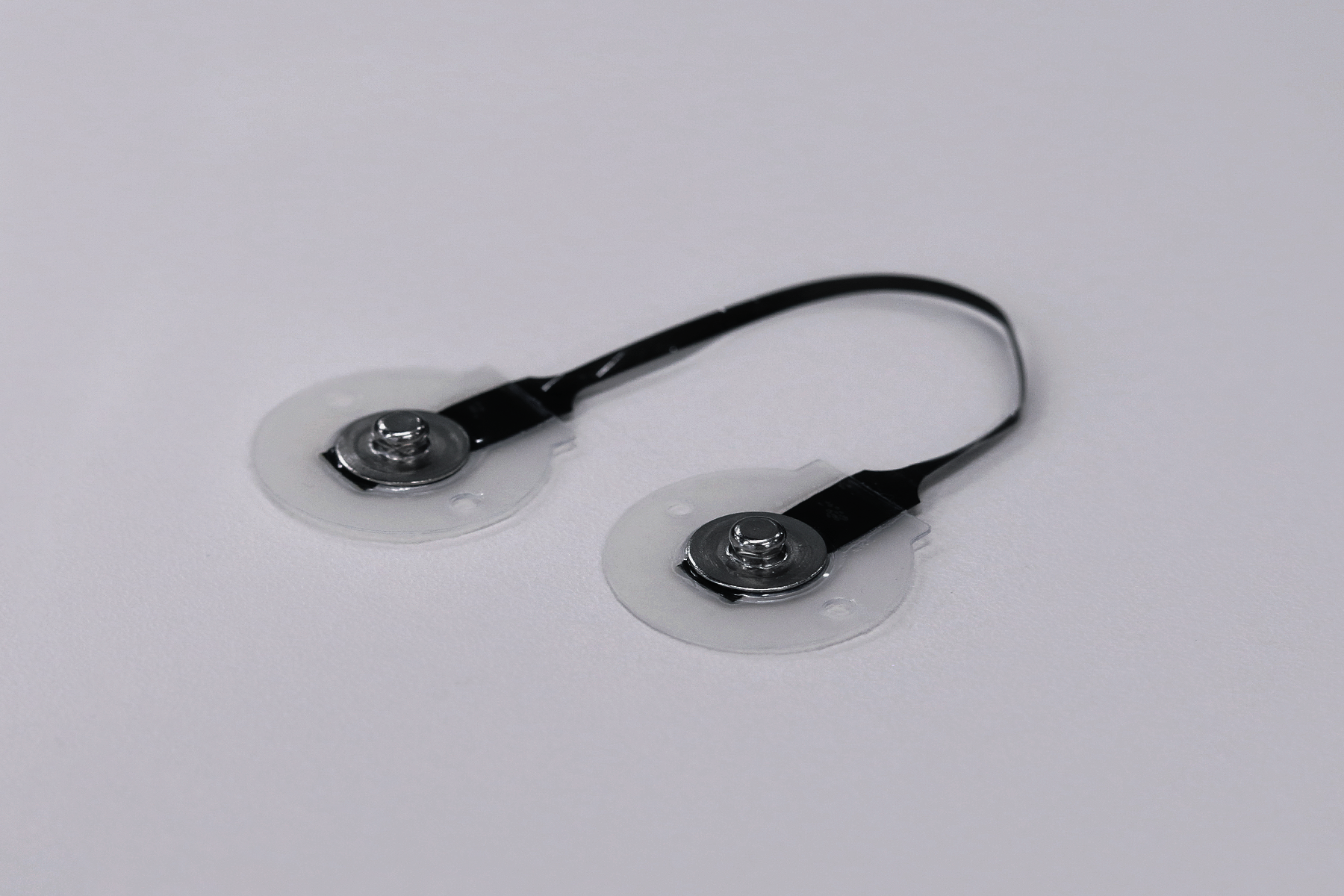
GummiStra is a composite material developed jointly with Shizuoka University that combines carbon nanotubes (CNT) with a special elastic resin.
CNTs are cylindrical with diameters ranging from a few nanometers to tens of nanometers. This new material has exceptionally high electrical conductivity and strength. Through the use of proprietary technology, we align these CNTs in a single direction, much like spinning yarn, and combine them with a unique, soft, and elastic resin to create CNT sheets. These sheets are then laminated with assist elastic resin with different properties, and then cut into strips like tape to create GummiStra.
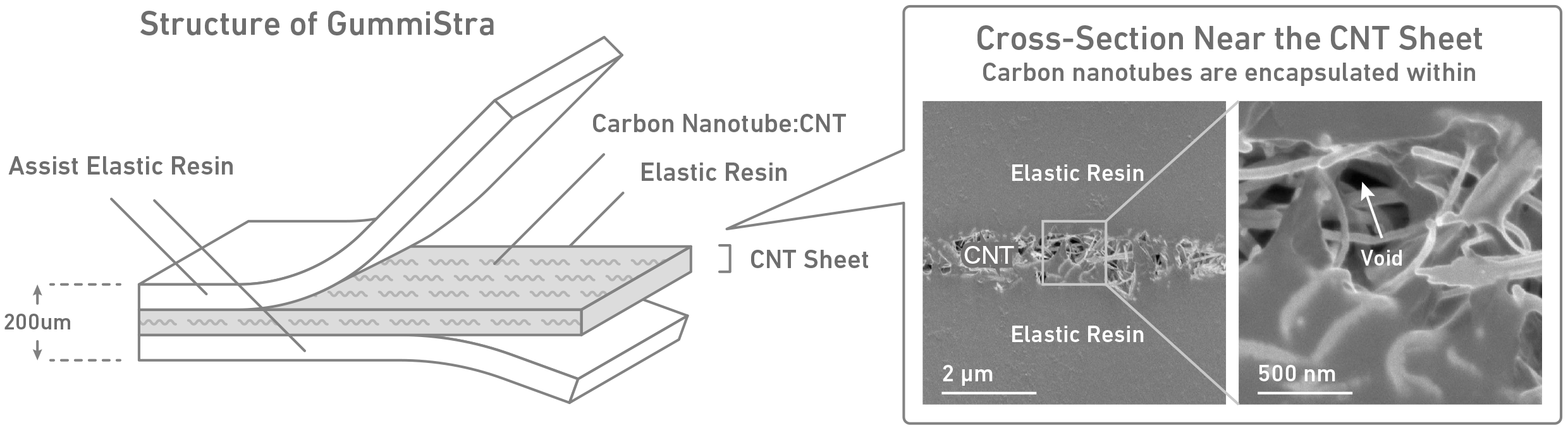
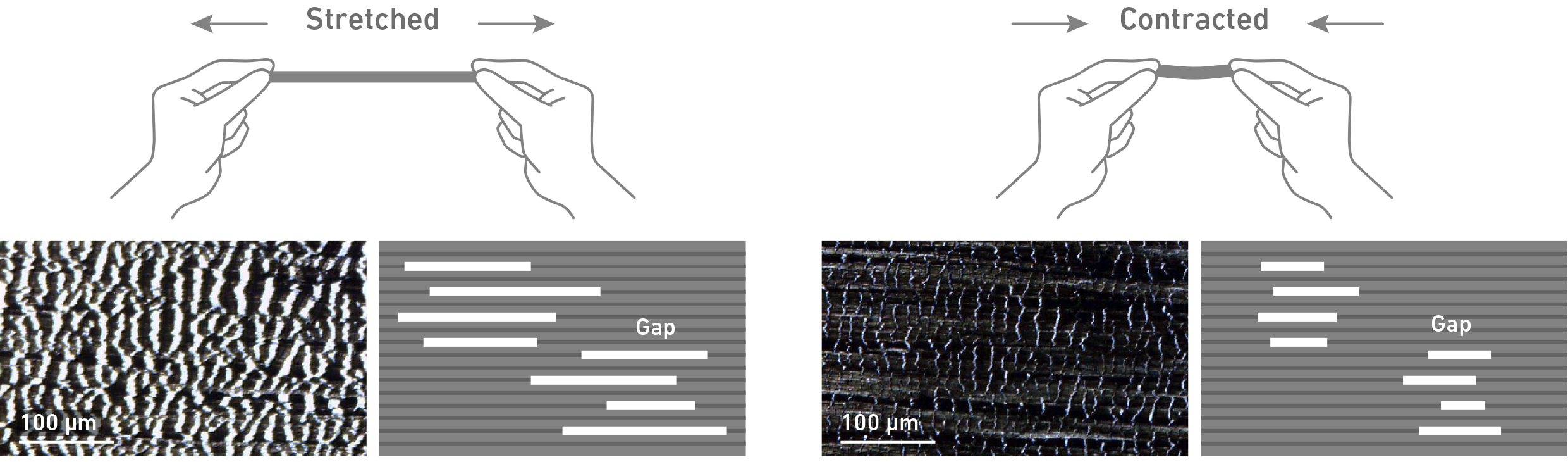
When GummiStra stretches, the electrical resistance changes due to variations in the density of the CNT sheets. There are multiple gaps in the CNT sheets. When GummiStra stretches, these gaps widen and cause the CNT sheets to become more coarser, resulting in increased electrical resistance. When GummiStra returns to its original state, the gaps narrow into a denser state, and electrical resistance decreases. Monitoring this change in resistance allows the material to be used as a sensor to measure movement.
Features of the Sensor
- The senor is extremely thin, approximately 200μm (about the thickness of two human hairs).
- It is made from a soft, skin-friendly material that offers excellent wearability. Its softness is comparable to human skin, allowing the sensor to be applied directly to skin without causing discomfort.
- Movement can be measured until the length of the sensor doubles.
- Continuous measurement is possible from small changes to large changes, and from slow movements to fast movements.
- The material is water-resistant, allowing it be used for activities that result in perspiration or when getting caught in the rain.
Monitoring a Musical Instrument Performance
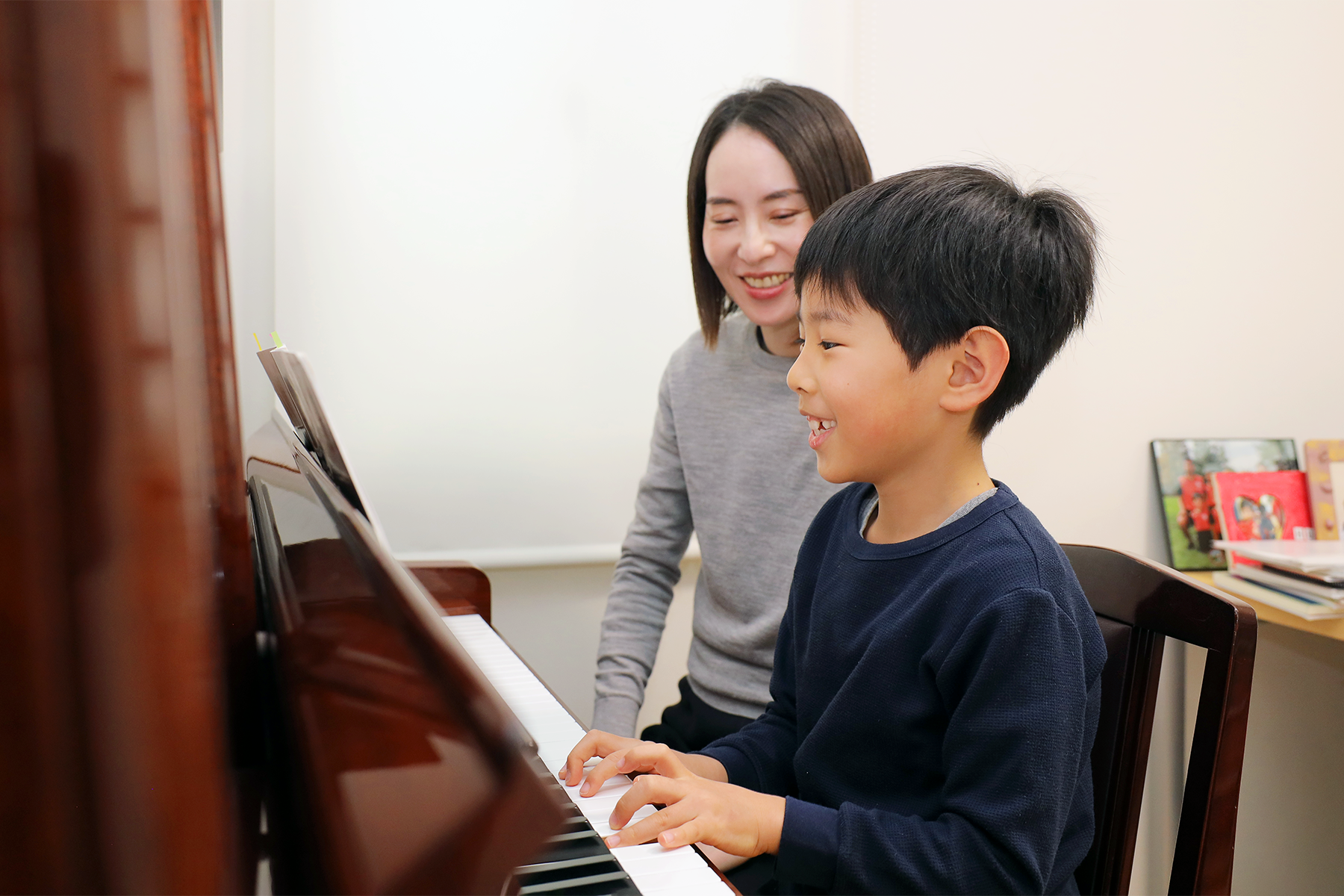
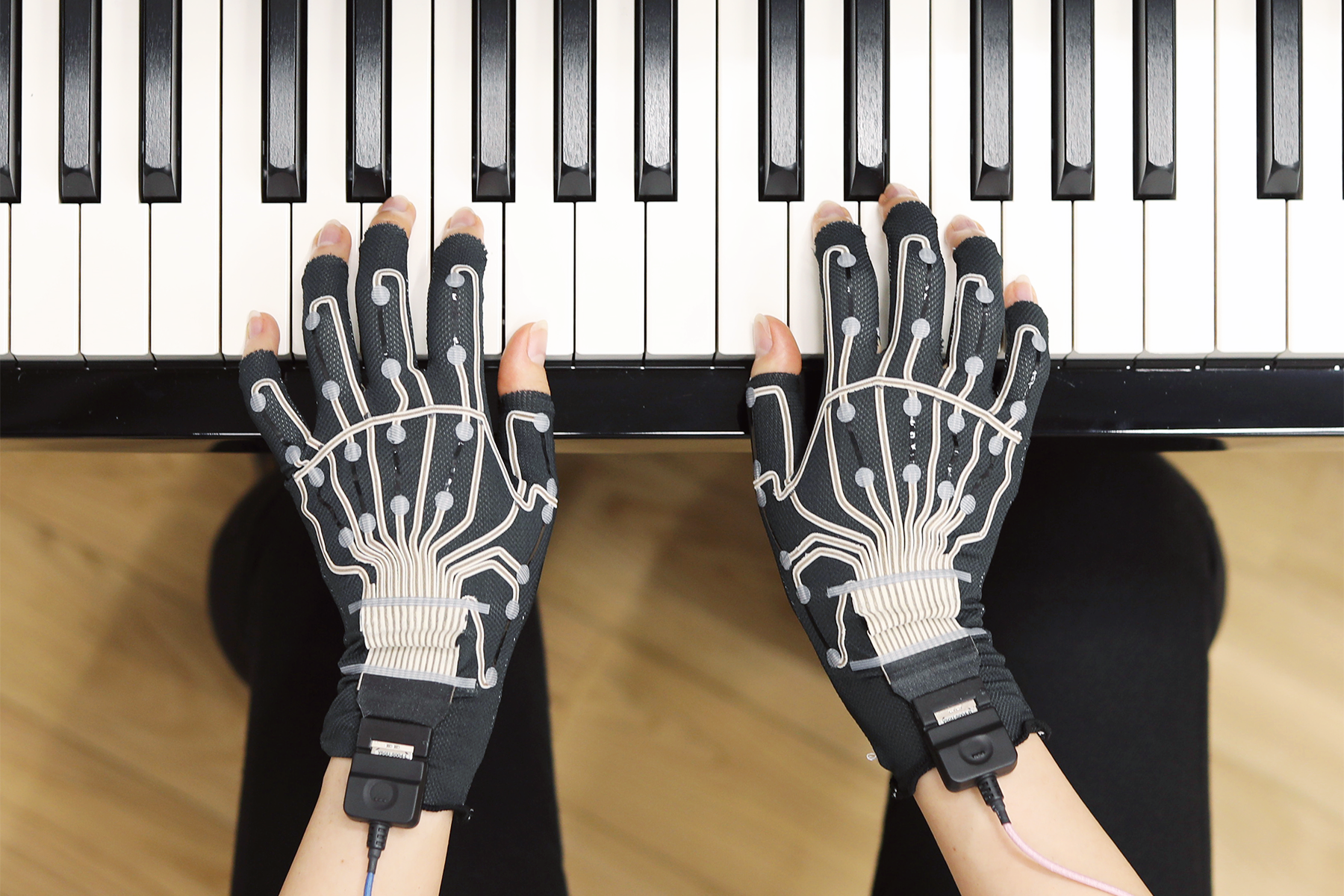
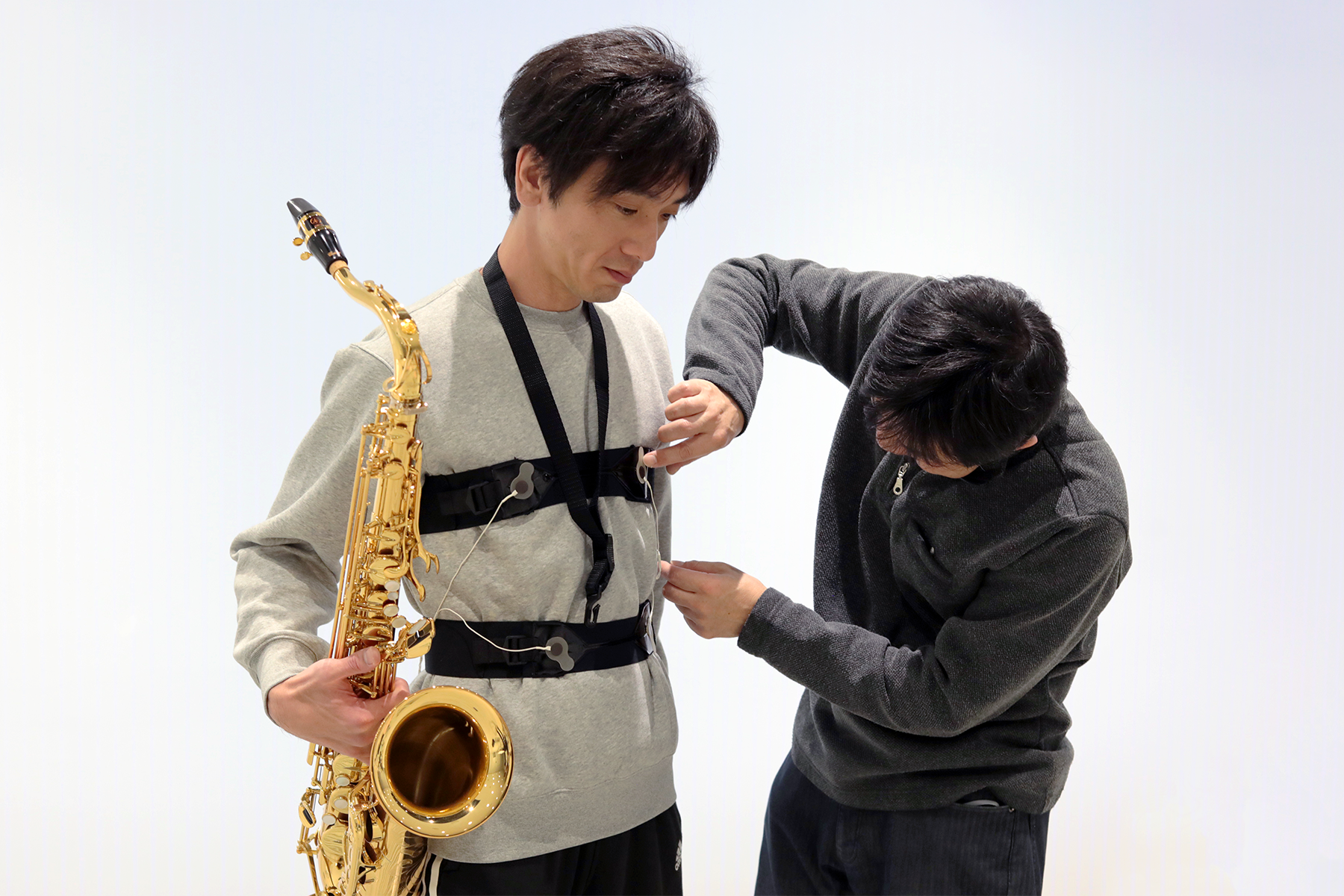
When worn on a finger, for example, this sensor can measure movements during a piano performance. When worn on the chest or back, it can measure movements during a wind instrument performance. It is also possible to perform composite measurements by simultaneously attaching several sensors to multiple locations. Our goal is to accurately digitize movements during musical instrument performances that have been difficult to measure with conventional sensors and motion capture systems.
By collecting and analyzing such data from players at various skill levels, we believe we can identify the areas that are difficult for beginners and how they should practice to achieve efficient improvements. Our primary goal with this sensor is to allow anyone to enjoy playing musical instruments without experiencing physical or mental strain.
In addition, we believe this technology can reduce the monitoring burden on medical professionals in the fields of healthcare and welfare. Just as with musical performance, through the digitalization and analysis of physical movement data, this technology can help patients to engage comfortably in rehabilitation activities and exercise.
Aiming for Even Greater Practicality
We are also developing peripheral technologies to explore the various possibilities of this sensor. For example, by developing stretchable wiring that will not break even when stretched to three times its original length, we have achieved the integration of sensors and textiles. For example, by shaping this material into a glove, it becomes possible to measure the movement of every part of the hand and fingers, allowing even minute and complex movements to be visualized.
We will continue to pursue further development of this unique sensor and peripheral technologies while exploring various possibilities for applications in areas such as musical instrument performance.