The Power of Music to Connect Communities — New Possibilities for High School Band Clubs
Bringing Schools Together through “Joint Workshops” to Boost High School Band Engagement
Yamaha Music Japan launched a nationwide program in 2022 to meet the growing demand among schools for stronger and more enriching band club activities.
The initiative dispatches qualified instructors to support students through “joint workshops”.
In 2025, the program expanded to Fukushima, Okinawa, Iwate, and Hokkaido Prefectures, where Yamaha organized multischool workshops and live performances to further energize and elevate students’ musical experiences.
Since around 2005, the influence of anime and video games has helped band clubs grow into one of the most popular cultural activities in Japanese high schools.
Schools have increasingly embraced these band-style music clubs as a way for students to develop widely valued skills—communication, teamwork, creativity, and a sense of performance.
As the number of band clubs continues to rise, several prefectures have established their own federations, and both regional and national competitions are now held.
Despite this growth, high school band clubs face similar challenges across the country, regardless of whether a federation exists in their prefecture.
Common issues include a shortage of specialized instructors and limited opportunities for inter-school exchange.
Public high schools, in particular, may see club activities slow down when advisors are reassigned, and large clubs often struggle to maintain a performance quality suited to their size.
These conditions can lead to lower competition standards and participation concentrated within a small group of schools—factors that have hindered the broader development of band clubs.
To address these challenges, Yamaha Music Japan has continued sending qualified instructors to schools and coordinating joint workshops and live performances that bring together multiple institutions.
During these workshops, students from several high schools gather to take part in a wide range of programs.
These include role-based sessions—covering guitar, bass, drums, live sound engineering, and songwriting—as well as band workshops where student groups perform and receive guidance from instructors.
A further benefit of these events is the opportunity for students to interact with peers from other schools, offering fresh perspectives and renewed motivation.
The initiative has led to numerous positive outcomes, including higher student engagement, strengthened instructional capabilities among advisors, increased campus visibility for band clubs, and expanded spaces for practice and performance.
It has also fostered new connections through music, deepening awareness of instruments among both students and advisors and infusing new energy into band clubs across local communities.
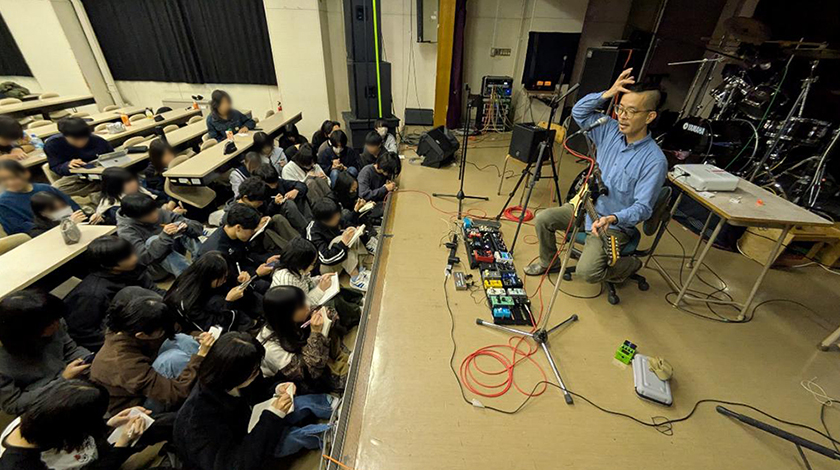
Instructors dispatched by Yamaha Music Japan taught students—guitarists, bassists, and all band members—the importance of being aware of their tone.
Communities With Clear Goals vs. Those Without
In regions where competitions exist, the shared goal of winning an award makes it relatively easy for schools to organize joint workshops.
In prefectures without such competitive structures, however, schools often lack a compelling reason to come together.
As a result, interactions may be limited to simple meet-and-greets between two schools.
Preparations also tend to take more time, as advisors must build mutual trust before collaboration can begin.
In some areas, there is not even another nearby school able to participate.
Even so, the situation is gradually changing.
The rise of privately organized regional and national competitions—such as Sneaker Ages—has created attainable goals for more communities and made competition placement a realistic target.
This momentum is encouraging more schools to host joint workshops, opening up new possibilities for band clubs across a wider range of regions.
Listening to Local Voices: The First Step Toward a Joint Workshop
The initiative often began with a single school visit.
Yamaha staff met with advisors who were deeply committed to their band programs—including schools previously connected through other Yamaha initiatives—to listen closely to their needs and understand the challenges within their community.
These visits revealed shared concerns, such as limited connections with other schools and a lack of instructors.
In response, Yamaha proposed hosting “joint workshops” and explained how inter-school collaboration could inspire students and energize the broader community.
United by a Shared Goal
Instructors, advisors, and students came together under one clear objective: succeeding in the prefectural competition.
As regional federations formed and official competitions took shape, schools were finally able to aim for tangible goals such as placing in a competition.
The emergence of multiple national competitions, both official and privately run, has further inspired students to pursue higher-level challenges.
Initially, many band clubs focused solely on their annual school festival performance.
Today, however, they are setting more ambitious goals—developing skills, competing, and continually improving.
This shift has sparked strong motivation among both students and advisors.
Joint workshops, built around these shared goals, became intensive learning opportunities where students could inspire one another beyond their usual school environment.
Students revisited not only their musical techniques, but also their mindset toward music.
Advisors, too, were able to see clearer, more tangible outcomes from their guidance.
In this way, the workshops breathed new life into local band communities.
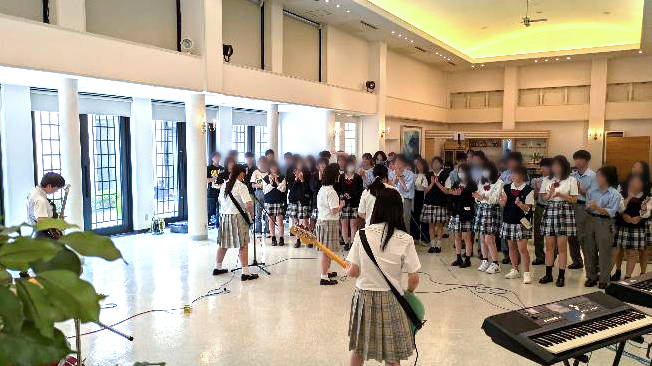
In an area with few opportunities to see band performances from other schools, simply watching them was valuable, and the instructors’ advice was also very well received.
It also became a great opportunity for interaction between advisors and students.
How the Joint Workshops Sparked Change
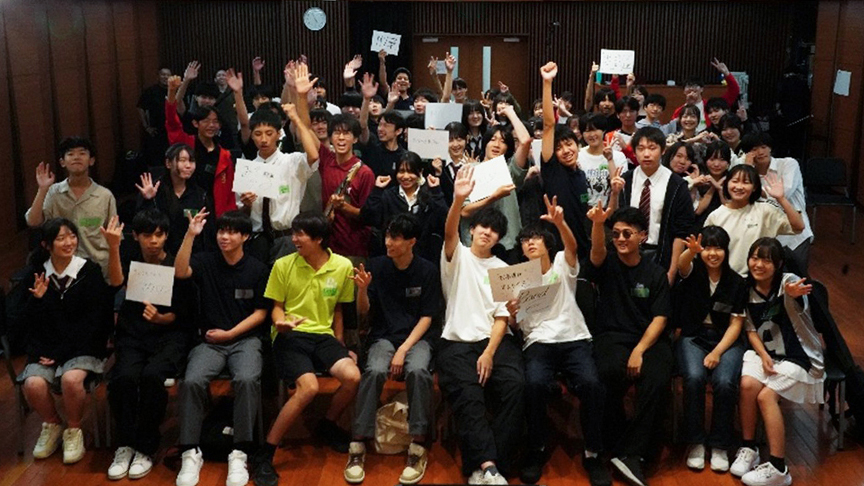
Held across Iwate, Fukushima, Okinawa, and Hokkaido Prefectures, the joint workshops brought together 160 students from 27 schools.
By the end of the sessions, the change in students’ expressions was unmistakable.
Many said, “It was inspiring to see bands from other schools,” and “The instructors’ feedback was incredibly helpful.”
Advisors also noted that the workshops highlighted the specific areas they needed to focus on in their instruction.
This renewed motivation soon translated into increased participation in subsequent competitions, spreading momentum throughout the region.
Advisors from non-host schools also expressed interest in improving their equipment and expertise so that they, too, could serve as host schools in the future.
In this way, the program has extended its impact far beyond individual school visits, emerging as a new model capable of engaging entire communities.
Toward a Future Connected Through Music
These joint workshops offer far more than skill development.
The secondary benefits—including improved equipment, deeper instrument awareness, and stronger advisory skills—have exceeded expectations.
Most importantly, by connecting with rival schools through music, students have formed meaningful new relationships within their communities.
Music connects people, connects communities, and connects the future.
This initiative has the potential not only to nurture local music culture, but also to expand opportunities for the next generation.
![[ Thumbnail ] Refining Yamaha's quality across departmental boundaries —From the French horn manufacturing site, returning to a customer-centric approach](/en/stories/culture/quality-through-dialogue/images/bnr_quality-through-dialogue.jpg)
![[ Thumbnail ] Education Outreach: Fostering the Next Generation of Musicians through a Life Filled with Music](/en/stories/culture/education-outreach-next-generation-musicians/images/education-outreach-next-generation-musicians-banner.jpg)
![[ Thumbnail ] The Power of Music to Connect Communities — New Possibilities for High School Band Clubs](/en/stories/culture/how-music-unites-communities-high-school-band-clubs/images/how-music-unites-communities-high-school-band-clubs-banner.jpg)
![[ Thumbnail ] Celebrating Culture Through Music: Yamaha India and MSST Present Indian Classical Keyboard Concert](/en/stories/culture/indian-classical-keyboard-concert/images/indian-classical-keyboard-concert-banner.jpg)
![[ Thumbnail ] The Joyful Piano](/en/stories/images/bnr_the-9th.jpg)
![[ Thumbnail ] Global LovePiano](/en/stories/images/bnr_lovepiano.jpg)
![[ Thumbnail ] School Project](/en/stories/images/bnr_school_project.jpg)
![[ Thumbnail ] Make and Play!](/en/stories/images/bnr_paperinstruments.jpg)
![[ Thumbnail ] I'm a HERO Program](/en/stories/images/bnr_im-a-hero.jpg)