Musical Score AI
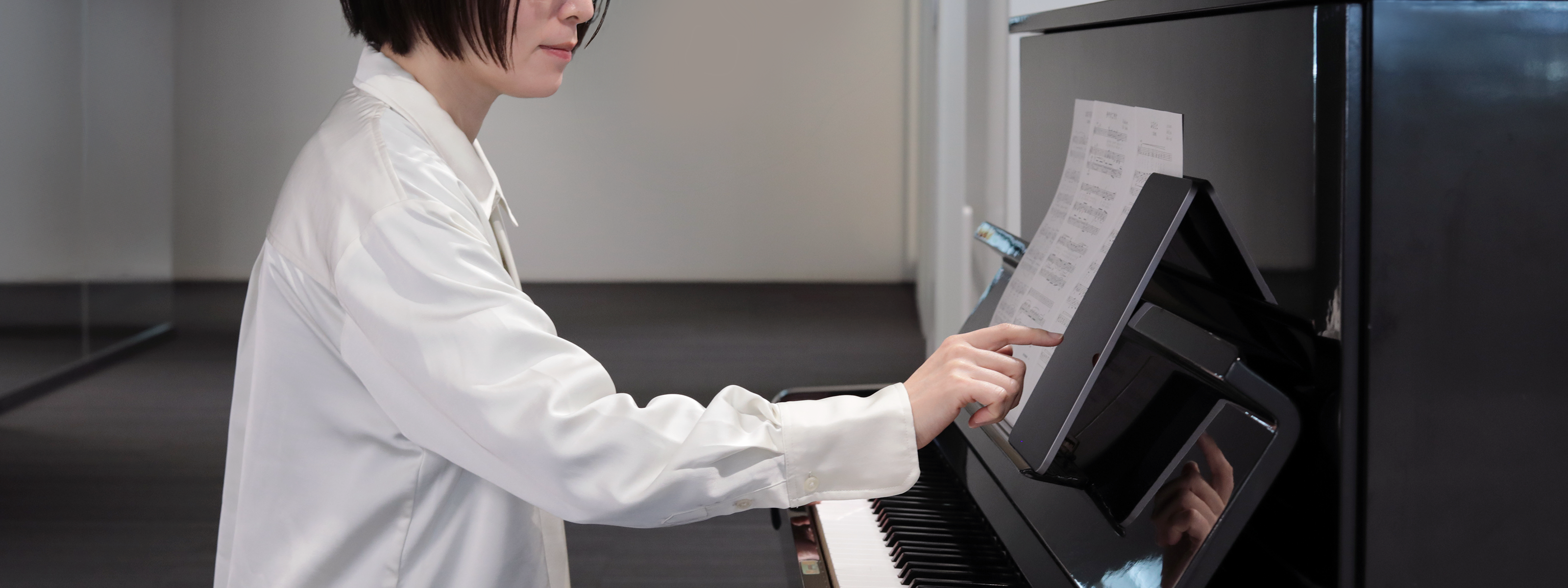
Musical Score AI is a technology designed to revolutionize the way musical scores are understood, processed, and utilized. By leveraging AI’s capabilities, this technology addresses the complexities of musical scores, enabling tasks such as adjusting score difficulty, arranging music for different instruments, and transcribing audio into sheet music. It provides a flexible framework for creating tailored scores that align with the needs of performers and specific use cases, contributing to a more accessible and engaging musical experience.
Score Difficulty Adjustment Technology
Delivering the most suitable scores to each performer
Many people learning music struggle to find scores that match their skill level. For beginners, a score may be too challenging, while advanced players might find it too simple. Although it is possible to manually modify existing scores to better suit an individual’s proficiency, doing so requires significant musical expertise and time. This process can be a heavy burden, especially in teaching and production settings.
To address this issue, Yamaha is exploring a new approach where AI analyzes musical scores and adjusts them to different difficulty levels. By converting scores into a digital format that AI can process, it becomes possible to automatically generate multiple difficulty variations for the same piece. We believe this technology, capable of providing scores tailored to performers’ proficiency levels or specific learning goals, has the potential to greatly improve the experience of music learning and performance.
AI Model for Understanding and Transforming Scores
A musical score consists of not only pitch and rhythm but also layered musical information, such as time signatures, key signatures, voices, and articulations, making its structure highly complex. If this information is processed as basic data alone, it becomes difficult to transform the score while preserving its musical meaning and the composer’s intent.
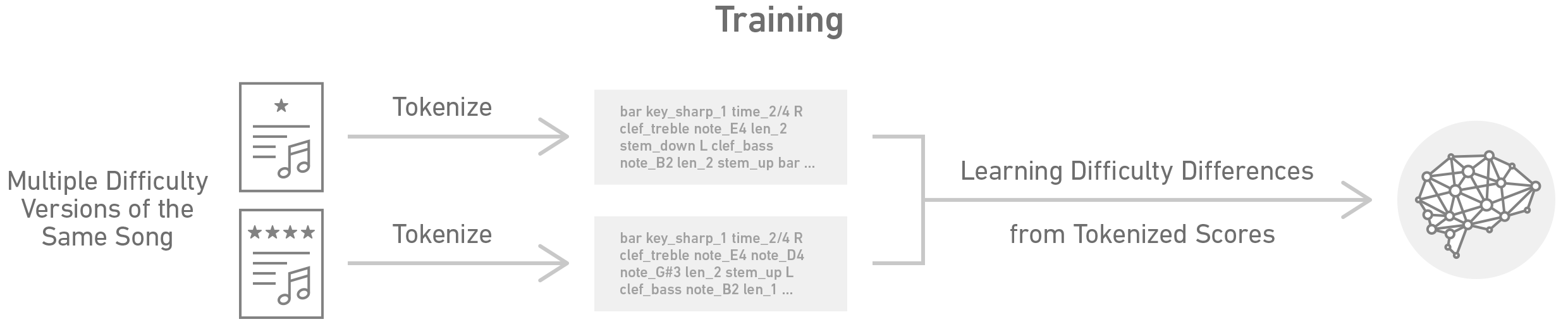
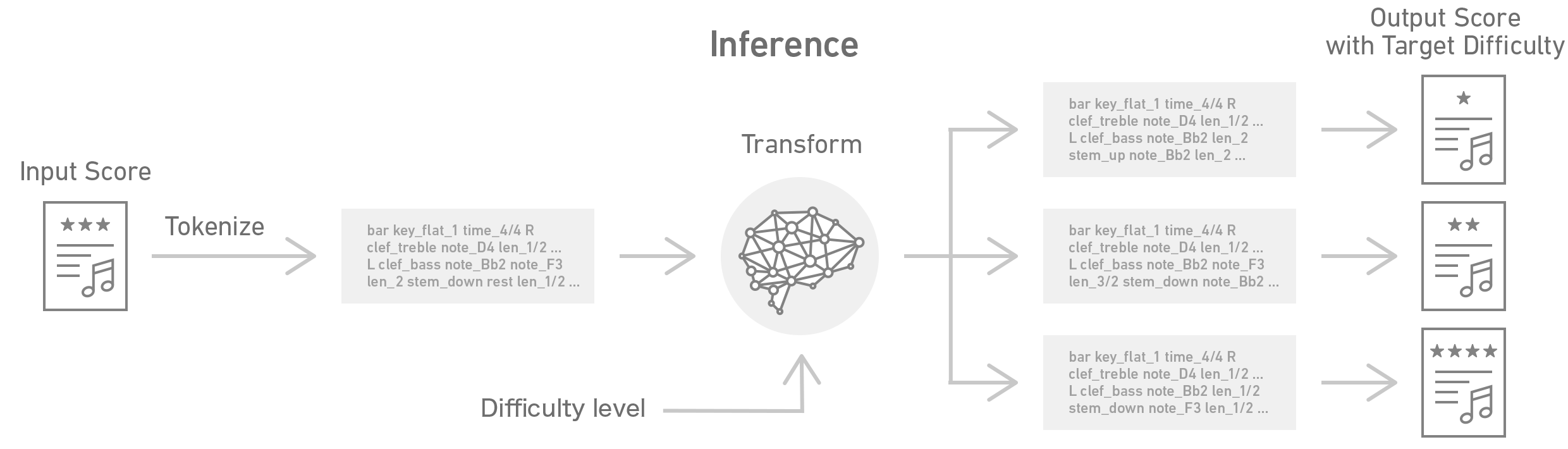
To address this challenge, we use a “score token representation.” This method breaks down and organizes the elements of a score into a structured format that AI can process. By converting a score into this token sequence, advanced deep learning models can analyze its structure and musical context, generating a new token sequence adjusted to a specified difficulty level. The generated sequence is then converted back into a human-playable score format. This approach enables natural score transformations that maintain musicality while adapting to the desired difficulty level.
Training Data and Transformation Process
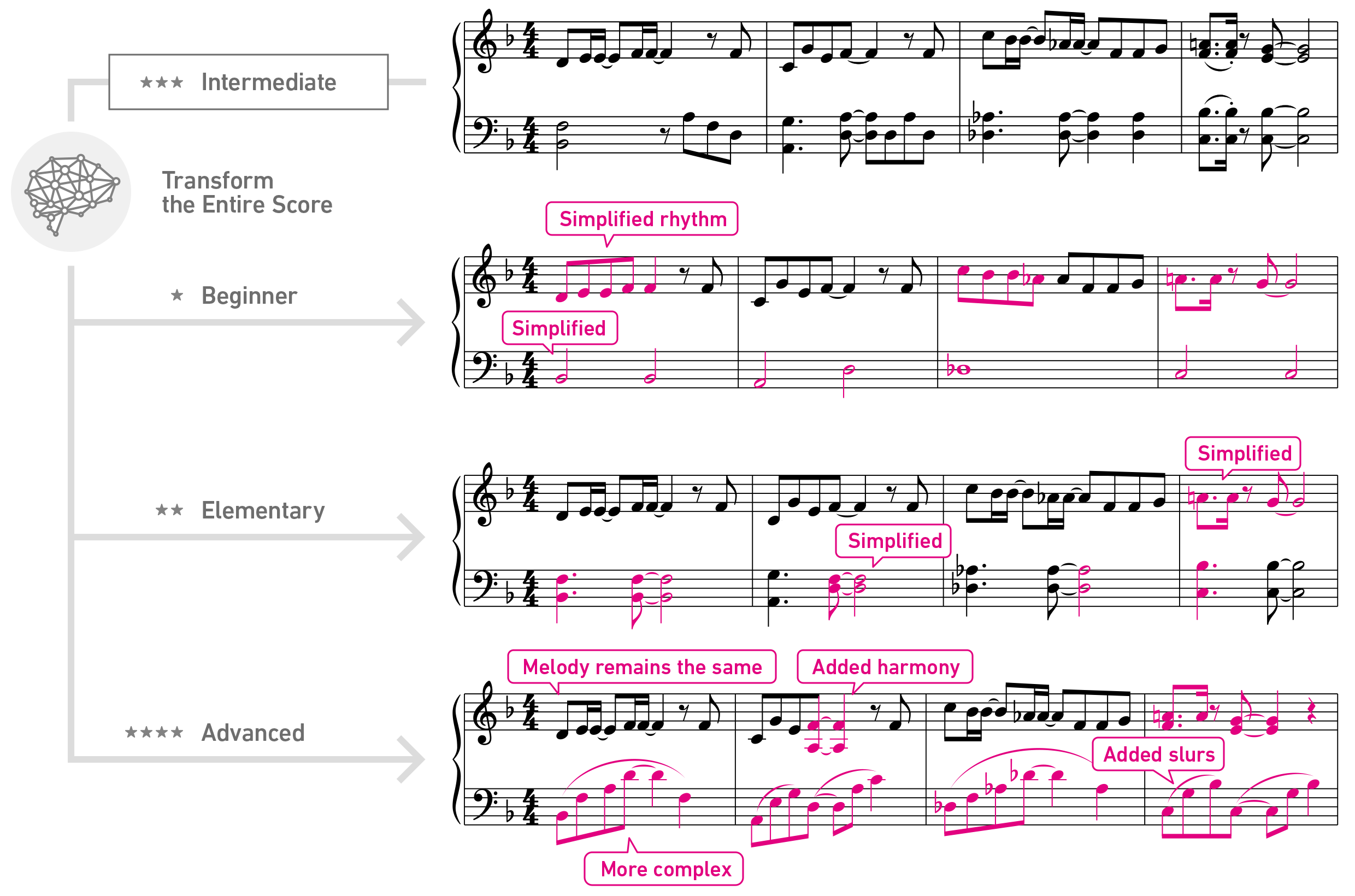
Implementing this technology involves preparing multiple versions of the same piece at different difficulty levels and training the model to understand their relationships. By using a large dataset of these paired scores, the deep learning model learns to identify the elements that affect difficulty—such as chord structure, rhythmic complexity, and pitch range. It also recognizes statistical patterns, including expressions commonly found in beginner-level scores and structures typical of more advanced scores.
The technology supports four difficulty levels: Beginner, Elementary, Intermediate, and Advanced. The trained model can transform an input score into the specified difficulty level.
Future Directions
Currently, this technology focuses primarily on piano scores. In the future, we aim to expand its application to other instruments. By incorporating scores from various instruments during model training, we hope to develop difficulty conversion methods that take into account the unique playing techniques and expressive characteristics of each instrument. Eventually, this could enable transformations between instruments—such as converting piano scores to guitar scores—making it possible to generate flexible and tailored scores for a wider range of performers and instruments.
Another important direction is personalization. By adapting scores to match each performer’s individual skills, goals, and preferences, we aim to provide learning experiences that are highly tailored and engaging. For example, scores could be optimized based on learning stages, preferred techniques, or specific practice objectives, helping performers achieve their goals more effectively.
Through these developments, we hope to create technologies that make musical scores more accessible and enjoyable, allowing more people to explore and connect with music in meaningful ways.