
Mixing Assist Technology
Intelligent Support for Sound Creation
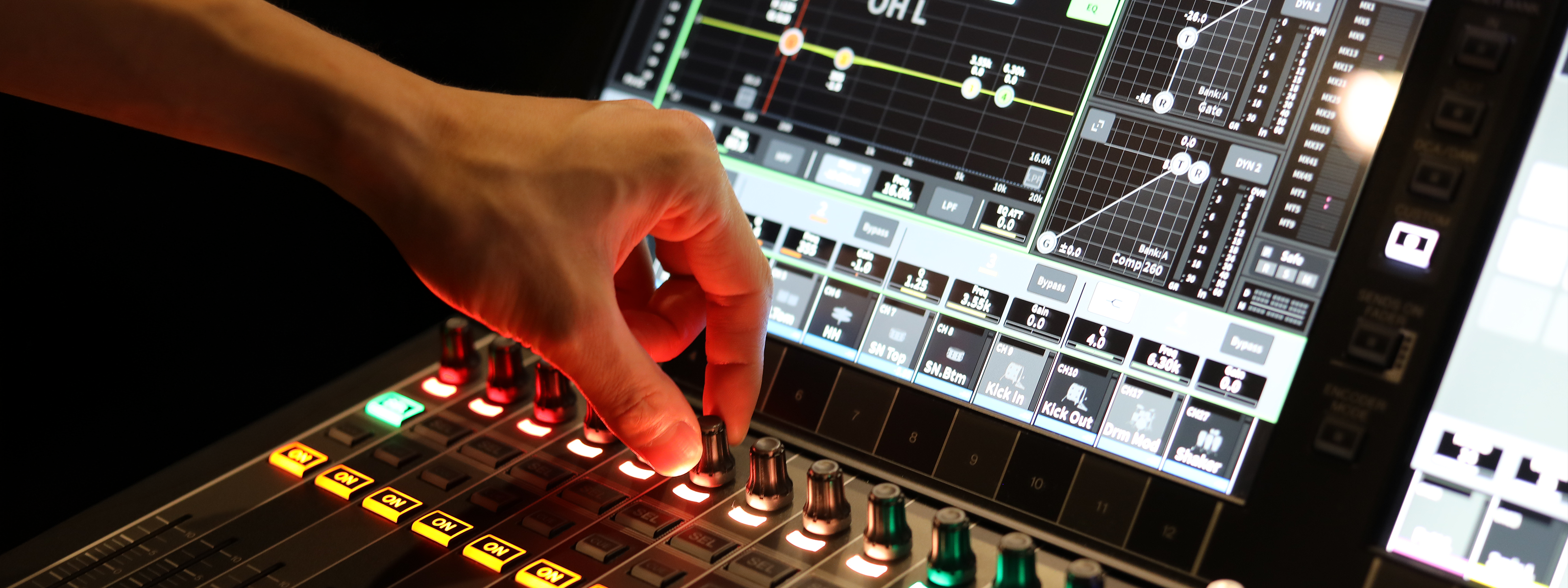
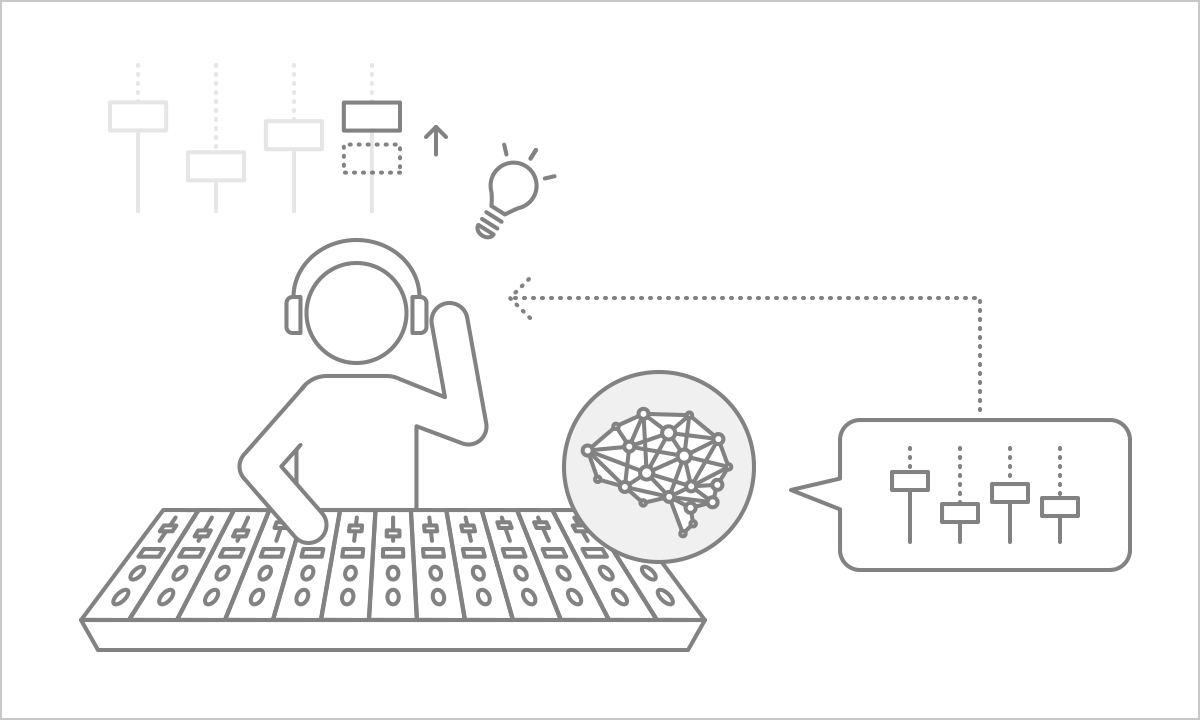
Mixing Assist Technology is a set of intelligent technologies that supports the initial setup and real-time adjustment of mixing workflows in live sound and music production. It assists with fundamental tasks that have traditionally relied on the experience of sound engineers and operators, such as gain setting, level balancing, and dynamics control, helping them spend more time on the creative aspects of shaping sound. The aim of this technology is not to replace people, but to work alongside them. By lowering the barriers to music-making while respecting the user’s intent and sensibility, it helps expand the creative potential of every mixing environment.
Workflow Burdens in Mixing and the Role of Assist Technology
In live performances and concerts, mixing is the final process that delivers music to the audience and plays a decisive role in shaping the impression of the sound. Operators create the final sound by combining a wide range of elements, including volume balance between vocals and instruments, tonal adjustment using EQ, and dynamics control with compressors. In live settings in particular, performances and acoustic conditions change constantly, requiring accurate decisions and operations in real time.
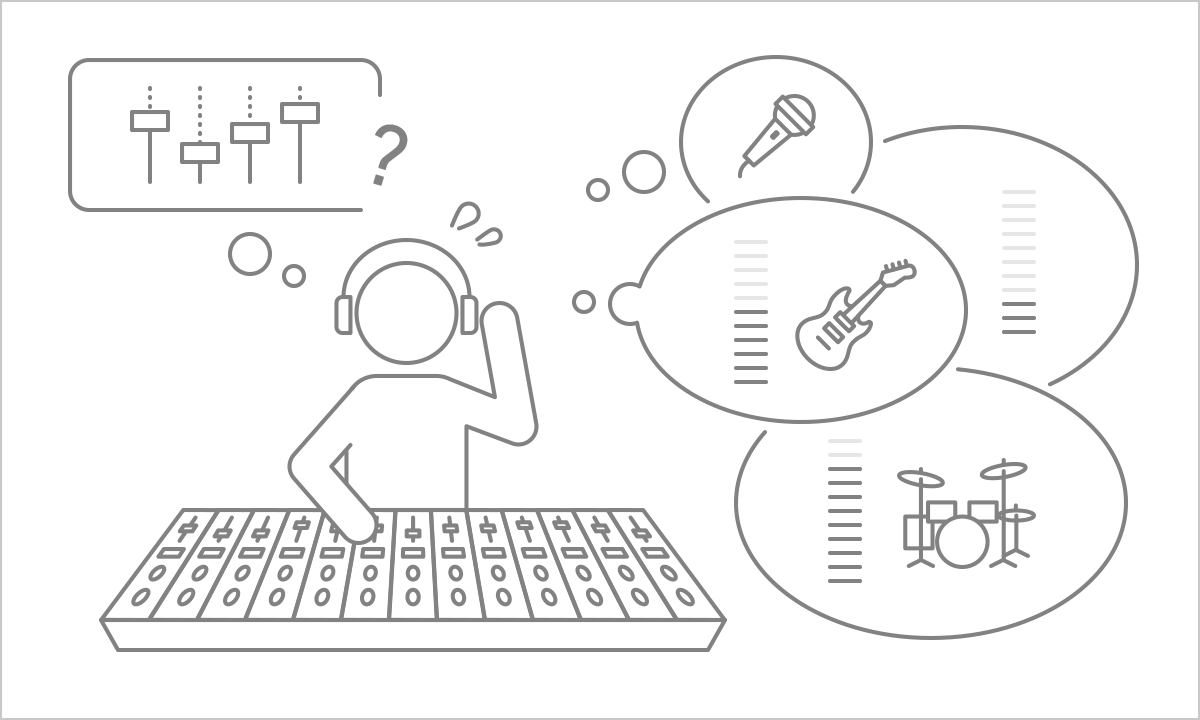
Before this creative sound-shaping work can begin, however, a range of preparation tasks is required. Initial channel settings, gain adjustment, and fader balance must be carried out carefully for every channel. As the number of channels increases, the workload grows, and the results can depend heavily on the operator’s experience. These tasks are often performed within the limited time available immediately before a performance, creating significant pressure for the operator.
Types of Mixing Assist Technology
HA Assist
HA Assist, or Head Amp Assist, analyzes the input signal and automatically suggests an appropriate head amp gain setting. It monitors the signal level of each channel in real time and adjusts the gain based on information such as peaks and average levels at once. This helps prevent clipping or insufficient input levels and makes it possible to establish stable input conditions across multiple channels.
Because the process runs in real time, optimization at the input stage can be performed immediately. It is useful during rehearsals and changeovers, helping to significantly reduce setup time. For example, during sound check, each performer can simply play in sequence and the system can quickly bring the input level into an appropriate range, greatly reducing the detailed adjustment work that was previously required. It provides a reliable foundation for starting a mix with confidence while minimizing the risk of sound degradation.
Naming Assist
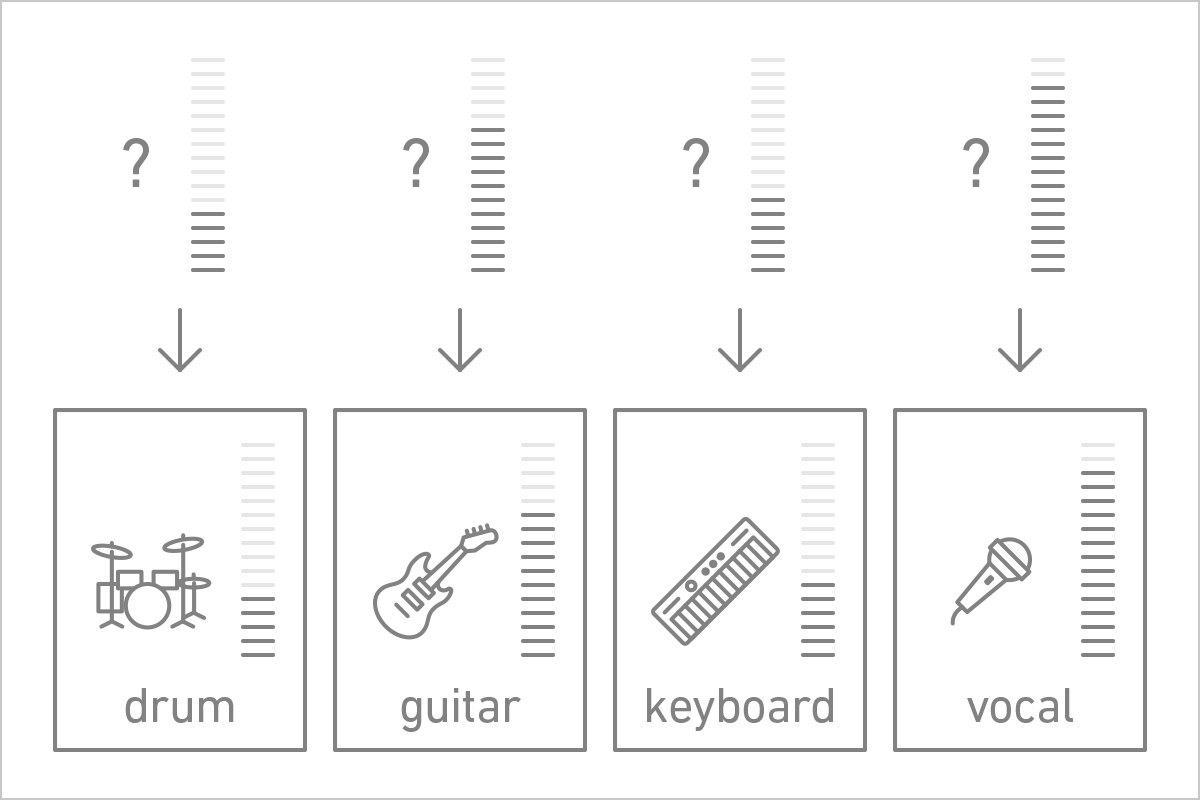
Naming Assist estimates the type of instrument from the characteristics of the input signal and automatically suggests labels for each channel. By identifying sounds such as vocals, kick drum, and guitar, it reduces the need for operators to enter channel names one by one. In live environments with a large number of channels, this function plays an important role in improving visibility and making channel organization more efficient.
The function is realized by combining feature analysis, such as frequency characteristics, with machine learning. By training AI models on Yamaha’s extensive library of instrument sound data, it achieves a high level of identification accuracy. Because the results are reflected immediately in the user interface, operators can understand the channel configuration visually and work more quickly.
Fader Assist
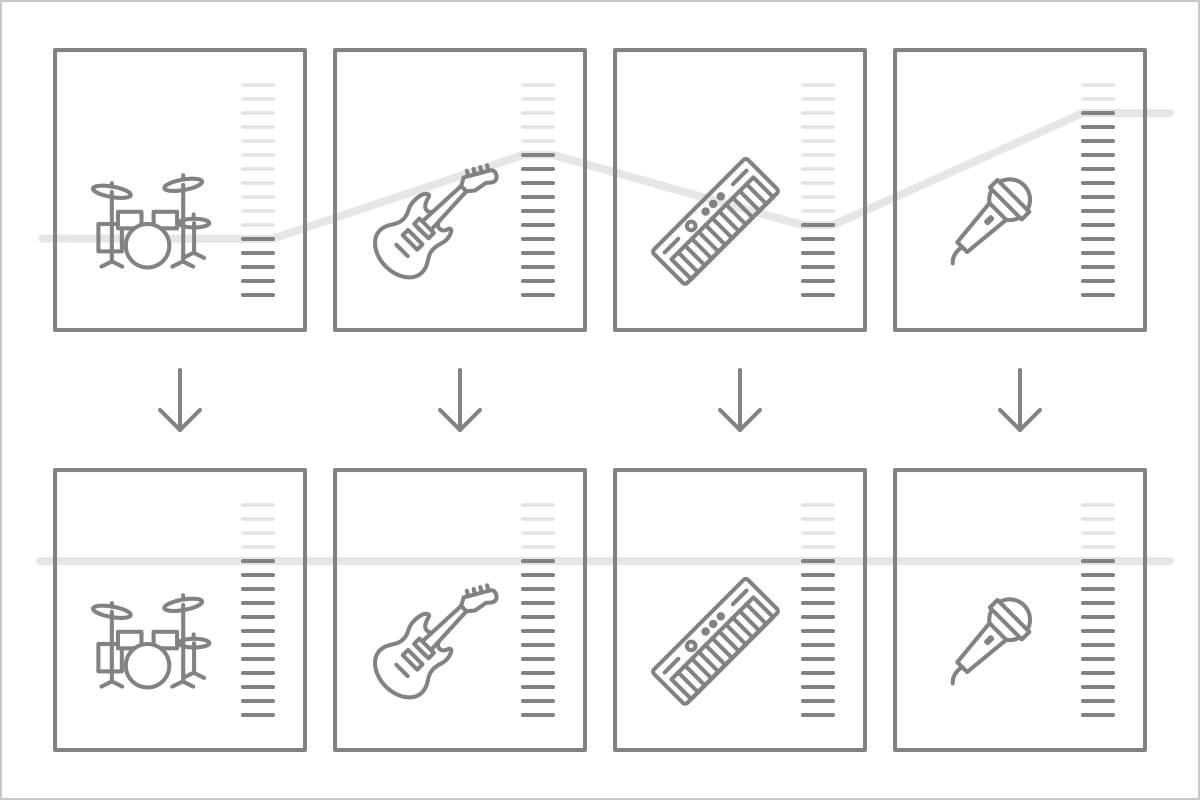
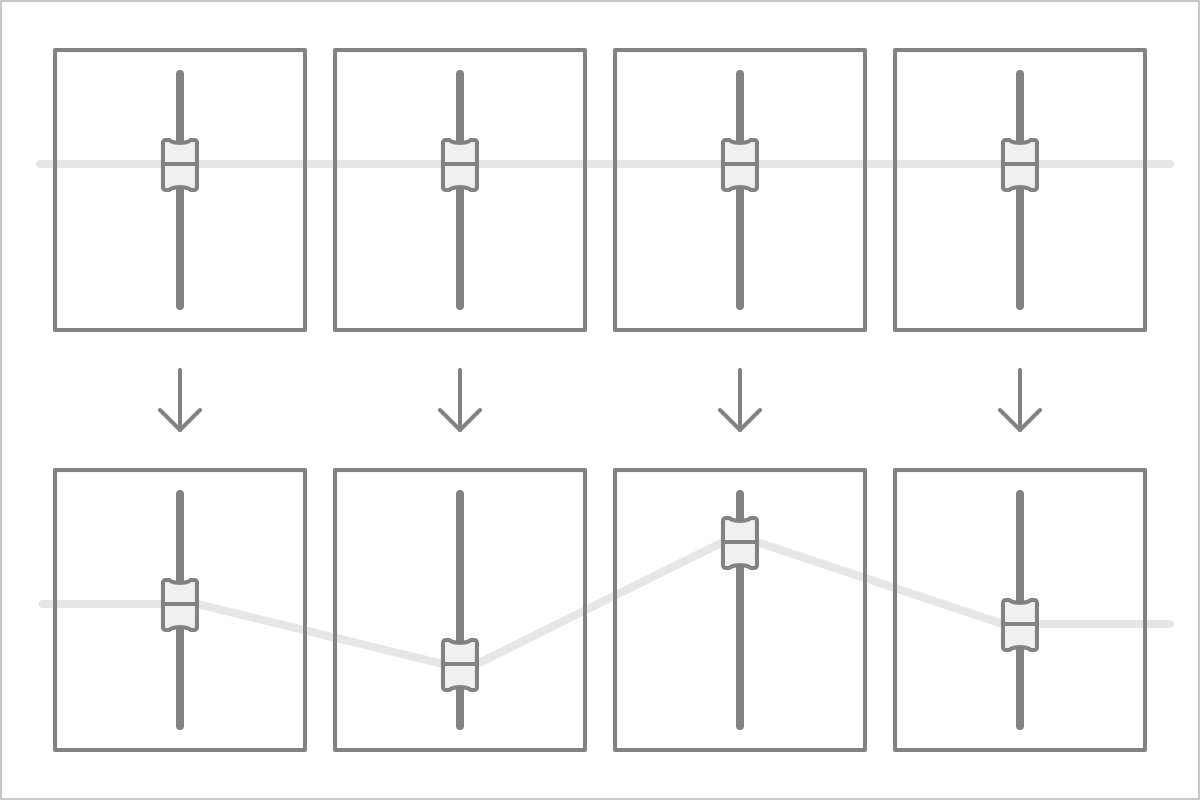
Fader Assist analyzes the overall volume balance of a mix in real time and guides it toward a practical balance that can serve as a starting point for mixing. It assists fader operation while taking the relationships among channels into account. Behind this technology is a balance model trained on multitrack data and mixing results accumulated by Yamaha. This makes it possible to suggest a musically meaningful balance, rather than simply making levels numerically uniform.
The key point is that Fader Assist supports technical balance adjustment. Fader operation involves both this type of technical work and the more artistic task of moving sounds in response to the development of the music or the intention of the production. Fader Assist helps build the basic balance that forms the foundation of a mix, while leaving performance-driven fader operation and final musical decisions to the operator’s intent and sensibility.
Comp Assist
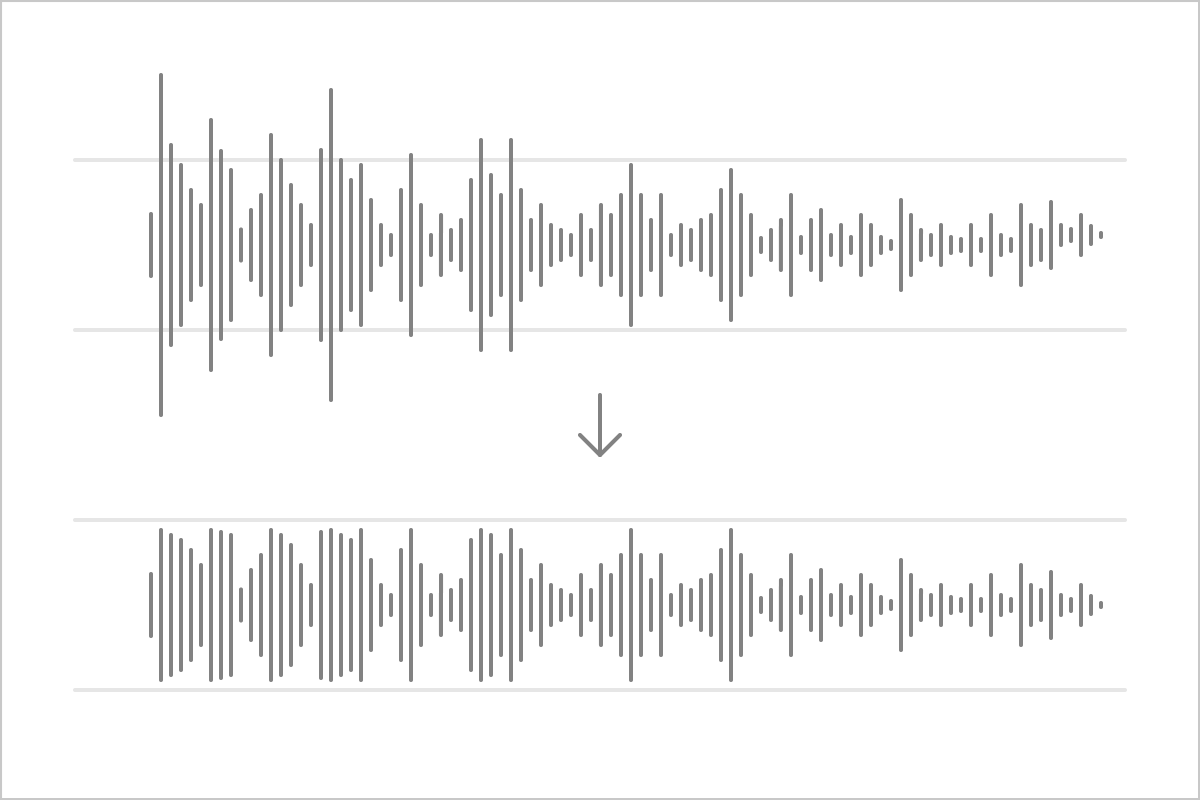
Comp Assist automatically adjusts compressor parameters to keep the dynamics of the sound within an appropriate range. It analyzes the dynamic range of the input signal and calculates or suggests threshold settings in real time to reduce unwanted level variation. This helps maintain a stable overall sense of volume. In live performance, changes in playing intensity or microphone distance can easily cause level fluctuations, but this function helps suppress extreme changes and keep the sound comfortable to listen to.
At the same time, expressive sound creation remains in the hands of the operator. The function does not diminish the expressive potential of mixing; instead, it reduces the time spent on trial-and-error parameter setting and helps establish a stable sonic foundation in a shorter amount of time.
Human-Centered Assist Design for Mixing Workflows
At the core of these assist functions is real-time processing. In live environments, where conditions change from moment to moment, each function continues to operate instantly. This real-time responsiveness enables the system to process the sound as it is happening, rather than relying only on prior analysis.
Equally important is the design philosophy of respecting the engineers’ intentions. Each function is designed to keep the operator in control. Rather than having the machine take the lead, the system works by supporting human judgment. Through this idea of human-machine collaboration, assist functions become more than simple tools for efficiency; they become a means of drawing out creativity. By aiming for behavior that leads naturally to musical decisions and operations, Yamaha is working to create assist functions that feel intuitive and comfortable in real-world mixing environments.
Future Outlook
Building on the real-time processing and support for musical decision-making developed so far, there is broad potential for further expansion, including more advanced AI analysis, optimization for different genres and applications, and automatic mix suggestion functions. The goal is not simply to improve efficiency, but to create technology that supports each person’s musical activity. Yamaha will continue to develop these functions as a partner that works alongside users, further expanding the possibilities of mixing in live sound environments.