
Visualization Technology of Customer’s KANSEI

Technology for the Visualization of Diverse Kansei and Values
As people’s Kansei and values grow increasingly diverse, we believe it is important to recognize and embrace these differences. While we understand that people experience things in a variety of ways, the specific reasons behind these differences and their underlying context often remain unexplored. Leveraging our accumulated expertise in KANSEI measurement technology, we research methods to scientifically visualize and gain deeper insights into the diversity of human Kansei and values. We also explore how to utilize these visualized results in creating products and services. By pursuing not only the functionality and performance of products, but also an approach and mindset that truly engages with people, we aim to create values that resonate with the heart and enrich people’s lives.
How KANSEI Visualization Technology Works
Yamaha is developing KANSEI technology to extract essential information about how people perceive and emotionally respond to various products, services, and related works, with the highest possible resolution and reproducibility. We use psychological methodologies to collect data and perform both quantitative and qualitative analyses, and visualize the results in formats such as KANSEI models (representation of a system in which stimuli are the input and responses are the output). By interpreting the models and insights obtained in this way and combining them with the Kansei of engineers and planners, we can propose new ideas and values.
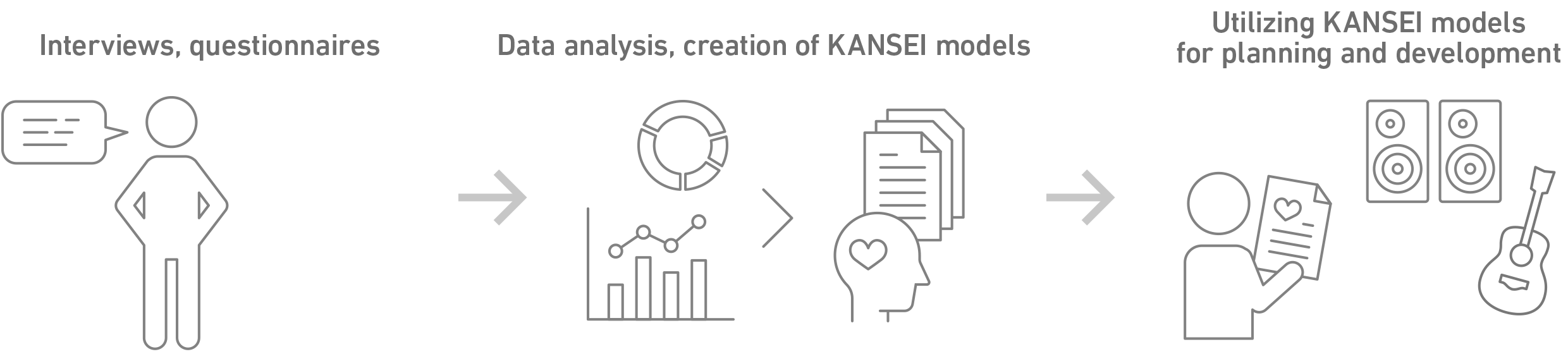
Specific Initiatives
Capturing the “drive” of instrumentalists
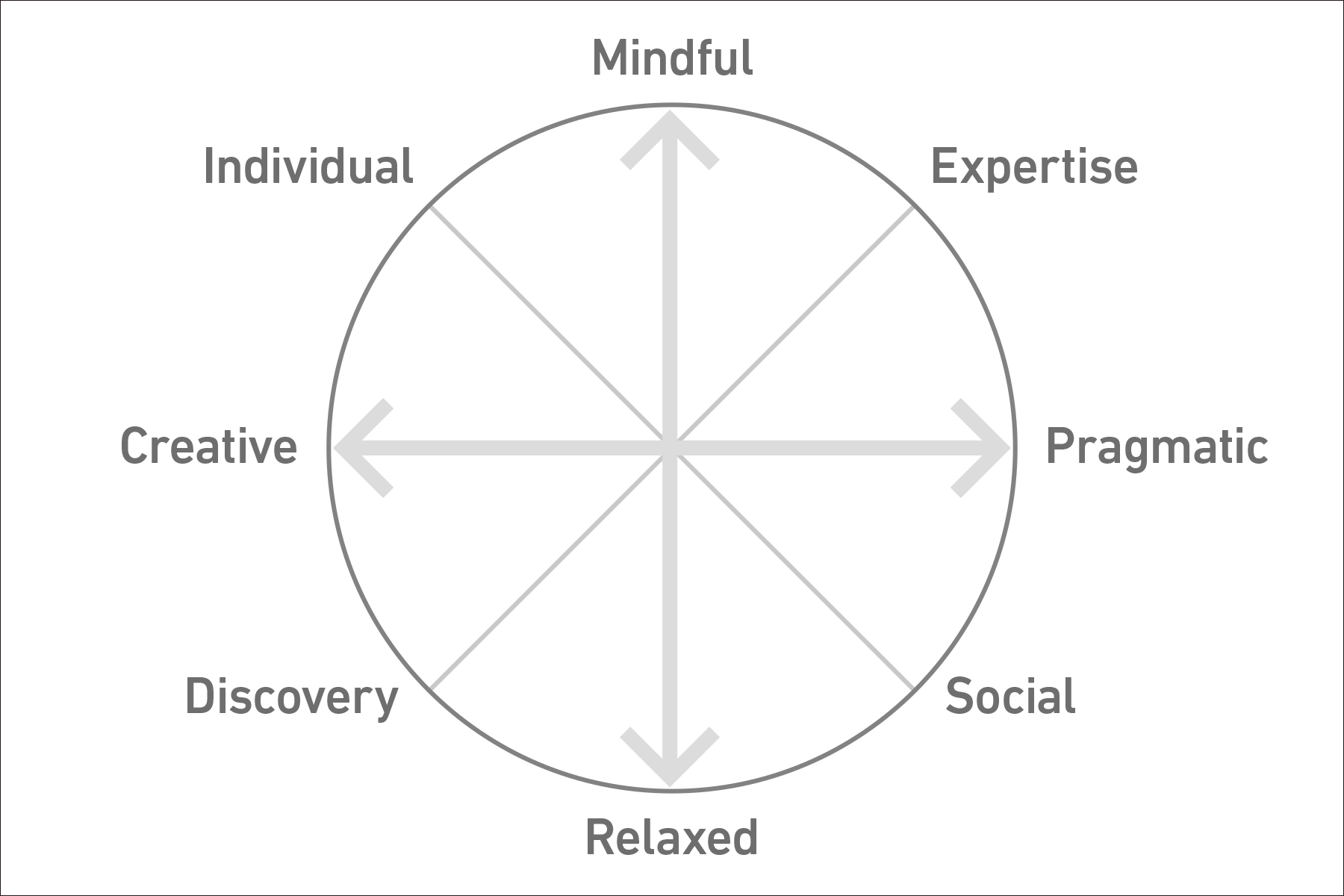
The motivations for playing an instrument and the role that the instrument holds for each individual are extremely diverse. However, there have been no objective indicators showing the types of values or their relationships. Therefore, we are focusing on the fundamental “drive*” behind why people perform, and are attempting to model it using psychological methods and statistics.
*What is “drive”?:
In psychology, motivation refers to the factors that prompt people to take action. This motivation is said to have two aspects: one is “drive,” which refers to the motivation and desire that arise from within, and the other is “incentive,” which refers to the goals and attractive stimuli provided from outside. It is believed that the combination of these two aspects leads to action. Learning a musical instrument requires a certain amount of practice, and it is believed that “drive” is very important to overcome that challenge.
This model (Emotion Drivers) illustrates the diversity of “drive” through two axes and eight segments, and is utilized in various situations at Yamaha such as product planning and development. Furthermore, because our company has many employees who play musical instruments, we believe that this can also serve as a tool to deepen understanding of people who have different musical experiences and values from ourselves.

Visualizing expectations for the places customers visit, and connecting the thoughts of customers and employees
Music that is played at brand shops and other customer touchpoints is one of the symbolic elements of the brand experience.
We develop and provide many products and services to people throughout the world, so our customers have various expectations and perceptions of Yamaha. We want to cherish each customer’s individuality–which is why we are working to explore our own creative process that embraces this diversity.
With this initiative, we used psychological methods to collect our customers’ various expectations, and created a structure by connecting them to our concept of what a brand shop should be. Furthermore, in order to express this concept through music that people will enjoy listening to, we have had numerous discussions with composers and specialists at the Tokyo University of the Arts and collaboratively produced such music. We consider this production process to be one of our unique processes.
We hope that the music created in this way will not only be enjoyed through listening, but will also lead to an unforgettable experience for our customers.


Future Prospects
Even as technologies and trends rapidly evolve, we are continuing our people-centered exploration by once again reflecting on the Kansei and values of both our customers and ourselves. We will deliver the results of our research to customers in a format they can experience, and actively utilize them to explore new fields at Yamaha. We aim to advance our research and provide new value by incorporating diverse perspectives arising from culture and society.