Technology for Suppressing Unwanted Resonance in HiFi Speakers
HiFi Speaker
Many Yamaha products are equipped with speakers. Speakers are used in a wide range of products, including home audio speakers for enjoying music at home, pro audio speakers for delivering music to a large audience at live performances and concerts, monitor speakers for music production, as well as for electronic pianos, keyboards, guitar amplifiers, and car audio.
Among home audio products, HiFi speakers in particular are special because they provide higher quality and more finely detailed sound, allowing you to enjoy relaxing moments in luxury. HiFi is an abbreviation for High Fidelity, meaning “faithful reproduction of the original sound.” Such speakers incorporate various technologies to minimize noise and distortion when reproducing a sound source.
In this article we will introduce a “Technology for Suppressing Unwanted Resonance in HiFi Speakers”.
Unwanted Radiated Sound due to Speaker Cabinet Resonance
A speaker system consists primarily of an amplifier, a speaker unit, and a cabinet. Upon receiving a signal from the sound source, the amplifier outputs an electrical signal that drives the speaker unit, which in turn converts the signal into sound. The cabinet suppresses sound that is emitted from the rear of the speaker unit.
Humans have ears that are sensitive to fluctuations in air pressure, which we then perceive as sound and music. These fluctuations in relation to atmospheric pressure are called sound pressure. The number of times the same sound pressure waveform repeats per second is called a frequency, and each frequency corresponds to a different pitch.
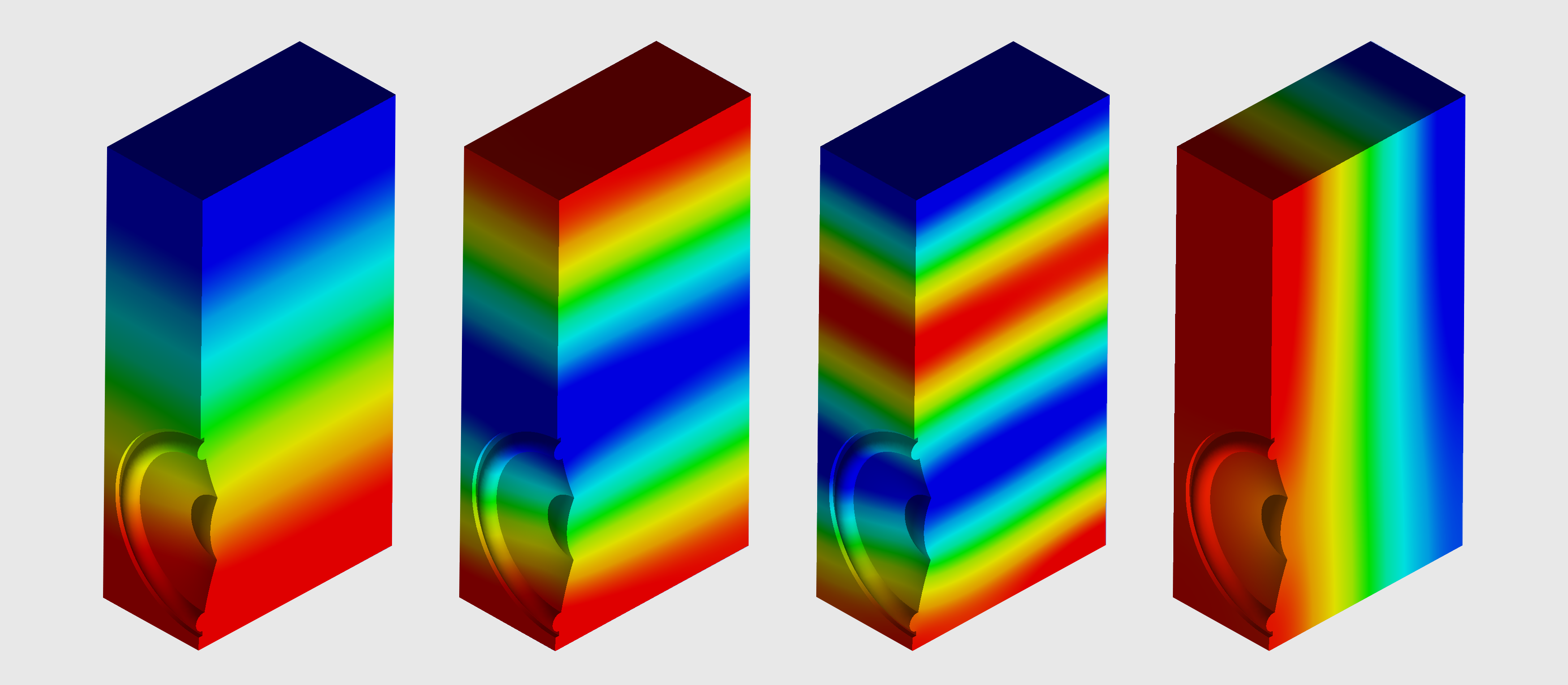
The sound pressure inside a cabinet, generated by the vibrations of the speaker unit, is often very high at certain frequencies. This phenomenon is due to resonance. It tends to cause unwanted sound to be radiated, which adversely affects listening quality.

Resonators and Sound-Absorbing Materials
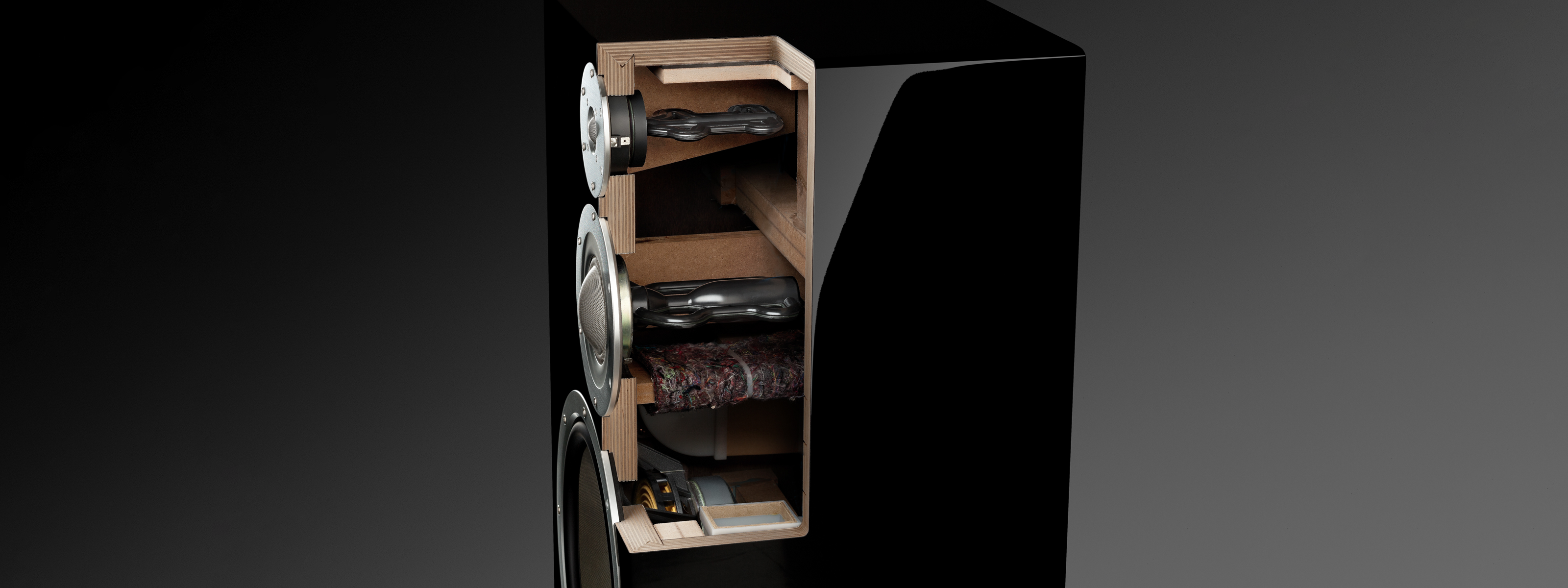
To minimize unwanted sound radiation, unwanted resonances in the speaker cabinet must be suppressed. Generally, sound-absorbing materials and resonators are placed inside speaker cabinet to prevent this problem.
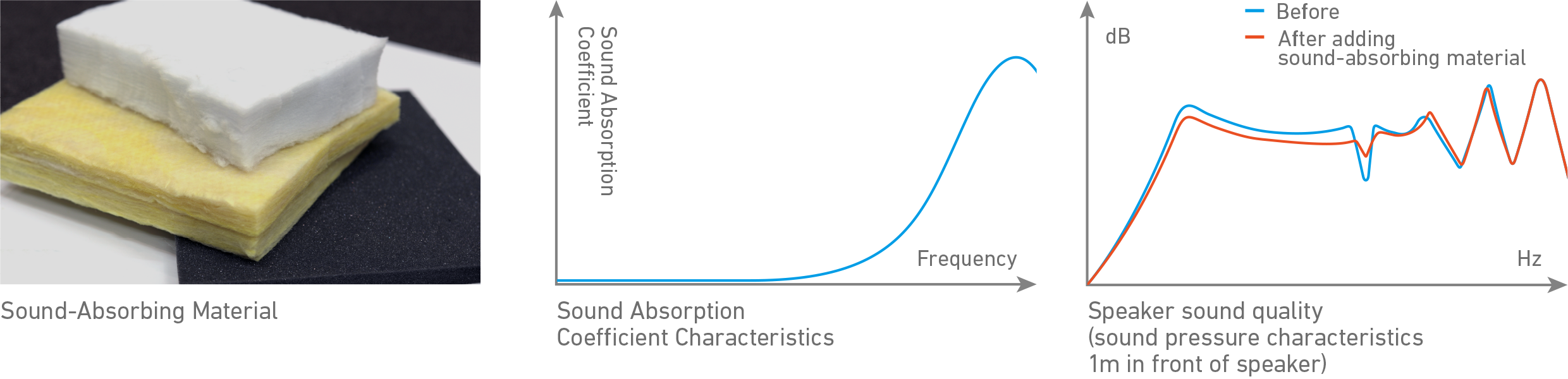
Typical sound-absorbing materials include glass wool, urethane sponge, and felt. These materials absorb sound mainly at higher pitches (higher frequencies) and can be effective in reducing resonance without much fine-tuning. However, they also have a significant effect on resonance frequencies other than those that need to be addressed, and side effects such as a reduction in speaker volume and unintended changes in sound quality might occur.
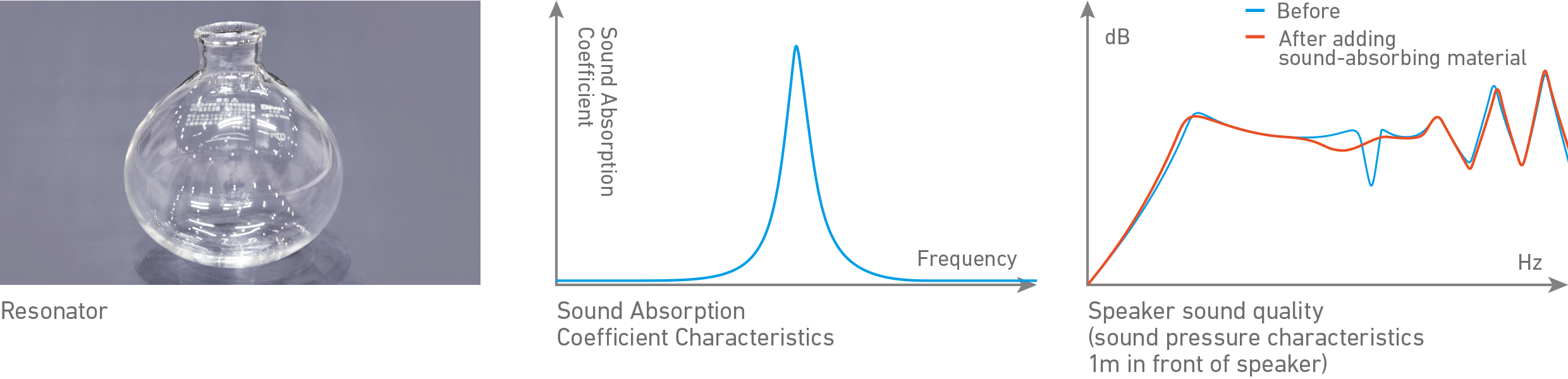
A typical example of a resonator is the Helmholtz resonator, which is shaped like a flask or wine bottle with a neck connected to a cavity. Resonators resonate at a specific pitch (frequency) and absorb sound at that frequency. This allows specific frequencies to be targeted. For example, by designing and adjusting a resonator to absorb sound at the resonance frequency of a cabinet, we can reduce the effect on frequencies outside the targeted frequency range. However, one resonator is required for each resonance frequency that needs to be addressed. Therefore, if there are multiple unwanted resonances, multiple resonators are usually needed.
Sound-Absorbing Materials: Glass Wool, Urethane Sponge, Felt
Resonator: Helmholtz Resonator
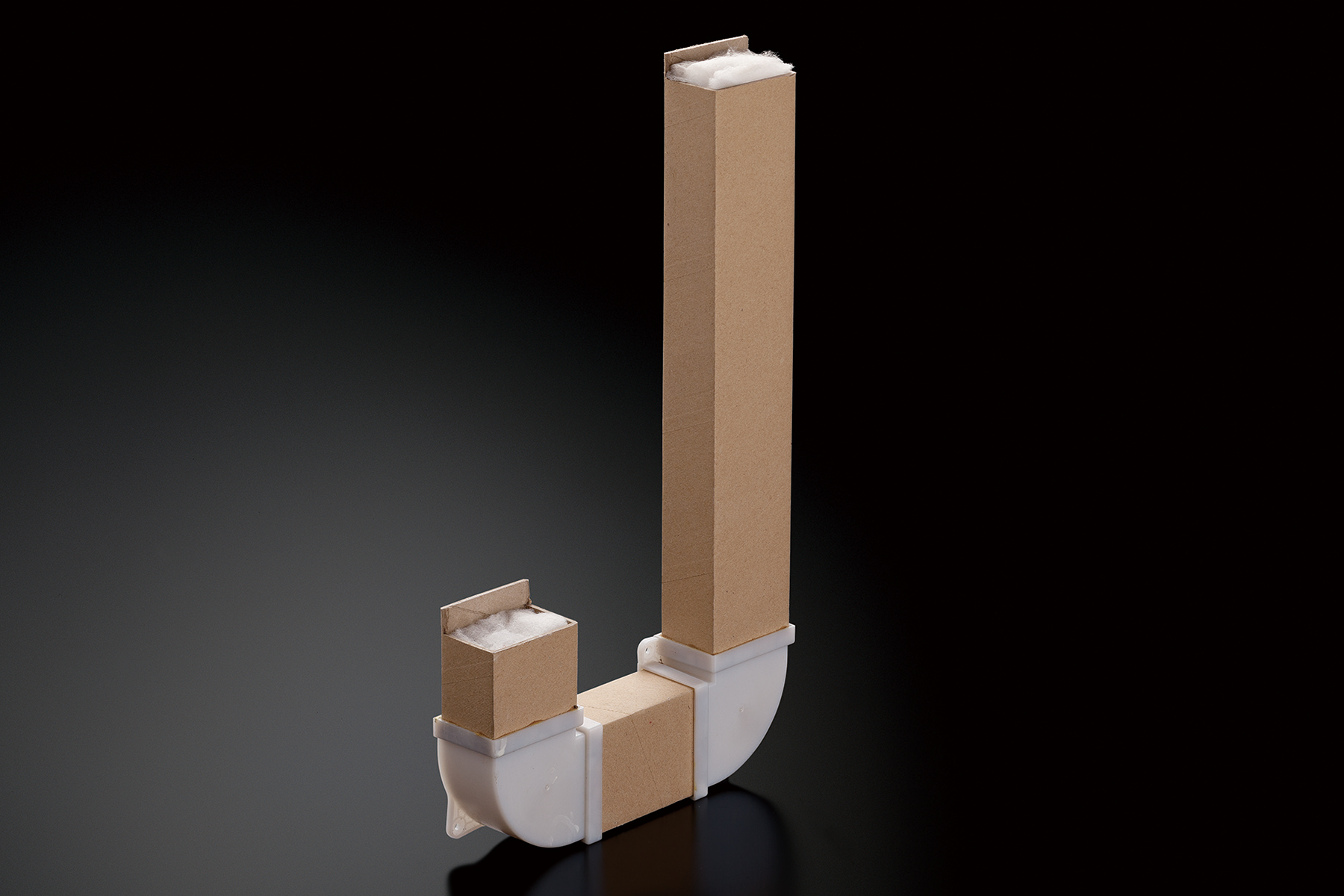
Yamaha “Acoustic Absorber”
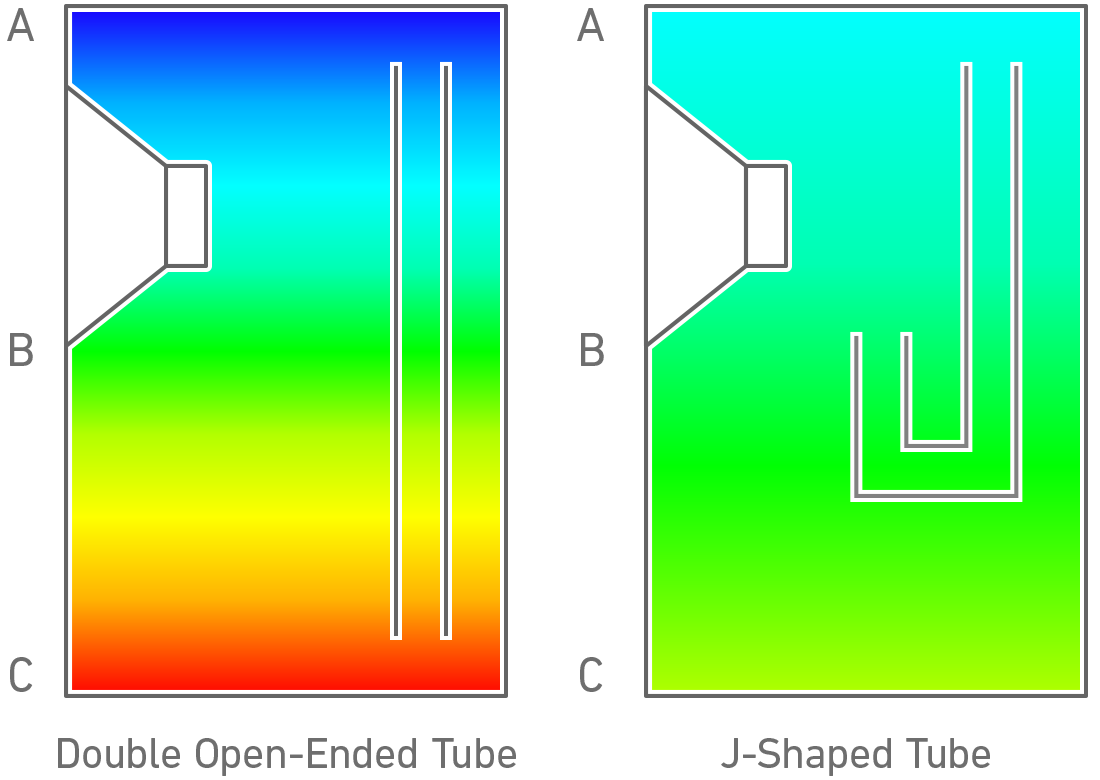
To solve these problems and achieve speaker systems with even higher sound quality, Yamaha has developed the “Acoustic Absorber”. A single acoustic absorber can address multiple resonance frequencies, while also reducing the effect on frequency bands that do not require treatment. One type of acoustic resonance tube, called a double open-ended tube, is open at both ends. The Acoustic Absorber is a double open- ended tube that is bent into the shape of a “J”.
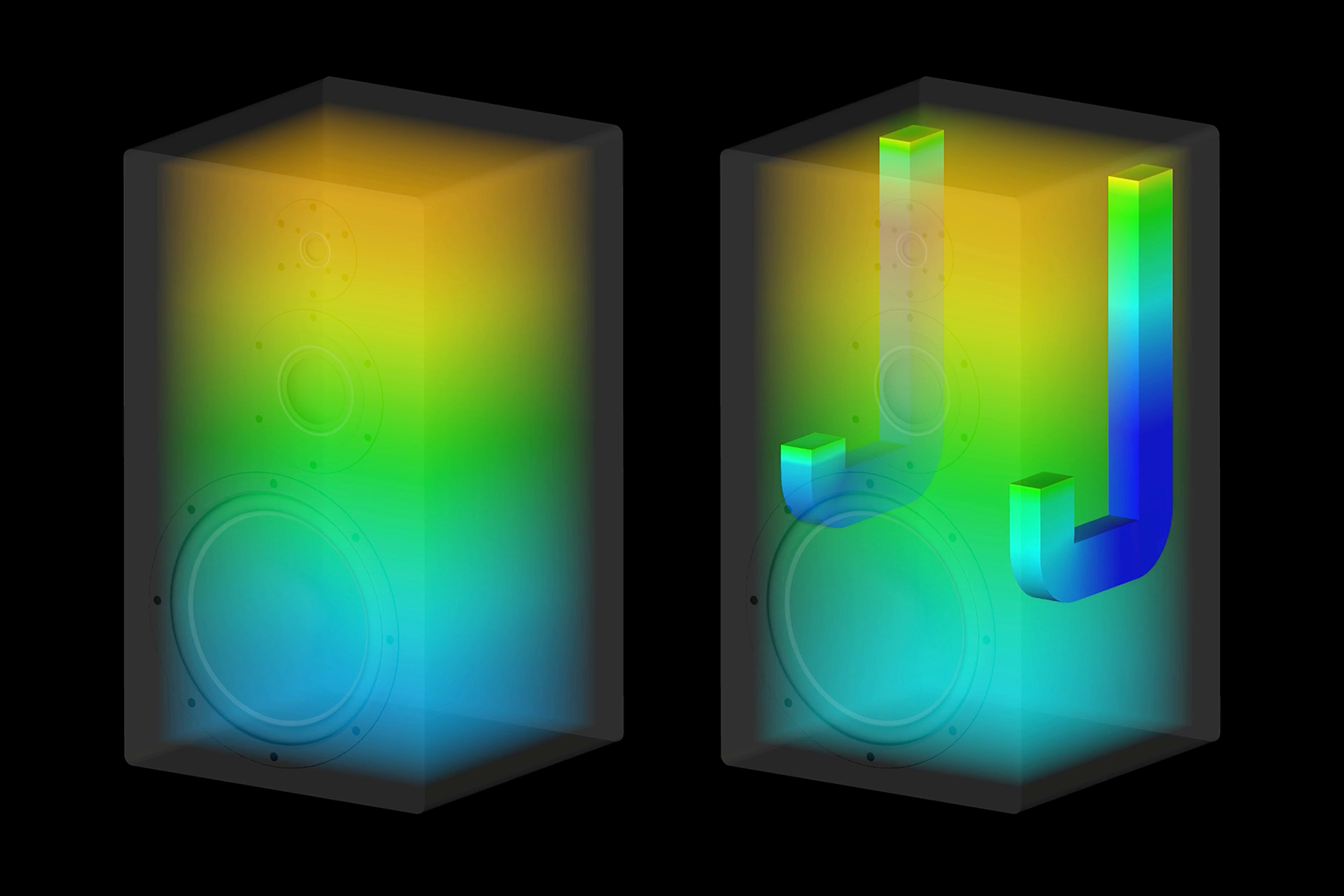
Double open- ended tubes resonate at multiple pitches (frequencies) and absorb sound at those frequencies. They resonate at a frequency equal to n times the lowest resonance frequency. (n is a natural number.) On the other hand, when resonance occurs in the longitudinal direction of a speaker cabinet, it can be perceived as a one-dimensional sound field that is closed at both ends. This also resonates at a frequency equal to n times the lowest resonance frequency, similar to a double open-ended acoustic resonance tube. (n is a natural number.) In other words, if we design both the double open-ended tube and the sound field inside a speaker cabinet so that the first-order (n=1, lowest resonance frequency) resonance frequencies match, the nth-order resonance frequency will automatically match as well.

However, depending on the placement of both ends of the double open-ended tube, cabinet resonance might not be suppressed even with the adjustments described above. The “J-shape” of the Acoustic Absorber is the result of careful design in order to place both ends for more effective suppression of resonance.
Resonance Frequency and Pressure Distribution during Resonance
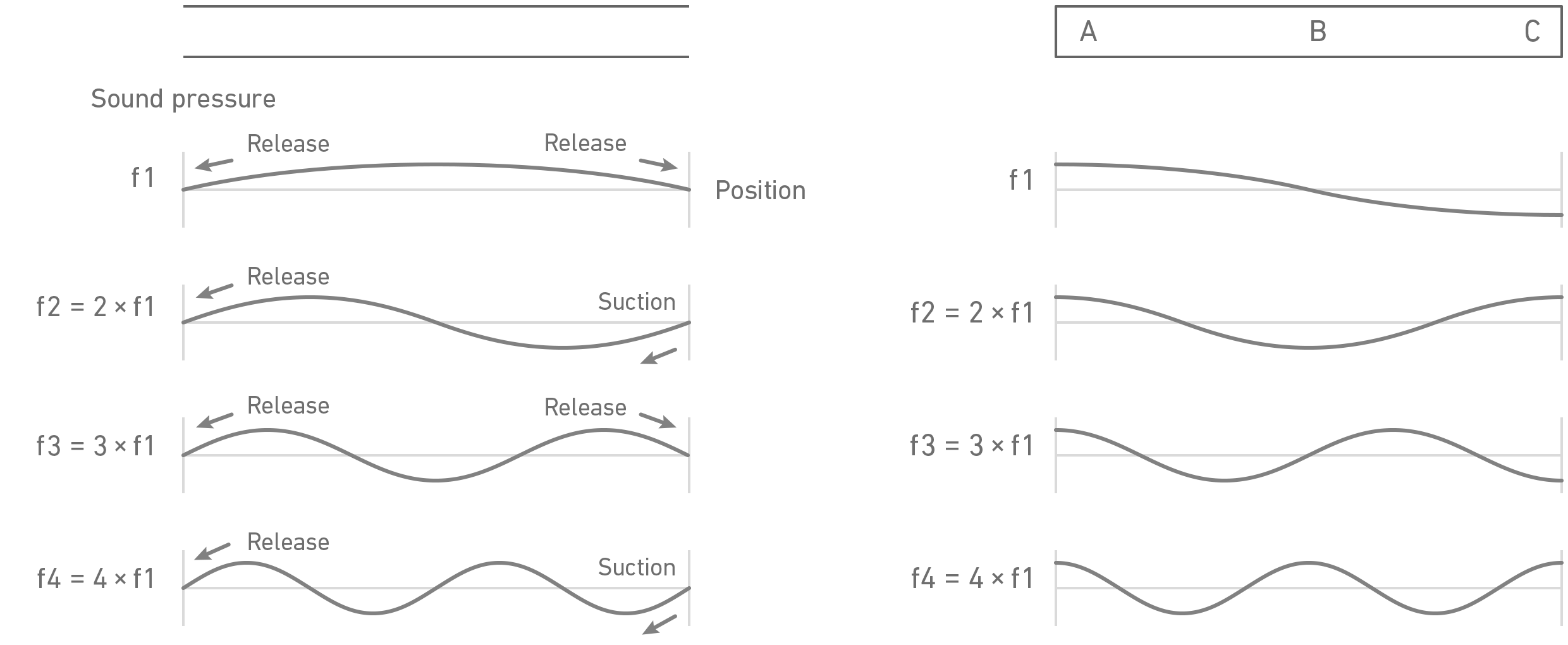
Position at Both Ends of Double Open-Ended Tube, Resonance Order, and Effect on Suppressing Resonance in Cabinet