
Researcher:Kazunobu Kondo
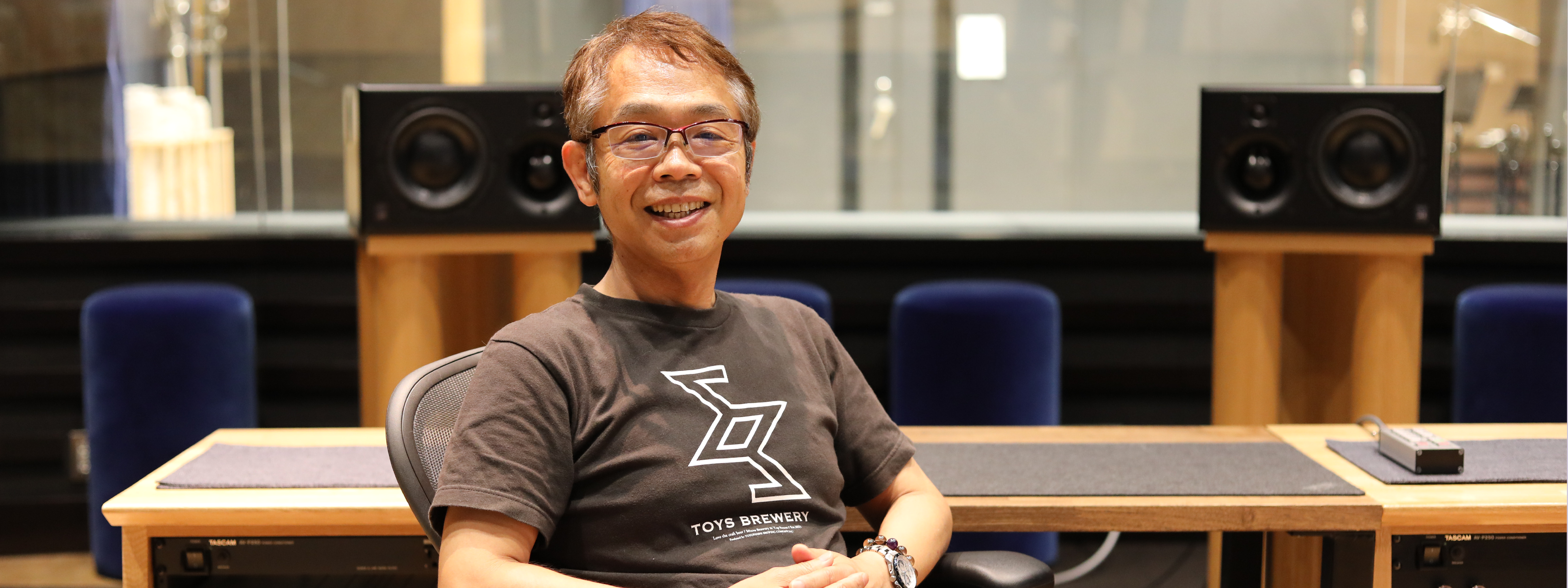
| Division | Musical Instruments & Audio Group, Advanced Technology Research Department, Research and Development Division |
|---|---|
| Details of Work | Signal processing, machine learning |
| Field of Study | High-definition image encoding at the master's level and sound source separation at the doctoral level |
| Year Joined Yamaha | 1993 |
Research and Management
I am involved in sound and music, and am in charge of research and management using signal processing and machine learning.
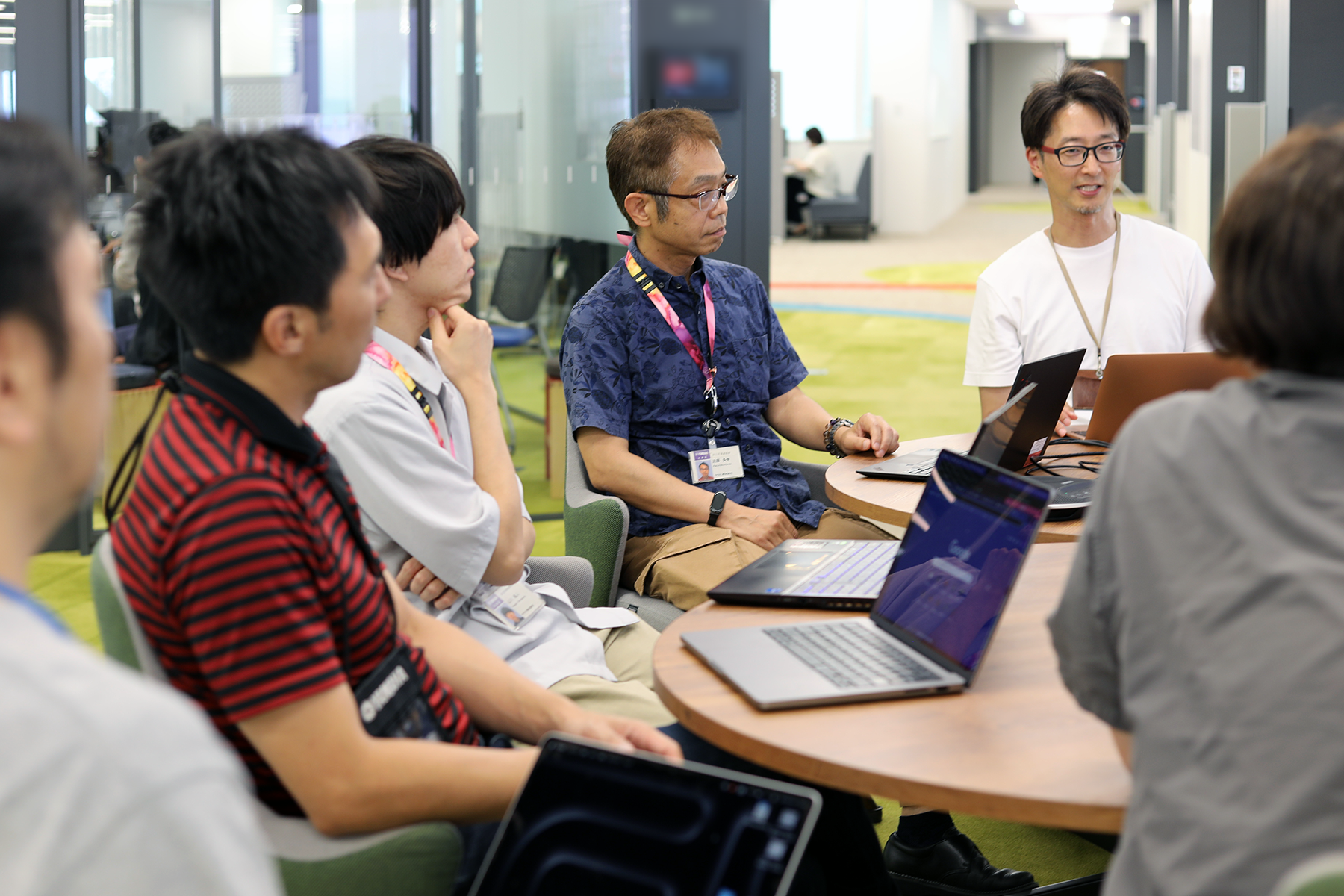
Although I am an engineer, I also sever in a managerial position. My main tasks are to propose the direction of research and carry out technical development, while also considering theory-driven engineering and the feasibility of edge devices. This is called applied research. I am also involved in the training of engineers, and am currently the head of the organizing team for Yamaha’s digital signal processing technology course. (I used to be in charge of actual operations, but have currently left that position.)
I have also been appointed to the role of Principal Engineer, and my main area of research is signal processing. So far, I have conducted research on sound source separation, noise suppression, and reverberation suppression in conjunction with joint research with universities, and have learned so much in the process. In addition, signal processing nowadays uses a lot of statistics and probabilities, so everyday I am working to keep up with the world around me while teaching myself about machine learning. I am working with an acute sense of the weight of my responsibilities as Principal Engineer.
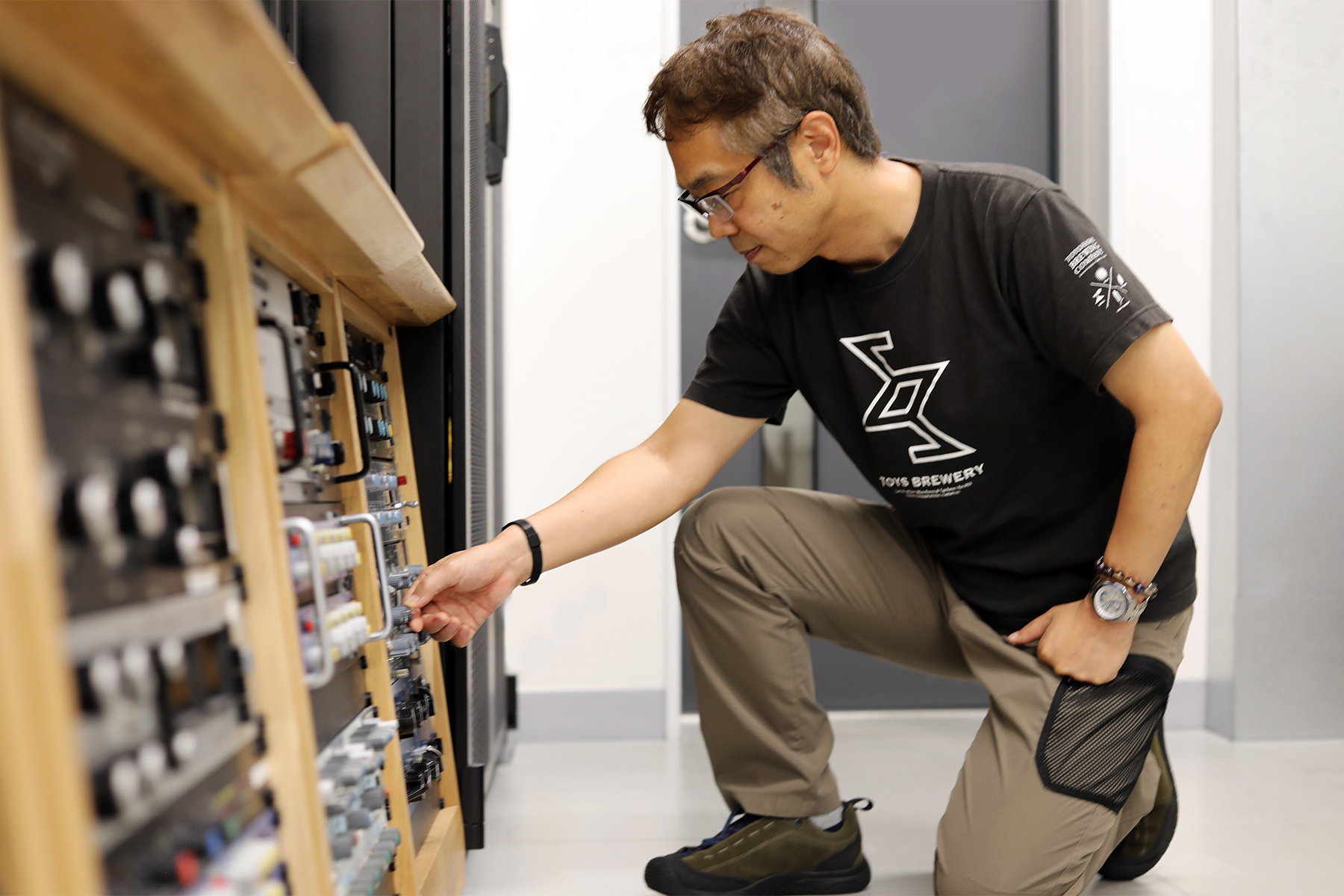
When considering signal processing and information processing methods, theory-driven engineering examines how to use a theory properly and how it will be used in the field. For example, it is important to talk with the front-line sound engineer, listen to the sound, and work with them to determine how it can be used in the field.
Currently, I am most interested in how state-of-the-art academic achievements, and sound source separation and suppression in particular, can be used for investigating the automatic sound control of digital mixing consoles and teleconference systems. I follow progress in these areas at international conferences and in literature. An acoustic system consists of a sound emitted from the source and a microphone that captures that sound. This is the same principle even for live music production and teleconference systems, which are examples of situations in which mixers are used. While seeking a deeper understanding and mathematical principles for these acoustic systems, the technical field will be concerned with how to translate the acquired knowledge into commercial products.
I Am an Engineer
At the beginning, I wrote that I am a manager. However, if you were to ask me if I am a researcher or an engineer, I will say that I am an engineer.
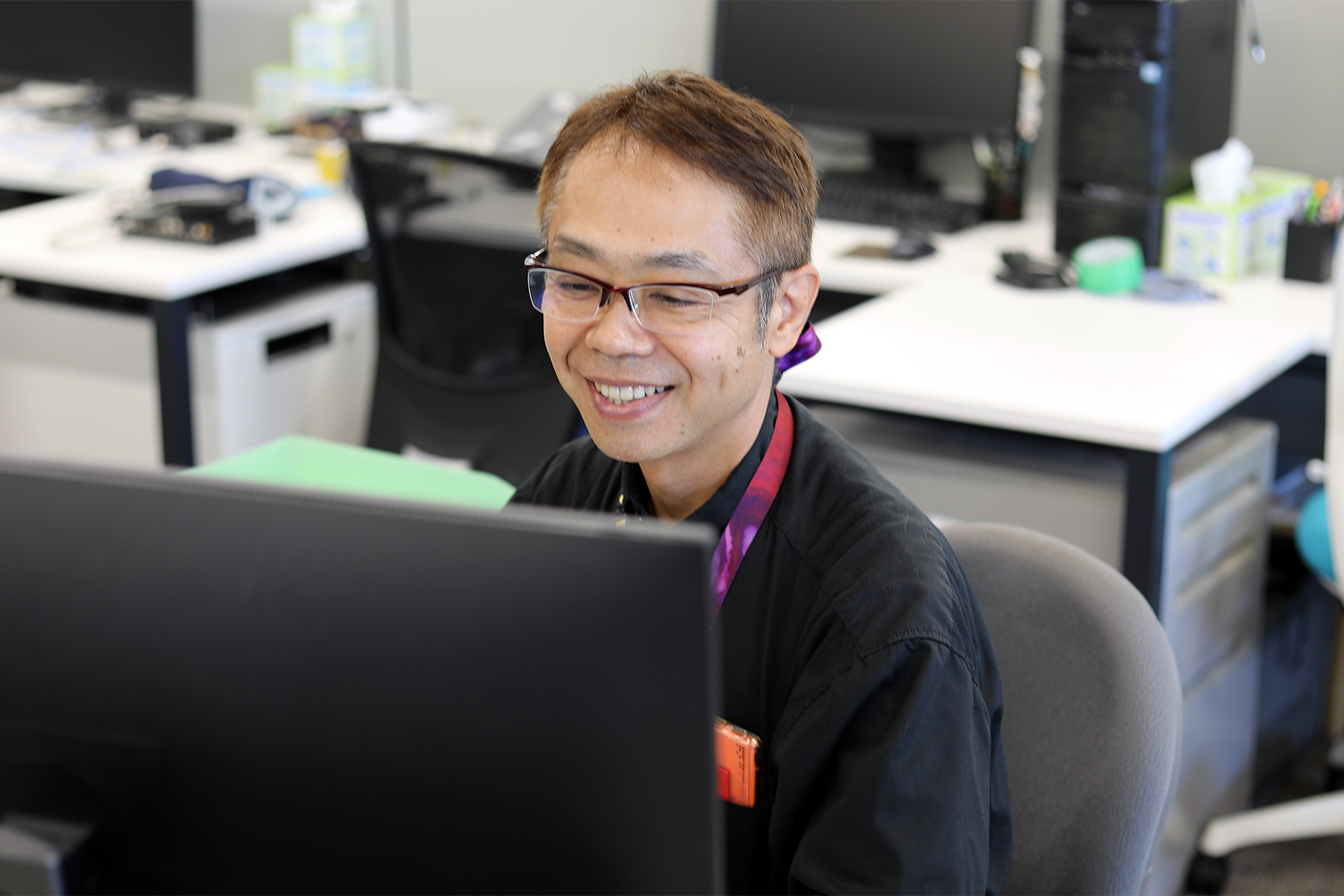
Taking my most recent work as an example, as mentioned above, we are considering the feasibility of edge devices in signal processing. Considering the use of objects in the field, it is easier to achieve a quick reaction if you can perform processing on the spot. Cloud computing is also popular these days. Considering the response from the machine to the person when operating a product, I think it is better to use edge devices rather than to wait. However, for a while, the term Fog Computing also came up, so I’m always thinking about how we can work with the cloud rather than how everything should be handled at the edge.
Although conceptual, applied research can also be said to be the translation of theory into practice. Here I have used the expression “translation,” which is used in the field of language. Speaking of the linguistic domain, to translate the nuances of a language, it is necessary to have a deep understanding of the language being translated. The same is true in technical fields, and by knowing the theory in depth, we can translate it appropriately for use in the field. This is the best part of applied research.
Based on the above, I am conducting research while proposing what kind of research will be more useful to Yamaha’s products and make customers happy. In this way, proposals are always welcome in the workplace.
Training Engineers
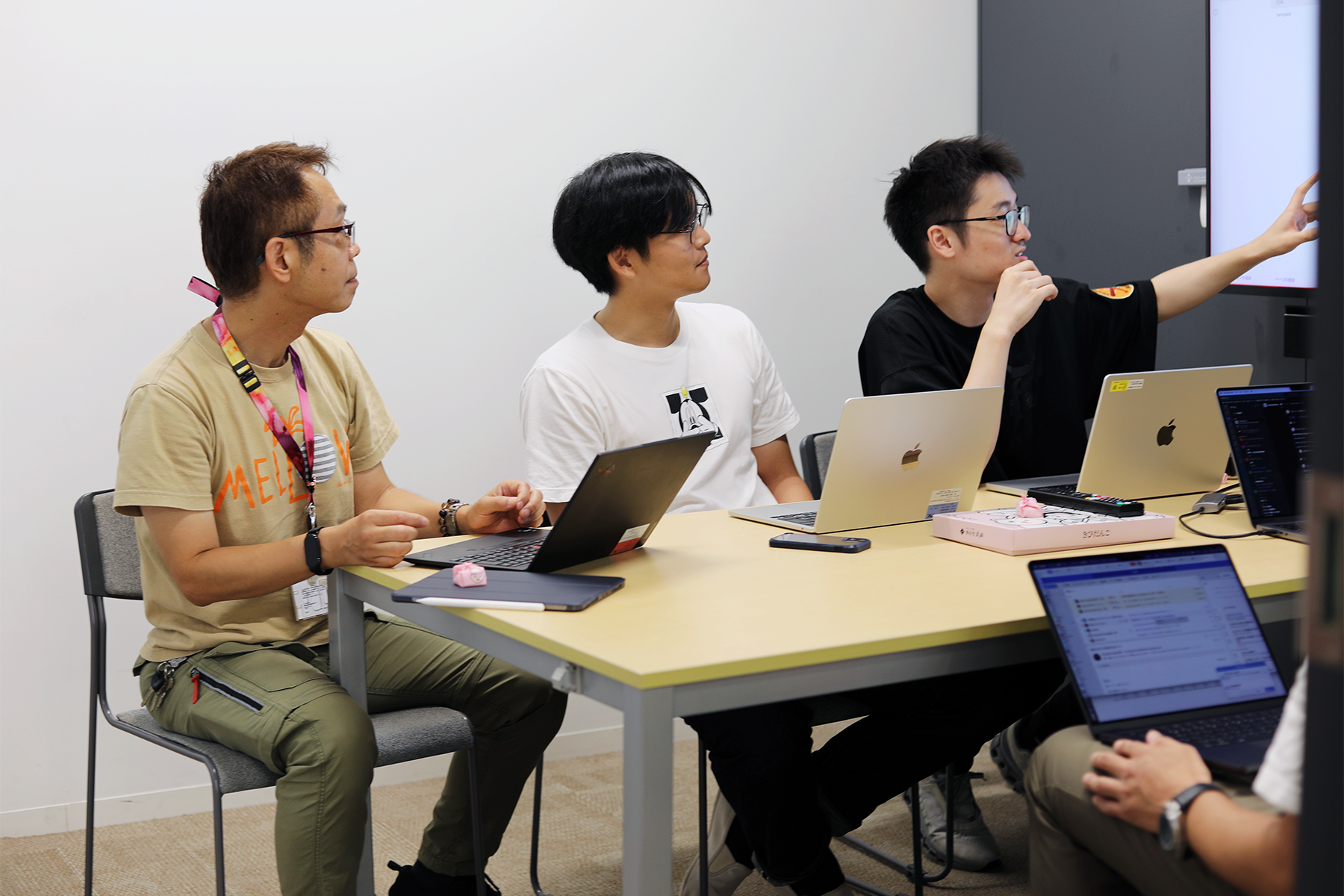
In the fields of signal processing and machine learning, mathematical handling is important. However, in order to utilize this for industrial use, it is necessary to balance not leaning too much on the principle and using it incorrectly in a simple black box. For this reason, in the digital signal processing technology course, the mathematics of signal processing is used in addition to the curriculum to consider the purpose of its use. In addition, because the subject of application will be sound and music, the lecture content is designed to teach not only basic signal processing, but also how humans hear sound, how it should be handled in terms of spatial acoustics, and how filter optimization works in adaptive signal processing. Of course, the academic aspects are not limited to internal discussions, so we are also consulting with university professors and requesting lectures.
I believe that an organization is made up of people, so training engineers strengthens Yamaha’s organization and leads to the creation of high value-added products. In an era where new technologies are emerging one after another, I firmly believe that it is essential for not only young professionals but also experienced professionals to learn and master these technologies in order to create value for the future.

Relationship with the Academic Community
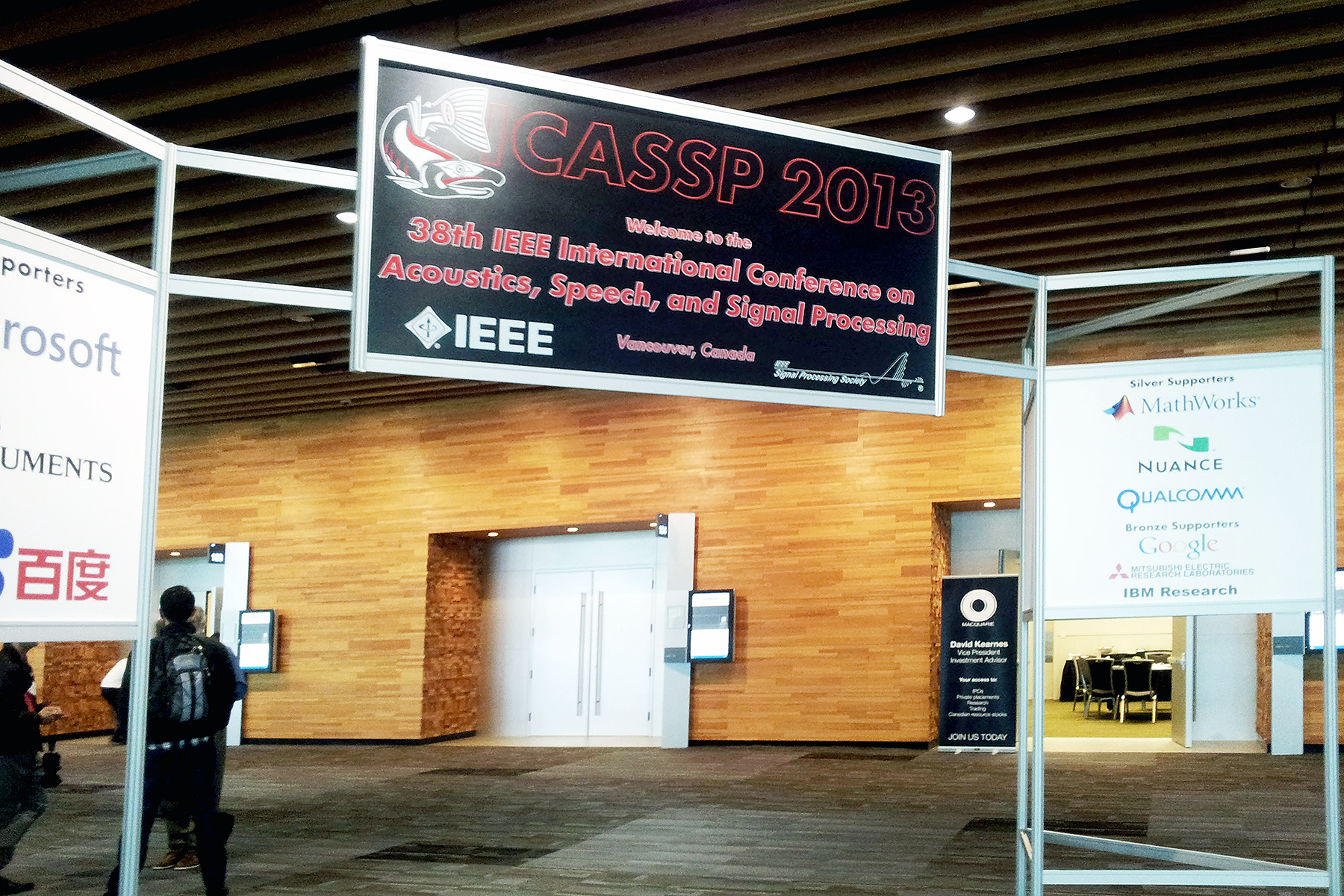
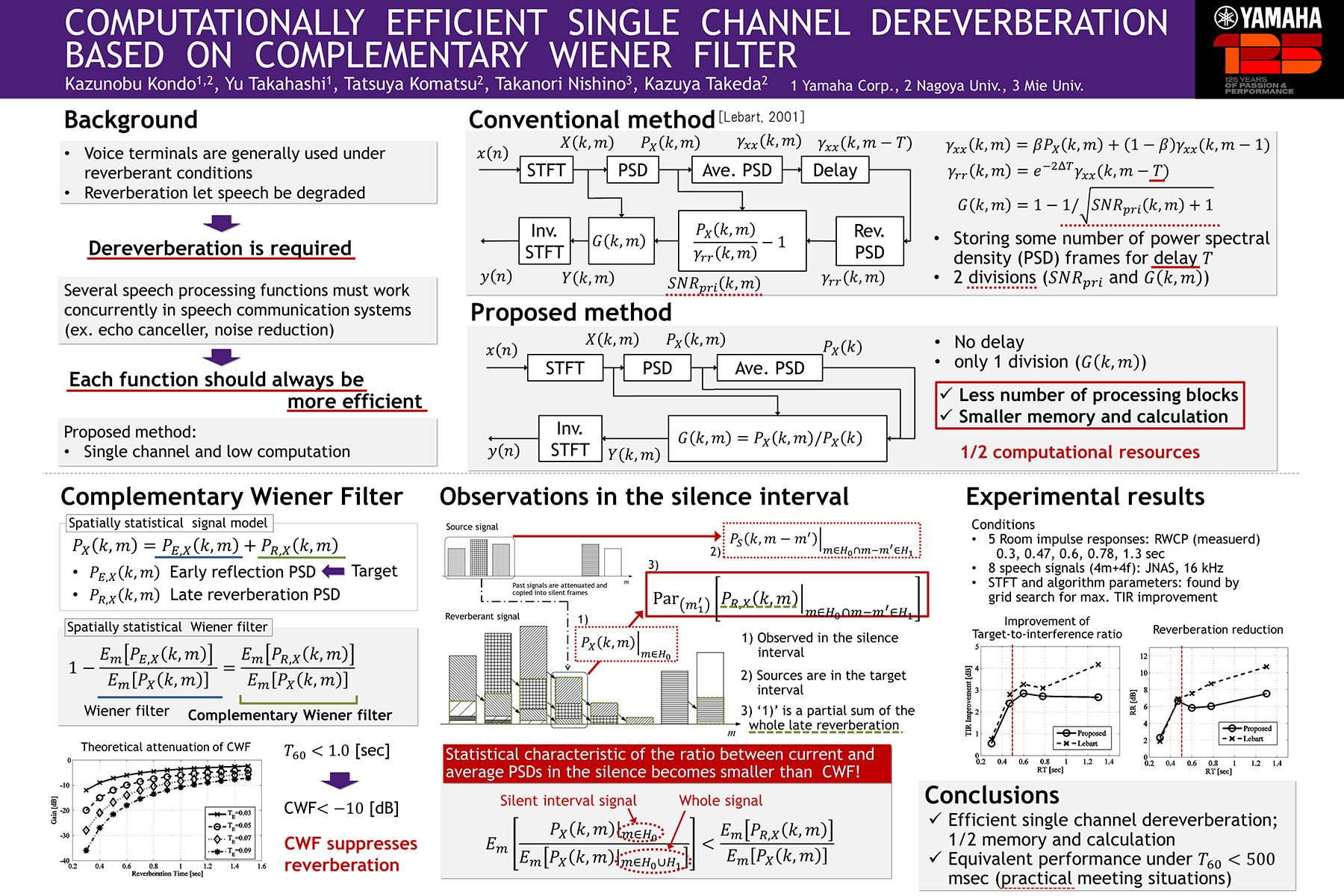
As a researcher, I present at academic conferences both in Japan and abroad, review papers for international conferences and journals, and have been asked to serve as an editorial board member for the Journal of Audio Engineering Society. In addition, my expertise has been recognized, and I participate in academic conferences as a sponsor representative at international conferences, promoting exchanges with various researchers and assisting in the recruitment of talent. During my career, I entered a doctoral program for working professionals and was awarded a Doctor of Information Science degree from Nagoya University. In connection with this, in 2013, I presented a poster on sound source separation at ICASSP (IEEE International Conference on Acoustics, Speech and Signal Processing).
In corporate research, the content can be divided into two categories: fundamental principles and practical know-how. The fundamental aspects are related to answering open questions in science, and in many cases can be presented at academic conferences. On the other hand, aspects that are closer to know-how are important functions for realizing products and are difficult to disclose. Therefore, if you consider whether your research is more theoretical or practical, it will be easier to determine whether it will lead to academic publication. If you want to tackle this from a theoretical standpoint, mathematical skills are essential. For example, even if you are proficient in deep learning, knowledge of linear algebra is very important. If you want to master signal processing and machine learning, you’ll find that mathematics lies at the heart of the related principles, which will bring you closer to academic publication. I aim to conduct research based on fundamental principles and to lead to high-level academic presentations.
Music Production, Technology, and Theory
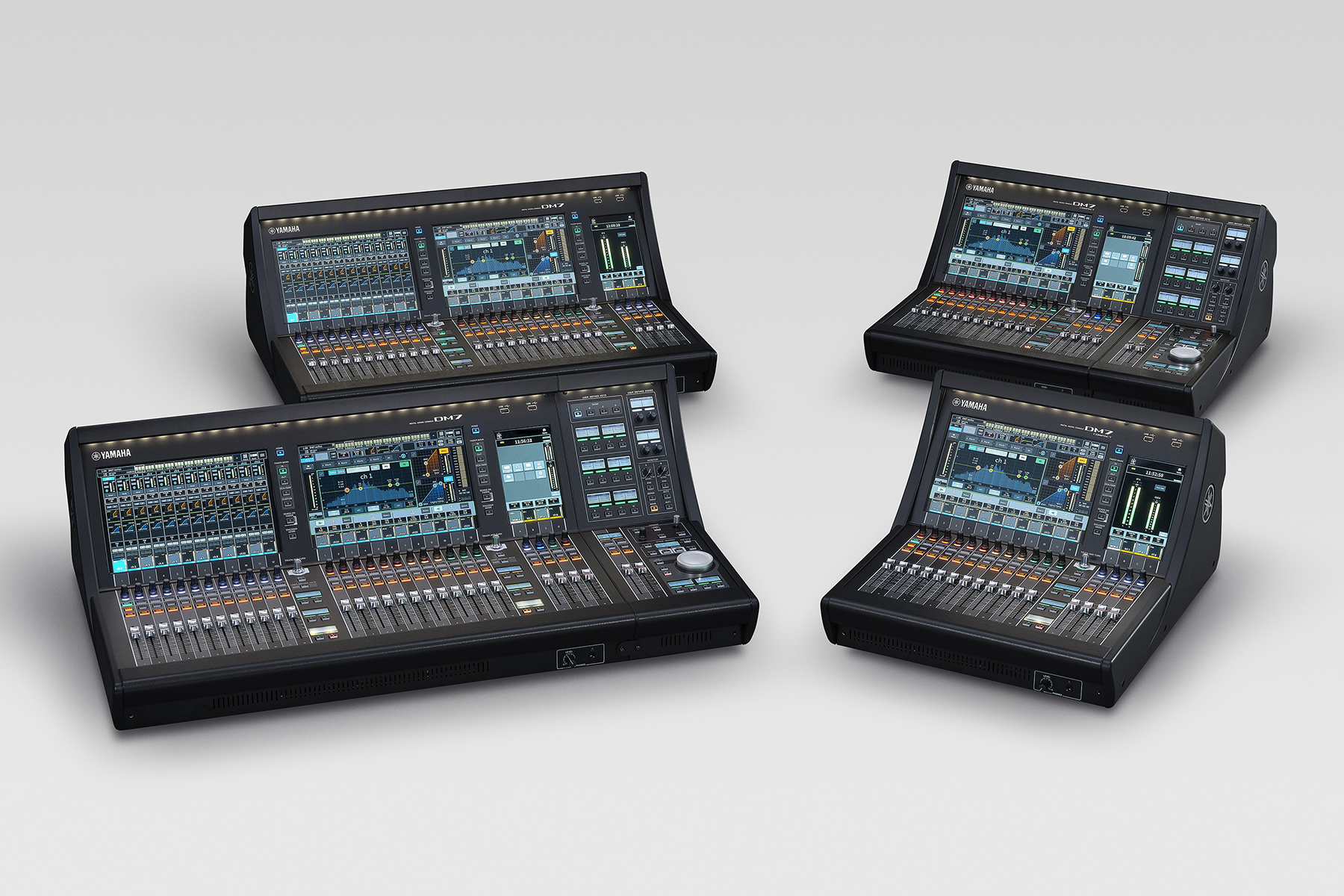
When you think of music production, you probably think of composing, but mixing is also part of music production. Therefore, this includes creative tasks. We are conducting research to provide technical support while respecting the creativity of each individual involved in mixing. In 2023, the Assist function was added to the DM7 series of digital mixers, enabling machines to assist humans in mixing workflows by utilizing signal processing and machine learning. Fader Assist and HA Assist can help you adjust the sound volume. Simply evaluating the volume and making adjustments to achieve the target value might sound easy, but here we use mathematical optimization theory to achieve the aforementioned “adjustments to achieve the target value.”
By applying optimization theory, a mathematical method (science), to Fader Assist technology, it is possible to create devices that assist in music production. Based on this, signal processing and machine learning research at Yamaha is based theory and it can be described as translating theoretical principles into music-related technologies. In other words, it is necessary to thoroughly understand theories that are widely studied in non-musical fields and apply them to the field of music in a way that will delight customers. No matter how old I get, I continue to strive for improvement every day, and I approach my research with this attitude.
Hobbies and Practical Benefits
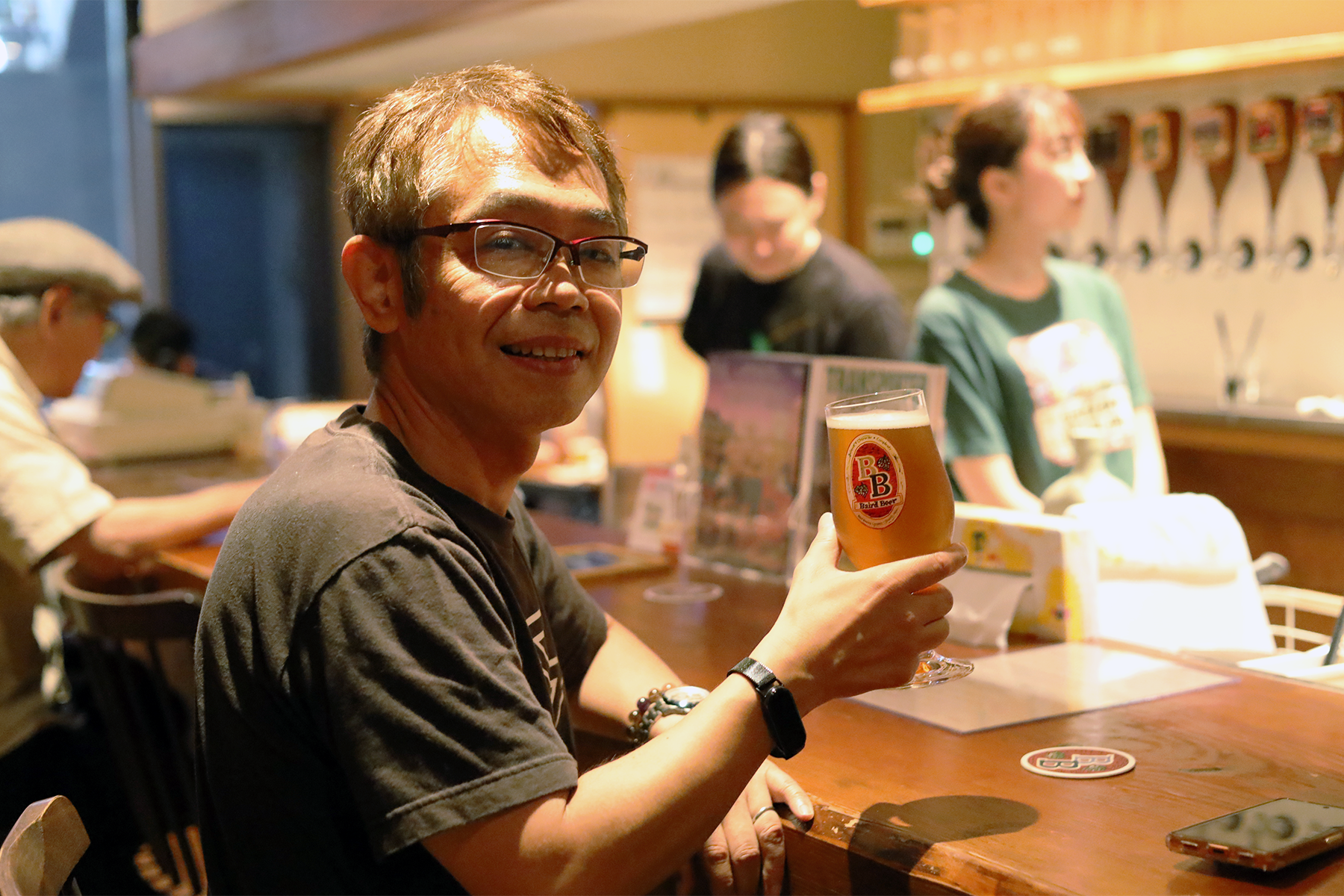
My hobbies include running 10km marathons, playing acoustic guitar, and enjoying craft beer. According to my guitar teacher, the left hand is the engineer and the right hand is the artist. No matter how skilled you are with your left hand, the right hand requires a wide range of variations and delicate movements to express yourself, so it’s not easy to play well. Furthermore, no matter how skilled you become at playing, there is another challenge in how to mix the recorded material. Daily effort and experience are necessary here as well. Experience cannot be gained overnight; it takes time, so I am working on it without rushing or getting impatient. One of the great things about Yamaha is that you can apply your hobbies, such as playing music or mixing, to your work in some way.
These days, craft beers from around the world have become readily available. That said, craft beer is often referred to as “local beer,” and I feel that its enjoyment lies in its similarity to the concept of local production for local consumption. Hamamatsu has a beer pub called Tir na n-Og that serves Baird Beer, as well as restaurants where you can enjoy local beers such as Octagon and WCB. In addition, there is a microbrewery called Toys Brewery in Toyohashi, which is adjacent to the Shinkansen station, where beer is brewed in a retro-style building called the Suijo Building. Additionally, there are opportunities to enjoy craft beer even while on overseas business trips. For example, Anaheim, where the NAMM Show is held, has a Ballast Point restaurant where you can enjoy American IPA. (I first learned about Ballast Point at a craft beer specialty store called Shinnosuke O in Toyohashi.) I think overseas business trips and trying local craft beers are valuable experiences that combine practical benefits with enjoyment.

As of 2024
Related technologies : Sound source separation, noise suppression, and reverberation suppression technologies