Researcher:Ayako Inaoka

| Division | Social Innovation Group, Advanced Technology Research Department, Research & Development Division |
|---|---|
| Details of Work | Visualization of diverse KANSEI and values using KANSEI measurement technologies; social issue solving and co-creation through KANSEI research |
| Field of Study | B.A. in Psychology; M.A. in Fine Arts |
| Year Joined Yamaha | 2010 |
At Yamaha’s R&D Division, both “products” such as musical instruments and the “people” who engage with sound and music in various ways are subjects of research.
Within this framework, I conduct research on people’s KANSEI—a holistic concept encompassing feelings, preferences, and values—regarding sound and music.
My work focuses on clarifying how people perceive sound and music, as well as the diverse values behind those perceptions. In addition, I apply these research approaches to collaborate with external research institutions and companies, as well as to work with local communities to address social issues.
Research Themes
My research consists of two areas:
(1) KANSEI research, including the visualization of diverse values, and
(2) research that connects technology to solving social issues.
KANSEI Research, Including the Visualization of Diverse Values
One example of the first area is the modeling of performers’ psychological motivations, or emotional drivers.
Through my experience interacting with people who enjoy playing musical instruments, I have come to appreciate the diversity of their motivations. This led me to explore what kinds of values exist and how they are related, and to represent them in an objective way. This work has become a foundation for my research at Yamaha.
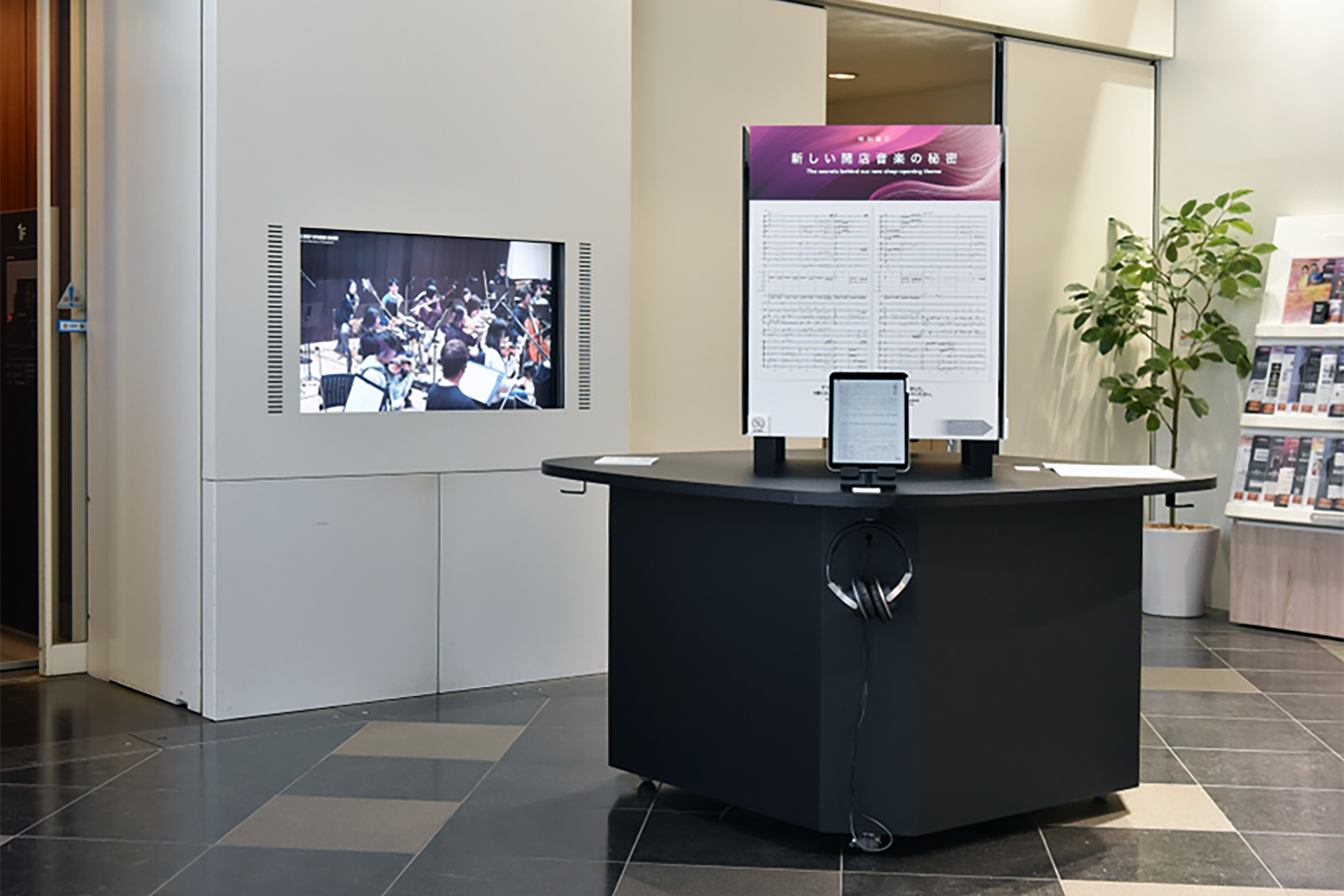
I also apply KANSEI technology to music creation. For example, I visualize the diverse sentiments of visitors and employees in our brand shops, and incorporate the extracted elements and their relationships into music that embodies the brand.
Working together with specialists in composition and acoustics, we transform research insights into experiential value and express them through music that welcomes customers at Yamaha Ginza Shop.
Research That Connects Technology to Solving Social Issues
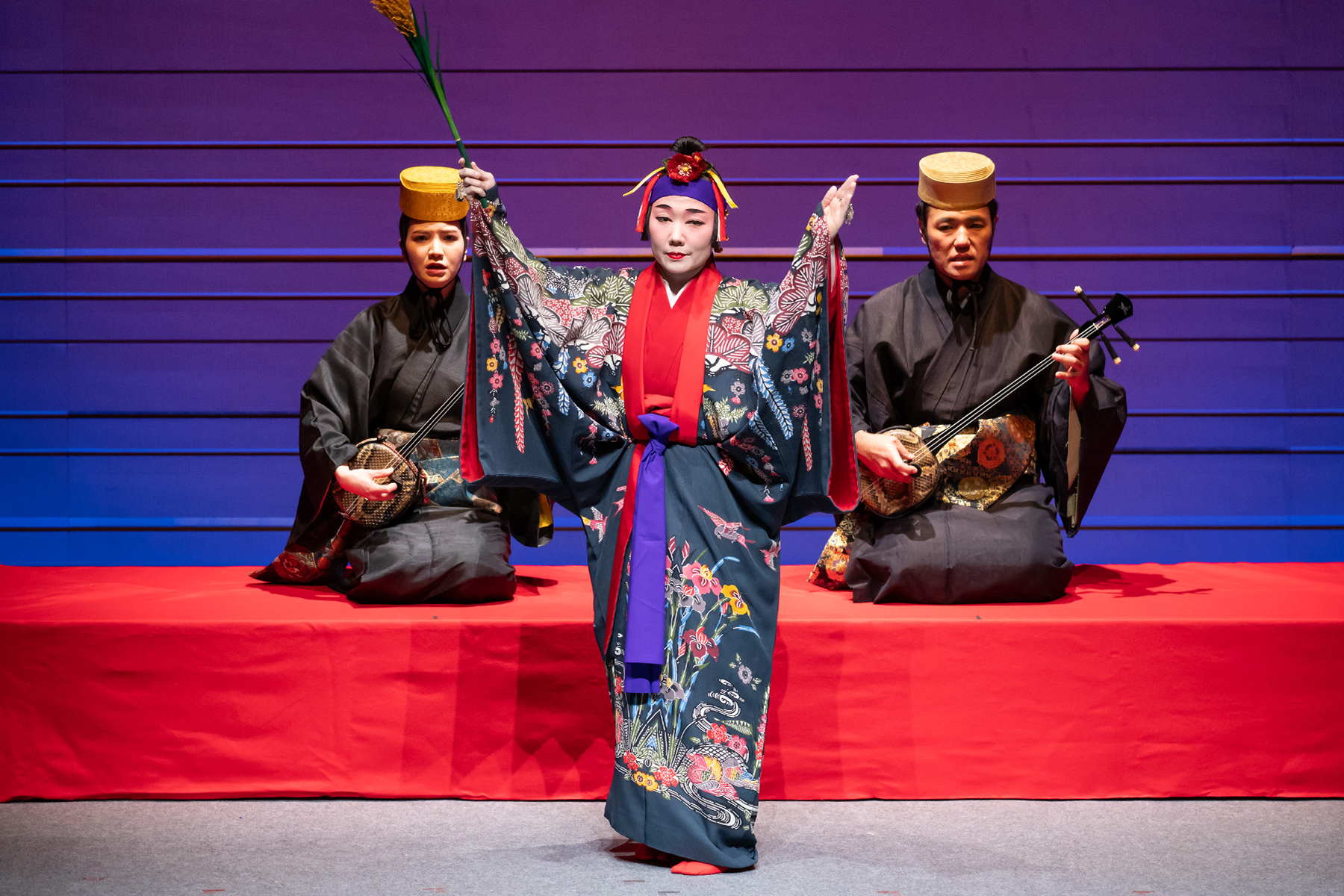
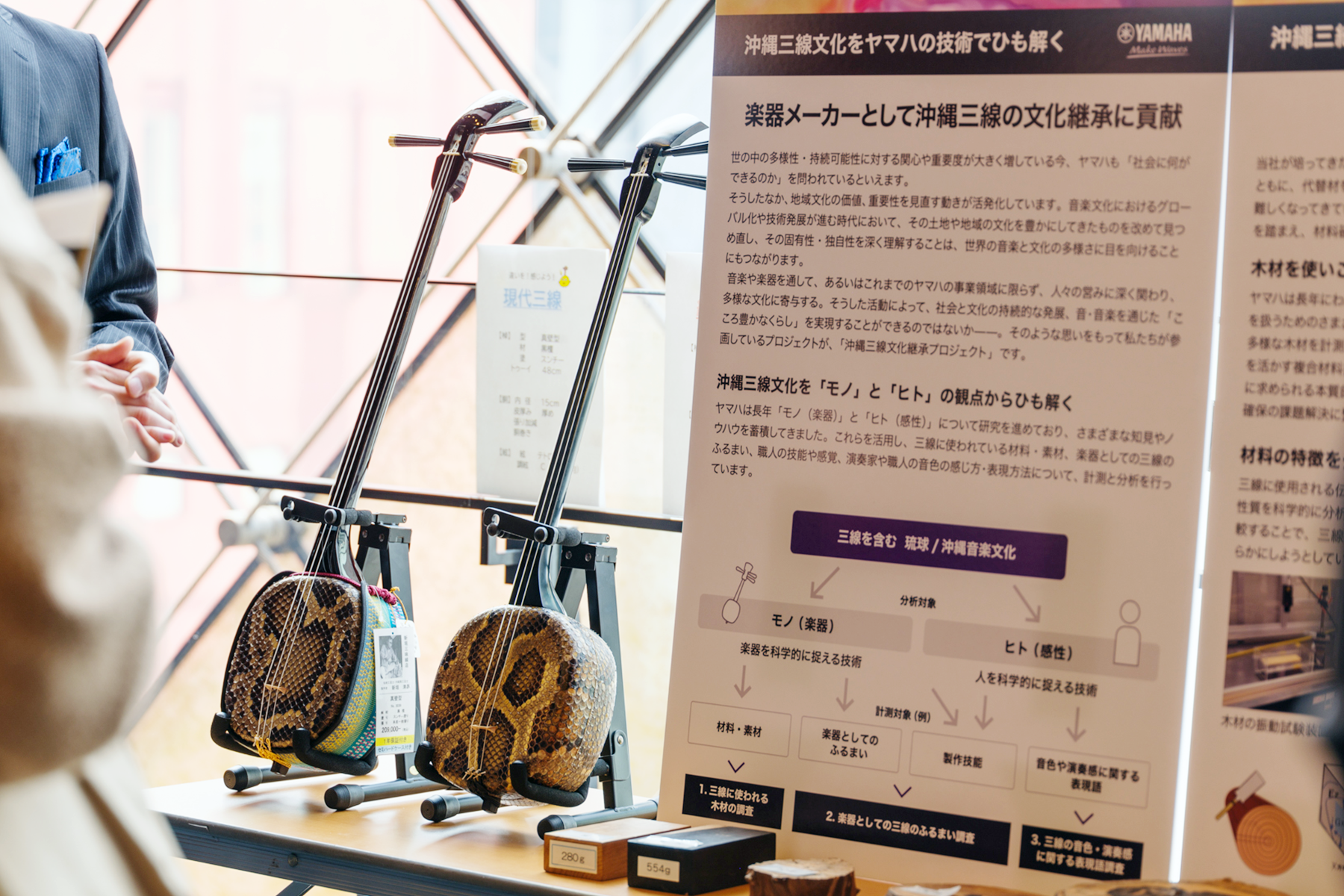
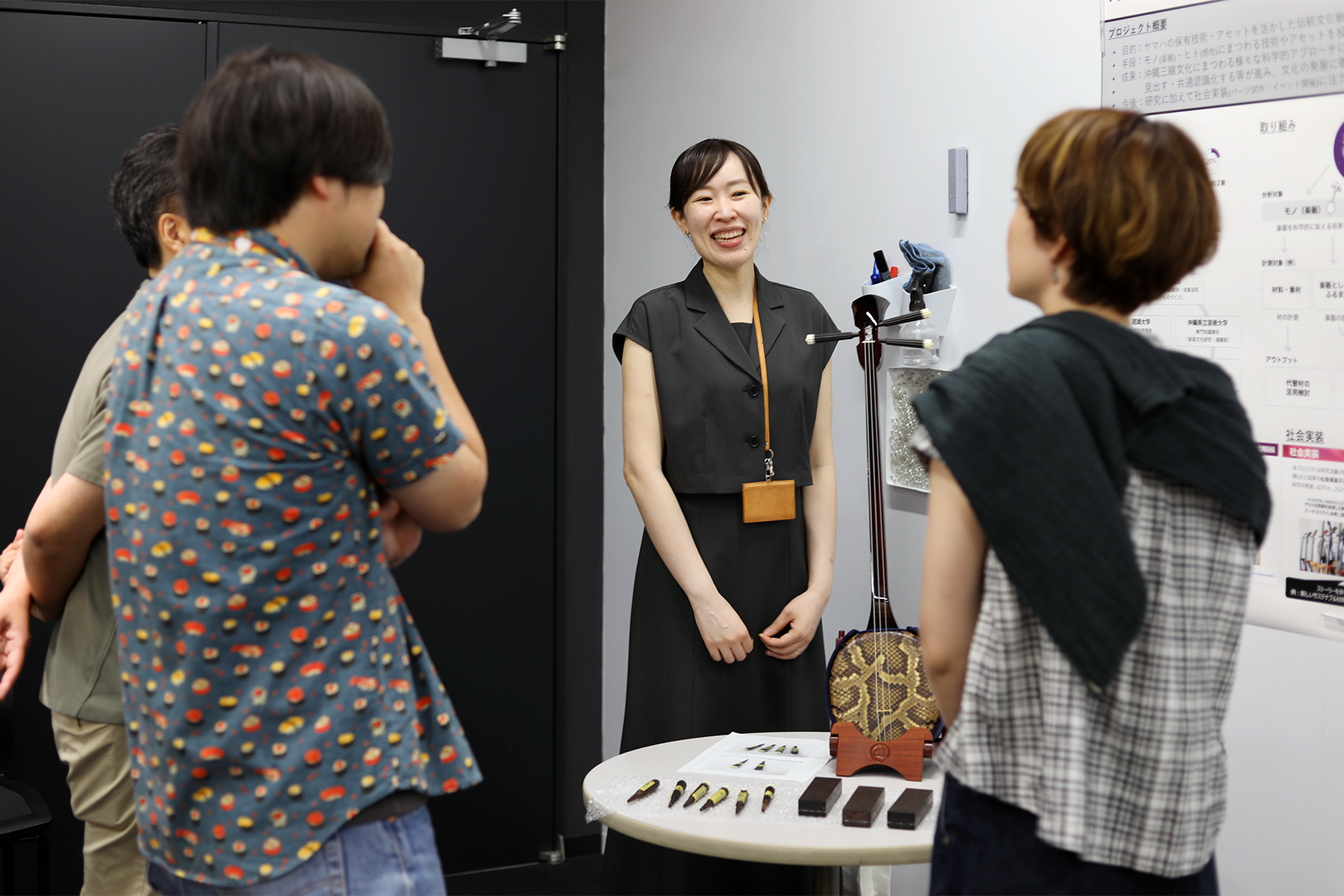
In the second area, I am involved in the Okinawan Sanshin Cultural Preservation Project, which aims to contribute to culture through technology.
We promote research that utilizes technologies and expertise in instrument analysis and KANSEI measurement. By integrating the tacit knowledge cultivated by craftsmen and performers over many years with scientific knowledge based on measurement and analysis, we explore what should be passed down to future generations and what makes Okinawa uniquely Okinawan.
Our goal is not only to quantify and visualize, but also to foster reflection and share these insights with society for future generations.
Co-creation in Research Activities
Co-creation with society is also a central aspect of my work.
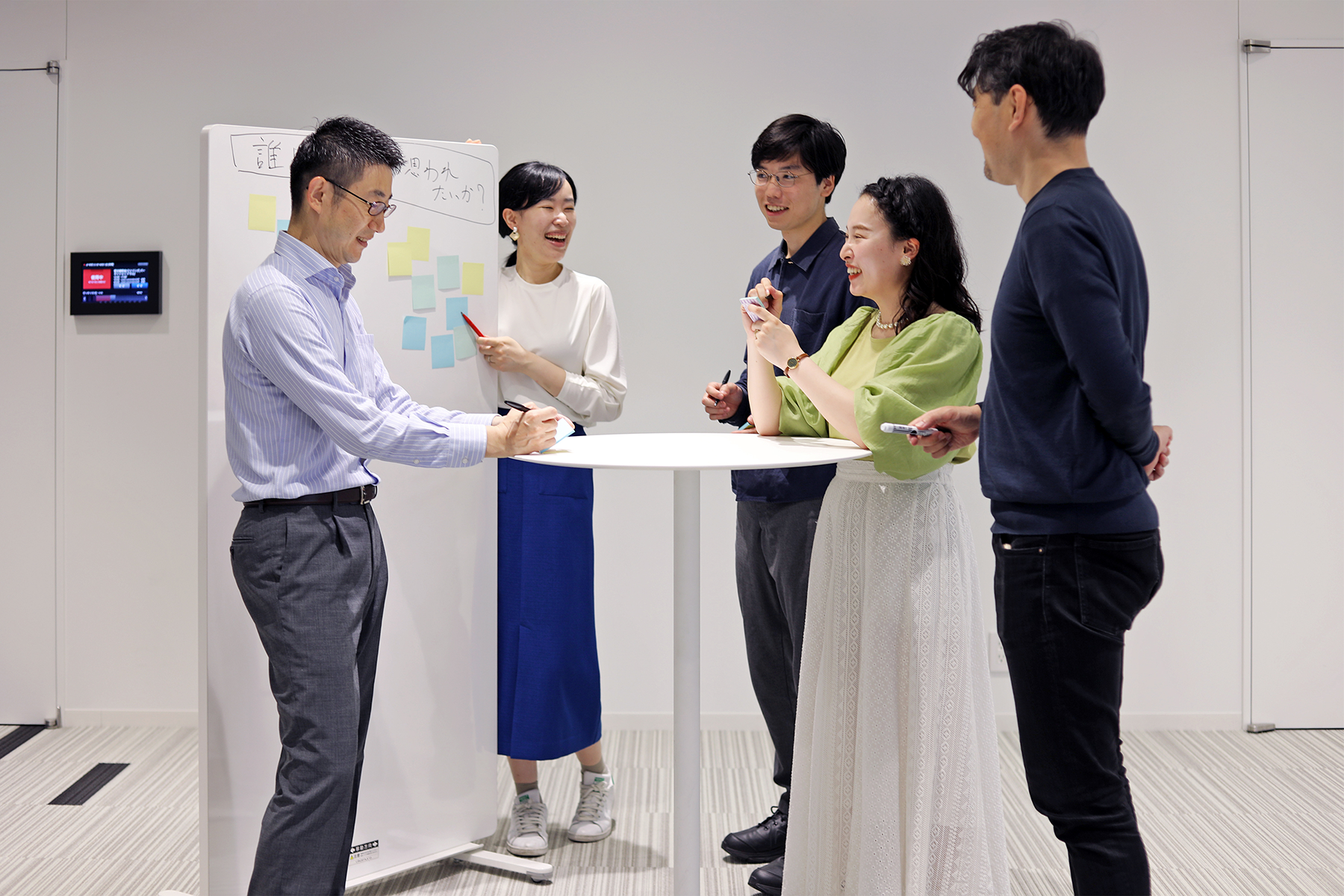
Co-creation can only be achieved with partners who are willing to collaborate. When starting a new research theme, we begin with ideas and hypotheses. However, in practice, we often realize the limitations of our own assumptions once we take action. Through discussions and collaboration with our partners, we are often reminded of perspectives and possibilities that we had not considered before.
Through this process, I continually ask what Yamaha can contribute and what can be created through collaboration. Even when facing challenges, I view these experiences as a driving force for growth and ongoing transformation, and continue to engage in research.
Career and Experience
Since joining Yamaha, I have worked in a variety of roles, including human resources, new business development, and marketing functions.
At first glance, these roles may seem unrelated. However, looking back, I feel that I have consistently taken on challenges related to “people” and “new initiatives” from multiple perspectives.
Outside of work, I have pursued not only my interests, but also my personal aspirations and ideals for who I wanted to become. For example, I obtained certifications as an industrial counselor and career consultant, and conducted research in interdisciplinary design at a graduate school.
While my career path is quite unique even within Yamaha, the perspectives and ways of thinking I have gained from these experiences are invaluable in my work today.
I also feel that pursuits I began out of personal interest have later connected in unexpected ways and evolved into my research themes.
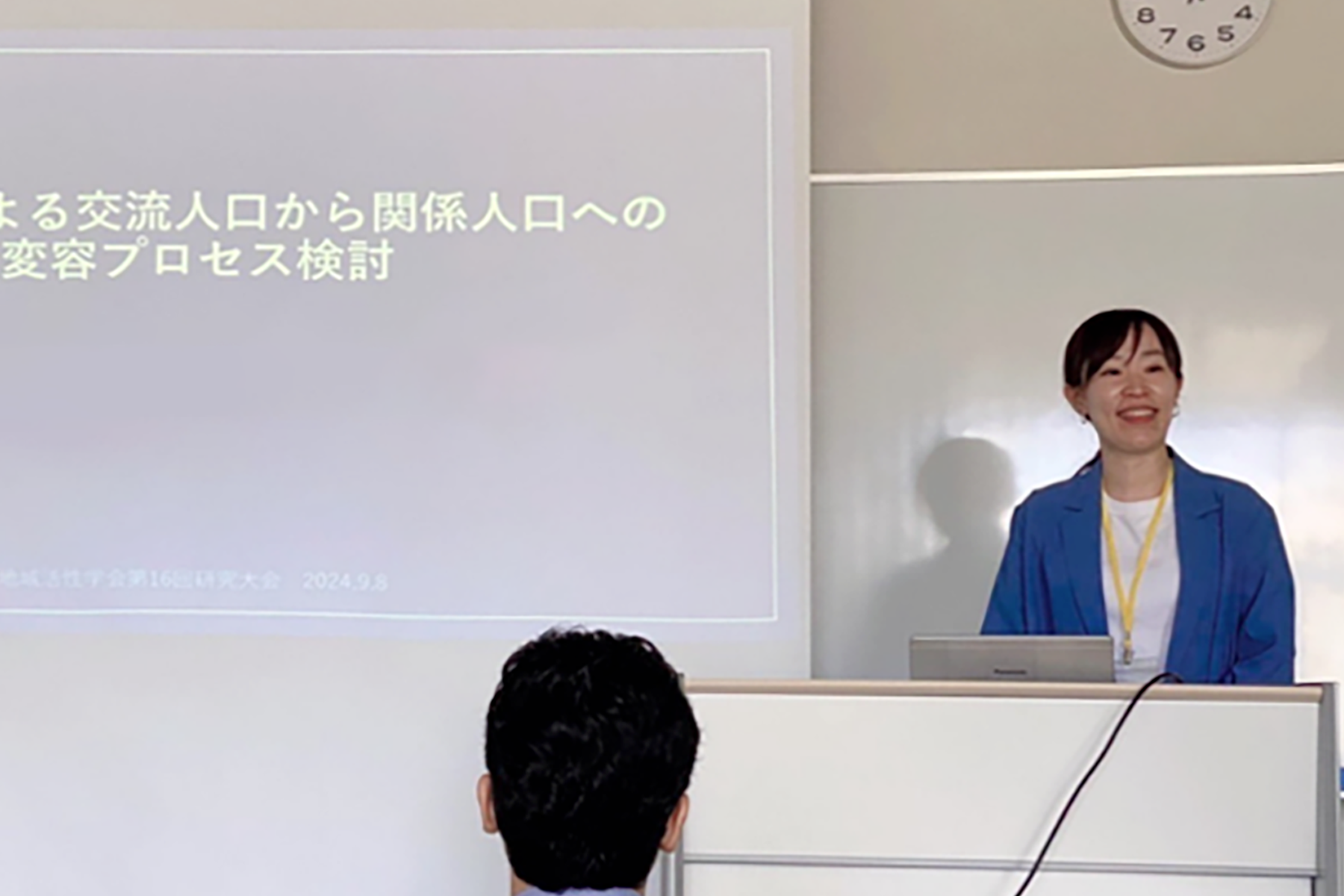
What It Means to Study Human Sensibilities
My approach to research is based on psychology.
Although this research involves studying people, I believe it is not simply about quantifying what people feel or analyzing them from an objective standpoint. Rather, it involves conducting research with people rather than merely about people.
As a manufacturer, our work involves uncovering aspects of human perception and values and combining them with technology to create new products. However, while contributing to business is essential, my personal motivation as a researcher lies elsewhere.
In active listening, understanding is achieved together with the other person. I strive to understand how individuals feel and how they perceive the world around them, from their own perspective.
Through interacting with people, researchers are given the opportunity to learn how others see the world. I hope that the accumulation of these interactions and research efforts will eventually contribute, even in a small way, to human flourishing.
At Yamaha, which is committed to enriching lives through sound and music, I believe that research can contribute to people’s well-being in a way that differs from clinical or counseling fields.
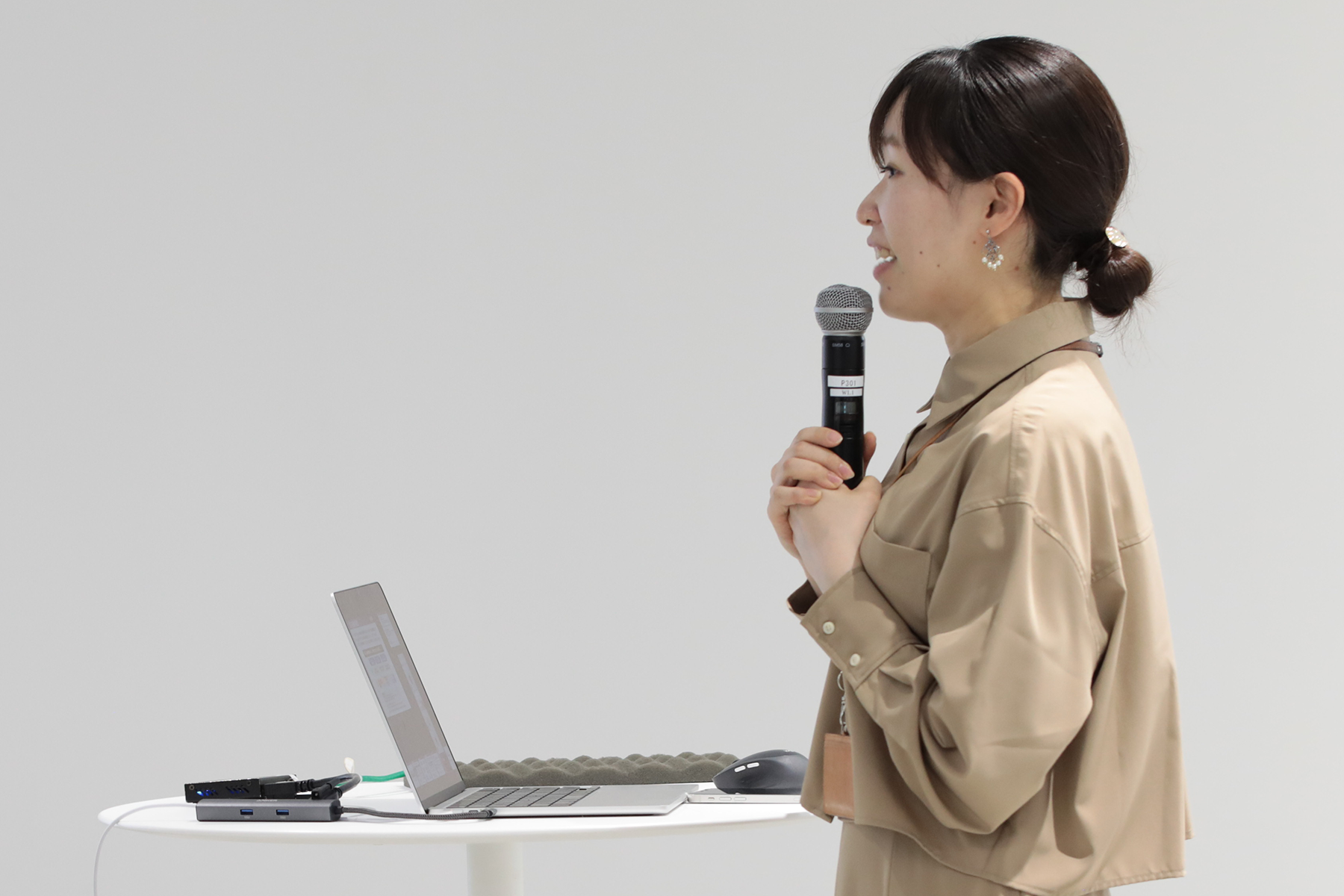

KANSEI Research from a Humanities Perspective
There are only a small number of researchers with humanities backgrounds in Yamaha’s R&D Division. I feel that research in this field is still developing within the company.
At the same time, as functional value becomes increasingly saturated, creating social value requires deep insight into the diverse values and feelings of people from unique perspectives.
From this standpoint, I believe that human-centered research into perception, feelings, and values from a humanities perspective will become a new foundation for Yamaha.
By working together with researchers from various fields, I aim to establish this research area and expand the breadth of Yamaha’s technological capabilities.
Working Together with People in Their Cultural Contexts
Engaging with people through research means continuing dialogue with individuals in different contexts.
There is no single technology that can be applied universally. Instead, it is essential to engage with each person’s culture and context, and continuously explore what can be done within those frameworks.
At the same time, the ability to understand people as a researcher is not limited to Yamaha’s core business domains. As demonstrated by collaborative projects such as the Sanshin Project, opportunities to contribute beyond Yamaha’s existing business areas are growing.
Going forward, I aim to explore Yamaha’s unique approach to solving social issues and to broaden Yamaha’s social purpose and reason for being through research.
Life Outside Work
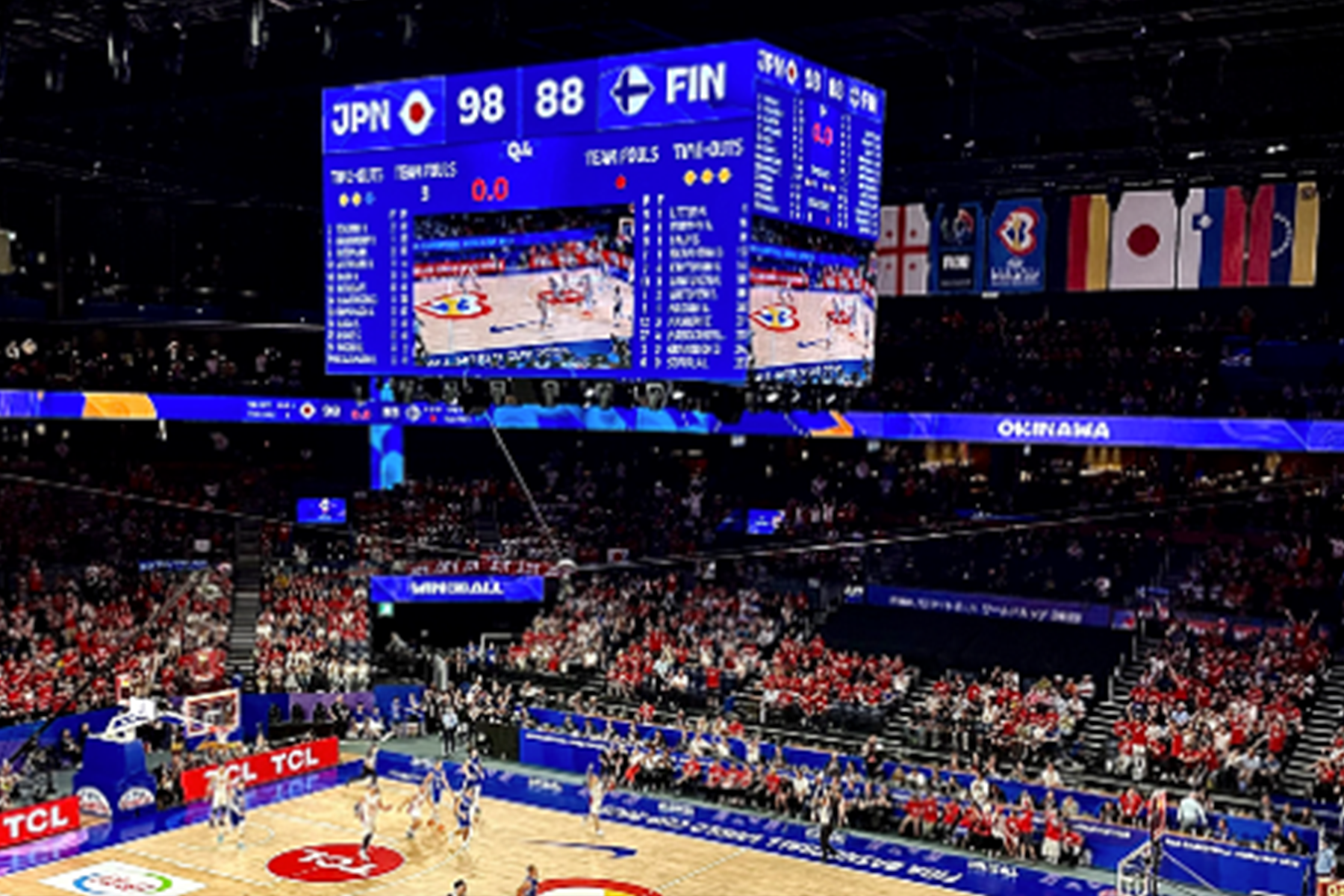
My hobbies include watching basketball and spending time with my cats.
Recently, I have avoided long trips for the sake of my cats, but I still enjoy short trips around basketball games.
Although these hobbies are not directly related to music, they help me maintain a healthy balance between work and personal life.