
Upcycling Guitar
Musical instruments are crafted from a variety of woods. Yamaha sources and utilizes wood from around the world for instrument production. We also conduct ongoing research and studies to ensure we can continue providing high-quality instruments within a sustainable framework while preserving the natural environment.
About Upcycling Guitar
Yamaha meticulously selects and processes wood to create high-quality instruments, but this process generates materials and offcuts that cannot be used for their original purpose. Yamaha refers to these as “unused materials” and is advancing initiatives to effectively utilize them as resources.
Yamaha meticulously selects and processes wood to create high-quality instruments, but this process generates materials and offcuts that cannot be used for their original purpose. Yamaha refers to these as “unused materials” and is advancing initiatives to effectively utilize them as resources.
Among these initiatives, the “Upcycling Guitar” project aims to explore new possibilities for guitars by utilizing a wide variety of woods, including those not traditionally used for guitars. Through this project, we are re-examining the potential of wood. By going beyond simple material upcycling and utilizing these woods as guitar materials with unique characteristics, we are embodying new appeal for guitars.
Three prototypes
To create new value and appeal by leveraging the characteristics of various unused materials, we produced three prototypes between 2021 and 2023.
1st Prototype (2021)
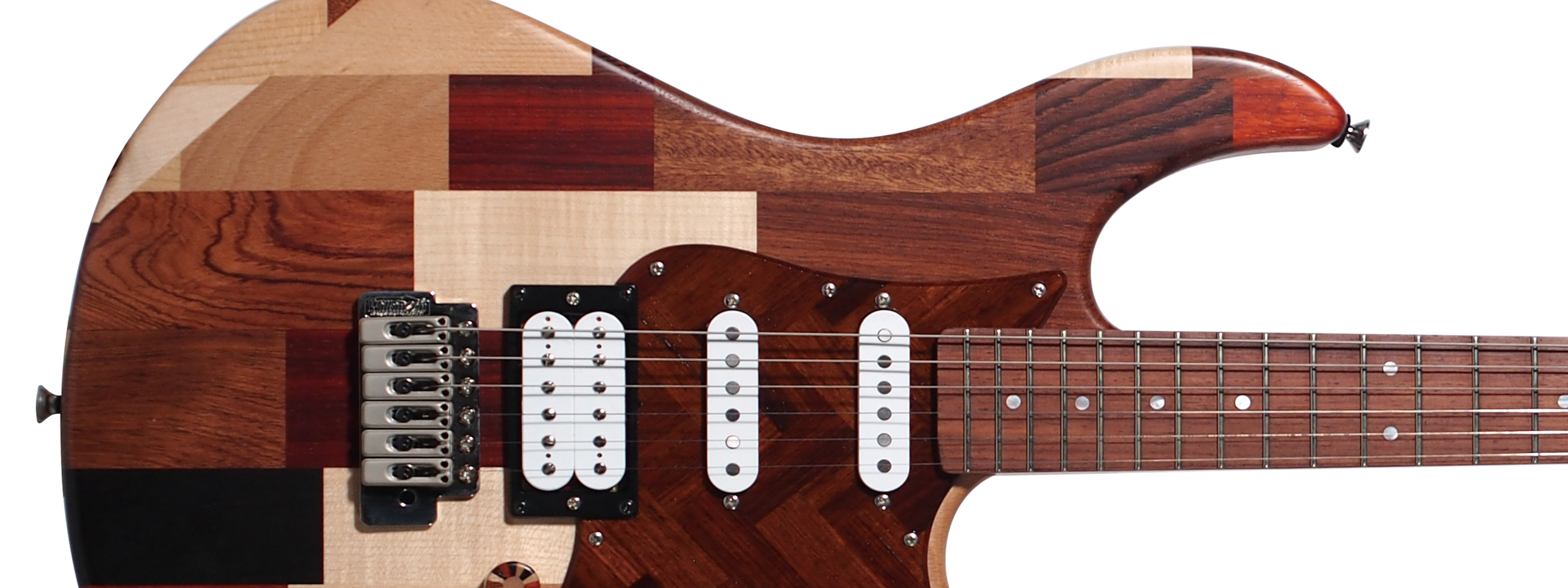
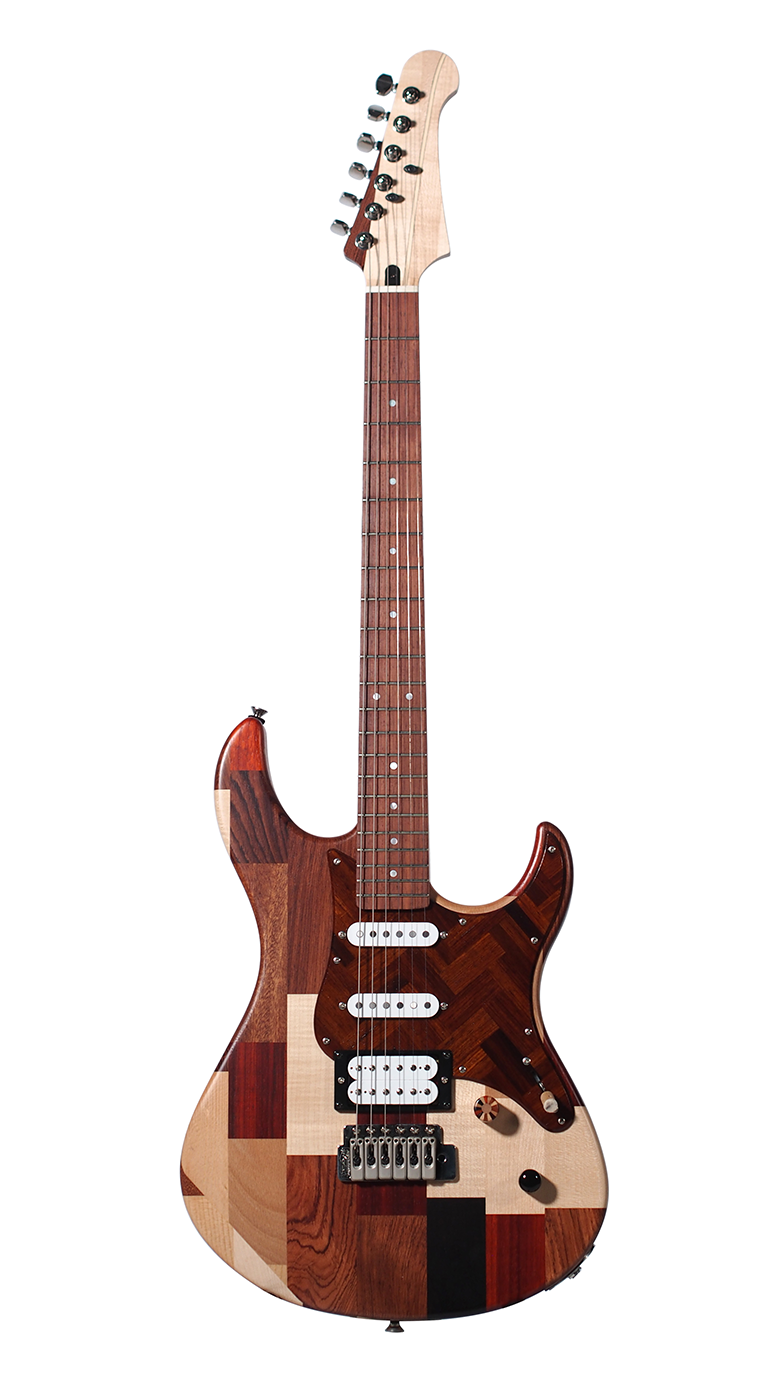
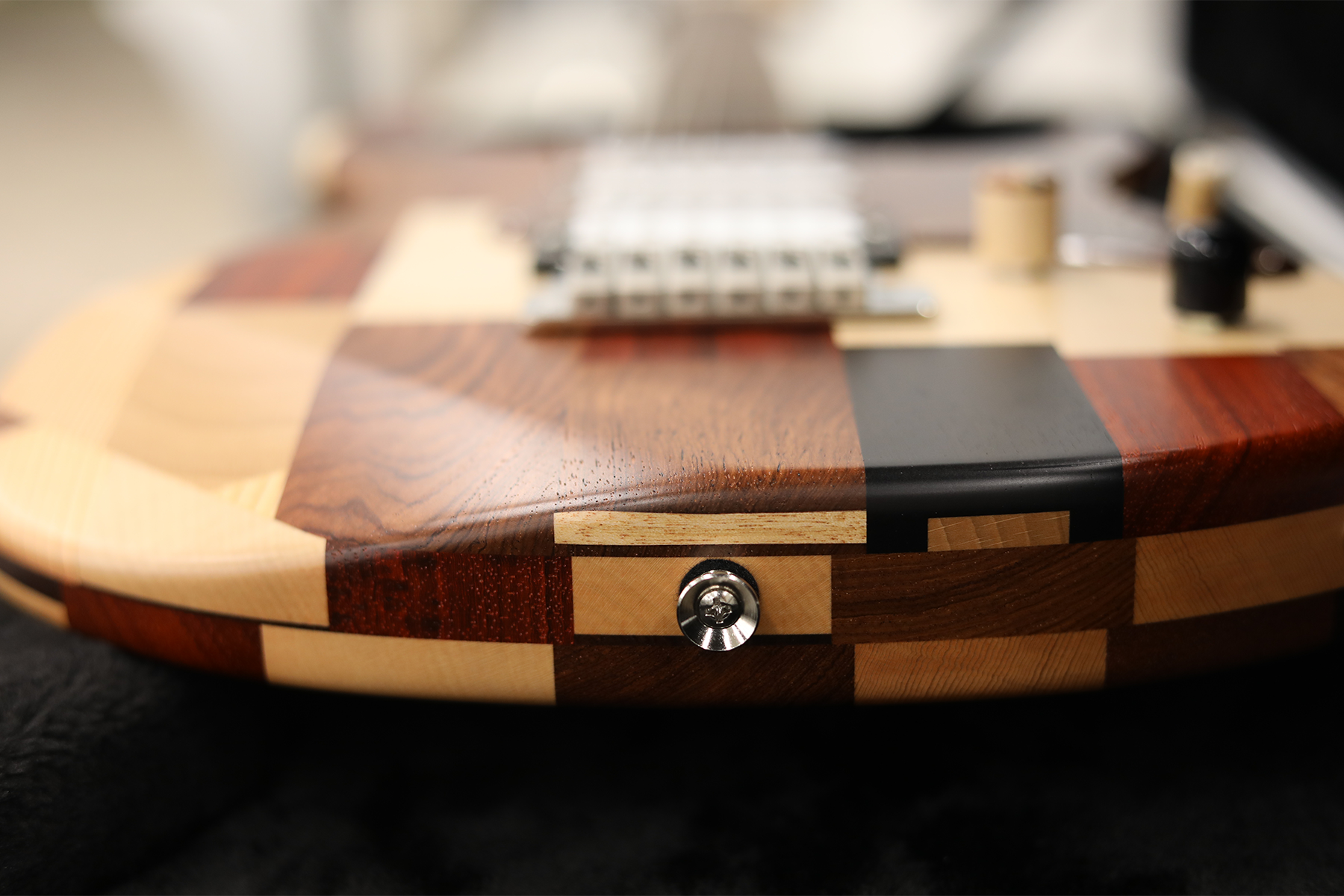
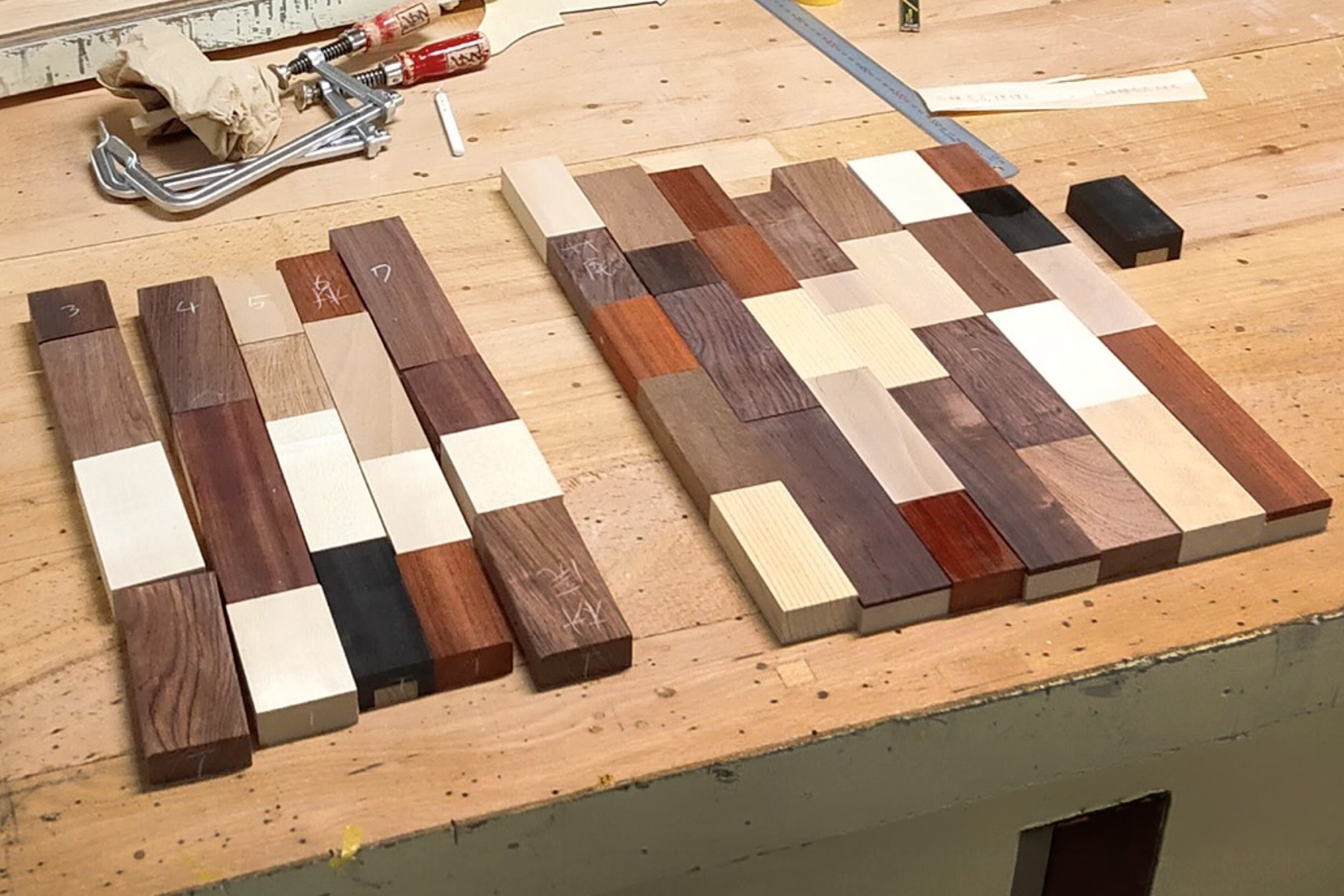
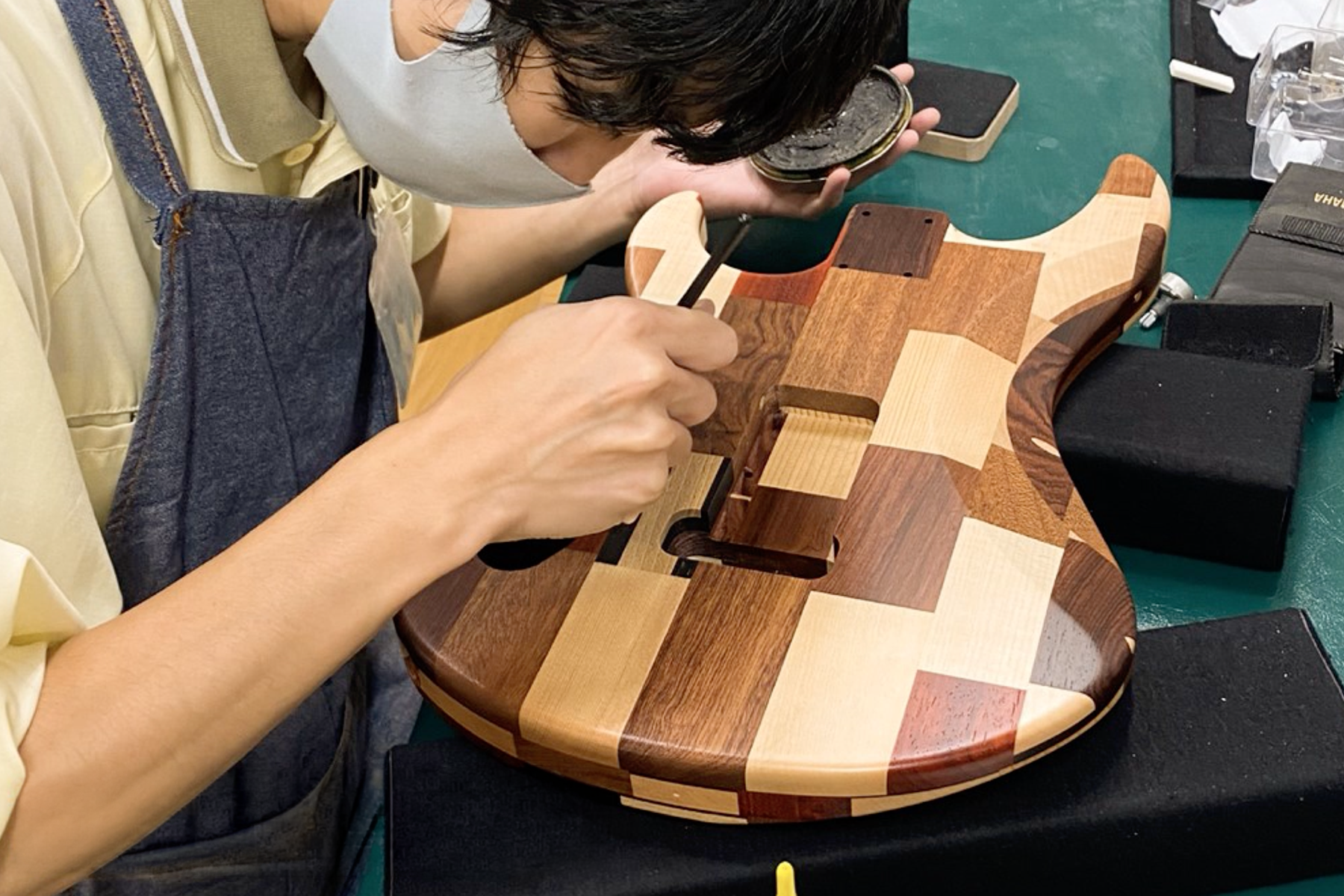
First, we began by touring each factory to identify what unused materials were available within the company. We were reminded anew that Yamaha handles an incredibly diverse range of wood species, each possessing its own unique charm. This led to the idea that by combining these woods and highlighting the individual character of each species, we could create guitars that are both impactful and captivating. Working closely with our guitar luthier, we progressed with production. While we faced challenges in wood processing and gluing, we focused on the goal of “first getting it into shape” and completed the 1st prototype. Featuring a patchwork arrangement of over ten types of unused materials, the guitar delivers not only a striking visual impact but also produces a unique sound where the tones of multiple woods can be distinctly felt. By bringing this concept to form, we demonstrated the potential to create compelling guitars using unused materials, and received positive reactions to the initiative from both inside and outside the company.
2nd Prototypes
Distinctive character is a crucial element in a guitar. While the first prototype focused primarily on “what could be achieved using unused materials,” the second prototypes pursued unprecedented guitar designs and sounds. We focused on the fact that unused materials originated from other instruments and decided to craft guitars that further enhanced their individuality by leveraging these characteristics.
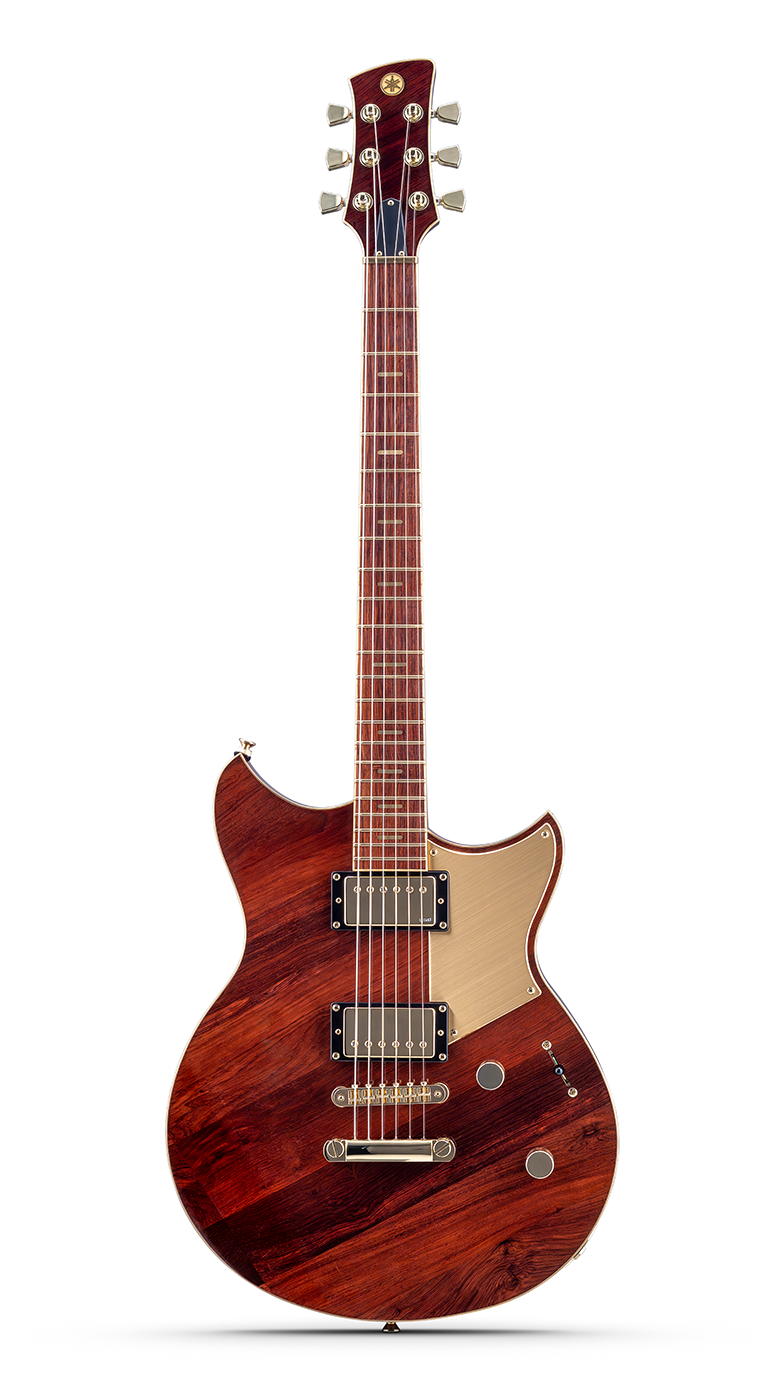
“Marimba” model
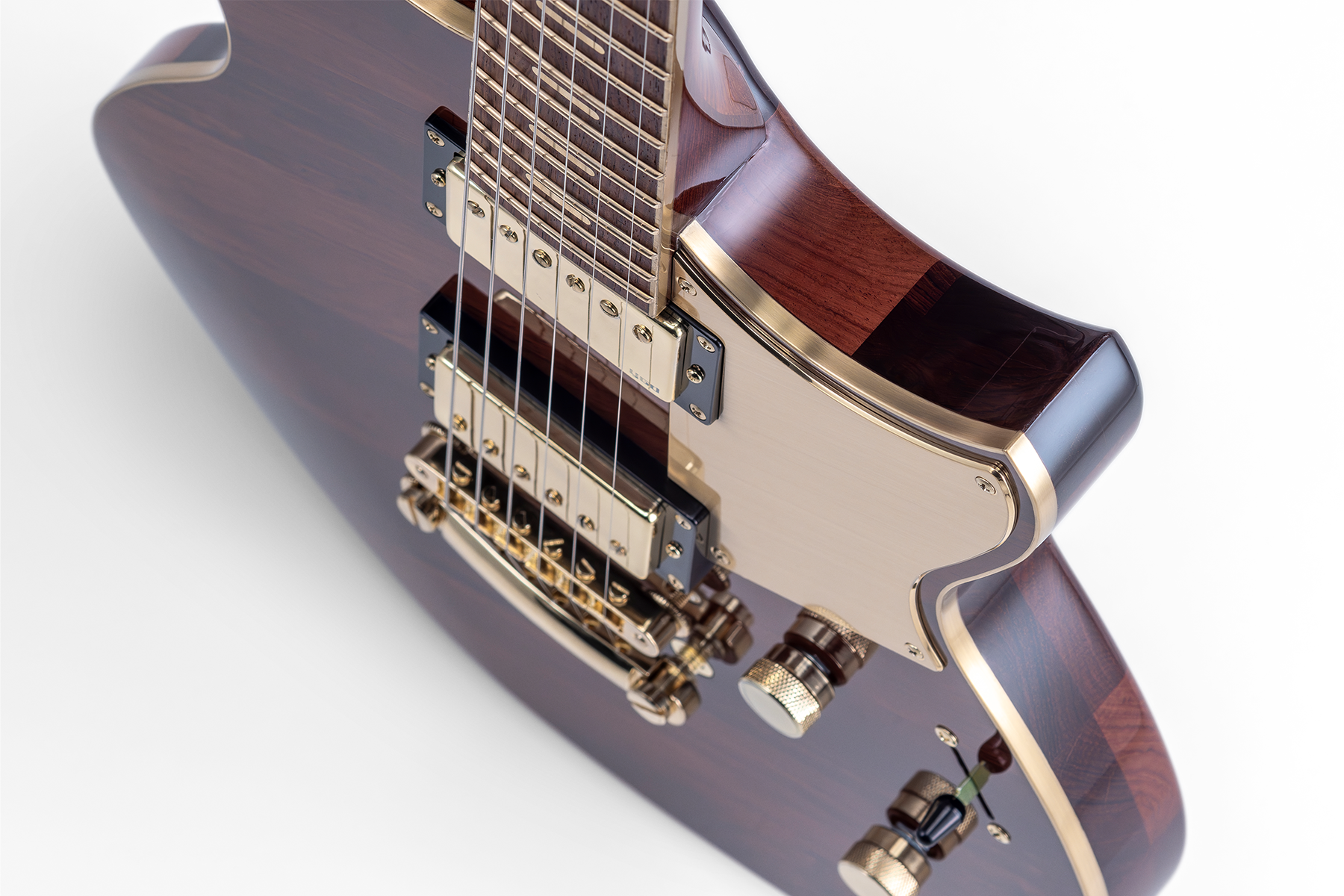
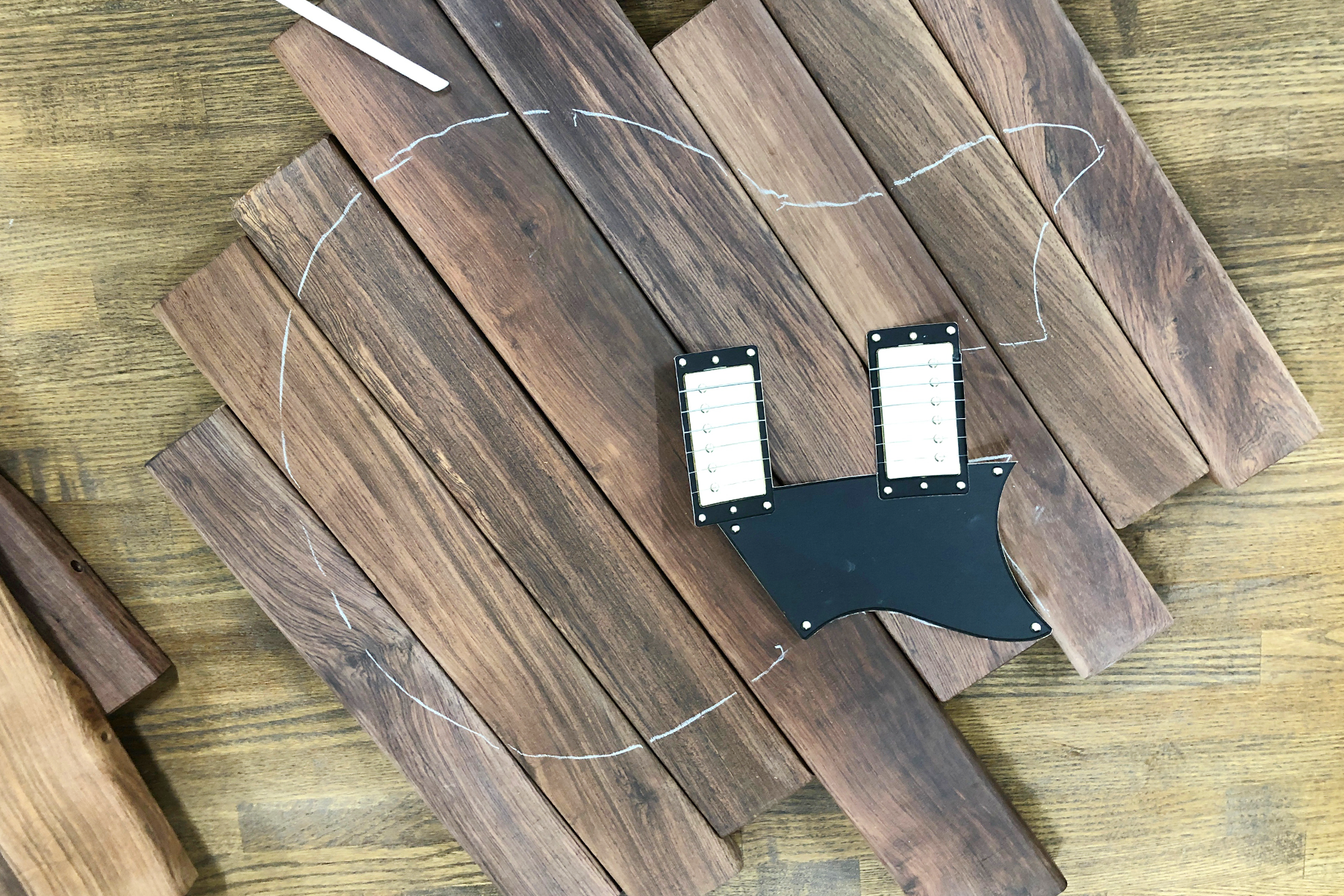
This model utilizes unused materials from marimba bars. The rosewood used is dense, hard, and heavy. Material specifically selected for marimba bars is characterized by excellent sound projection and long sustain. The neck and body are finished using unused marimba bar materials. The body features a solid-body construction without internal voids, and the arrangement of the bar blocks expresses the essence of a marimba. Furthermore, by tilting the wood grain at a 60-degree angle, a natural resonance is achieved even with this highly rigid wood. The characteristic of the sound is the length of sustain inherent in the material.
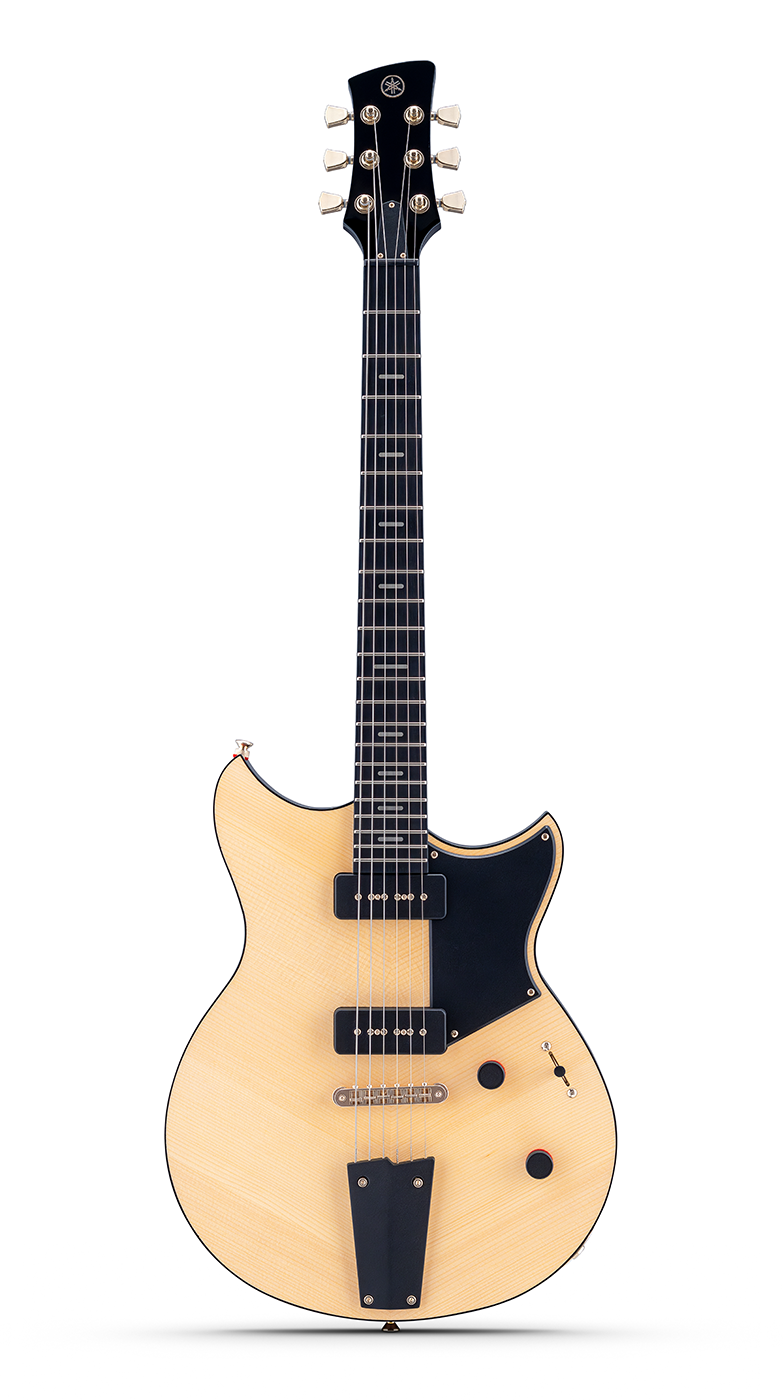
“Piano” model
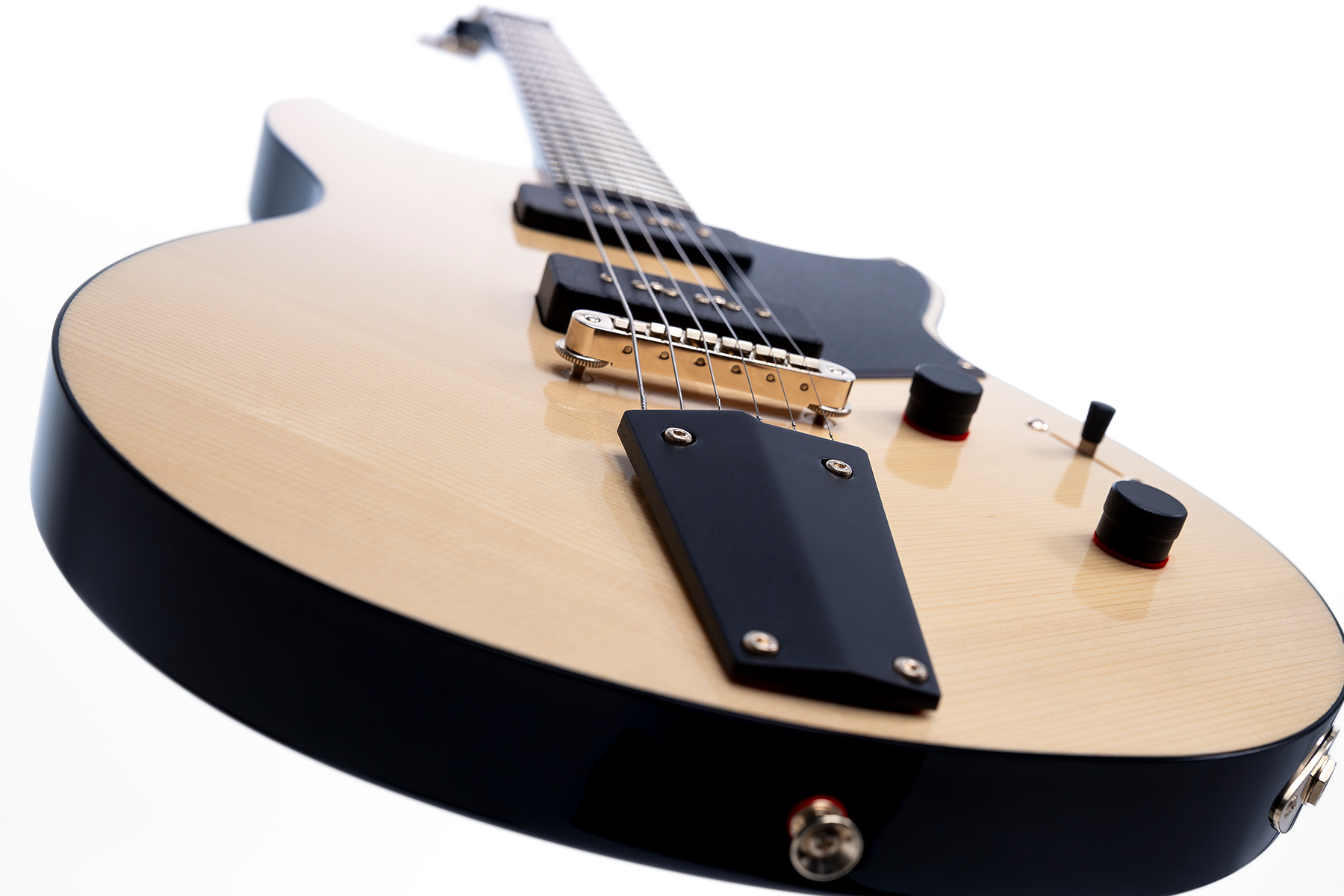
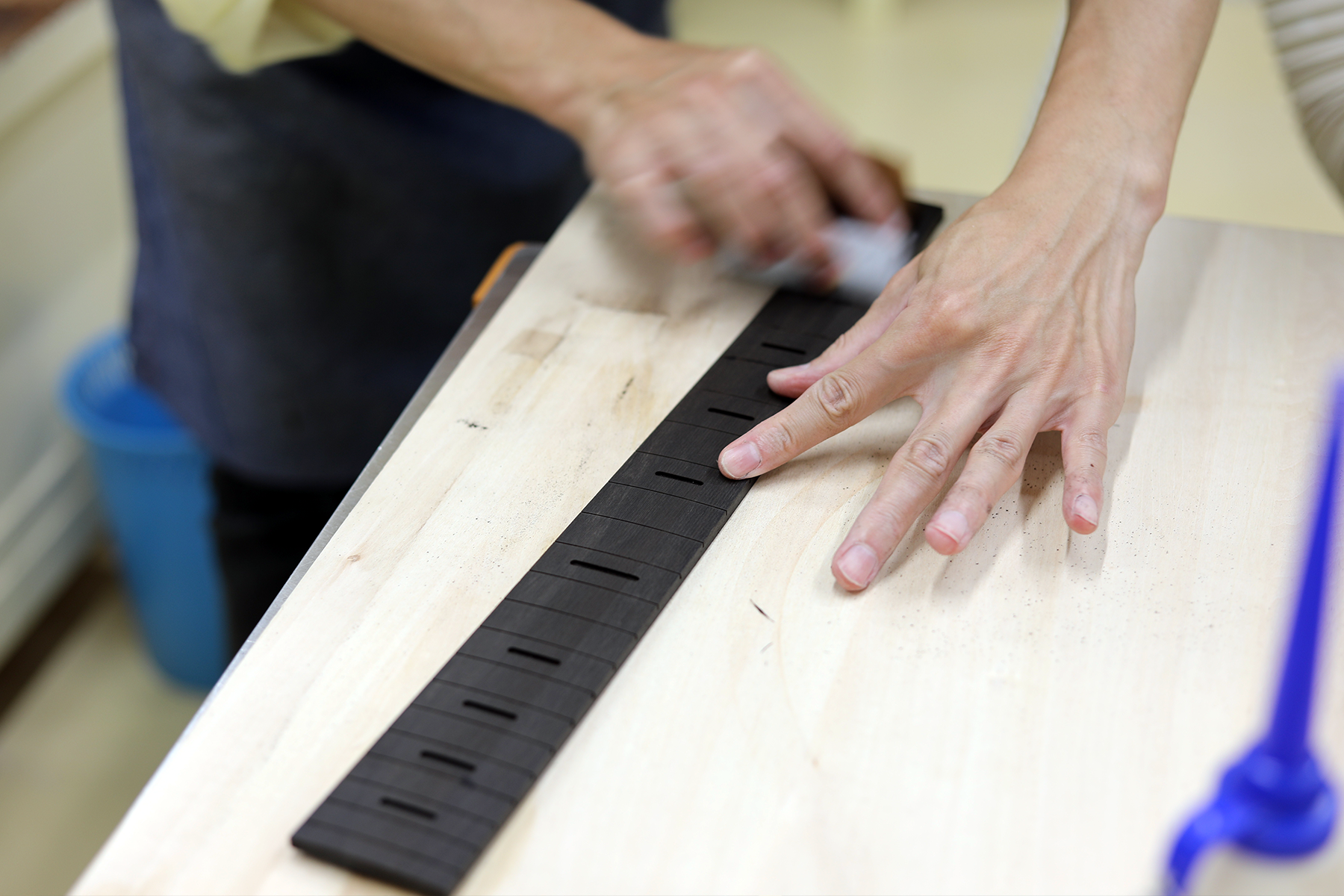
This model was crafted using two types of unused materials from piano wood. The spruce used for the body top comes from piano soundboards. Soundboards amplify the vibration of piano strings, beautifully resonating throughout the space, and are often called the heart of the piano. To maximize the resonance of this soundboard material, a semi-hollow body design was adopted. The sound’s characteristic features are the resonance and crispness born from the properties of the piano soundboard material and the semi-hollow body. Additionally, ebony wood, typically used for black keys, is applied to the fingerboard, lending it the characteristic contrast and definition of a piano keyboard.
Yamaha’s unique approach to manufacturing
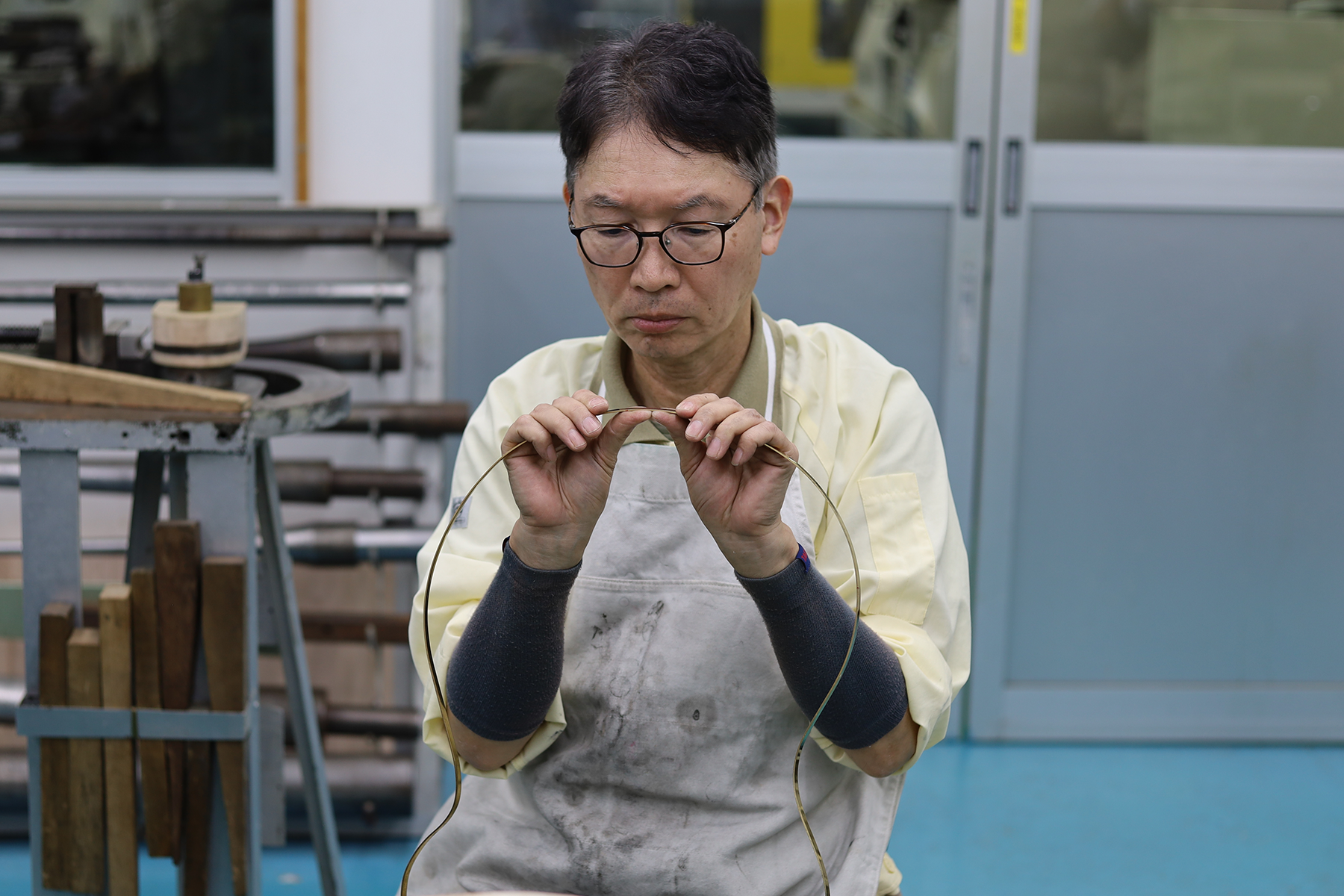
Assembling various types of wood requires extensive knowledge and skills in processing, gluing, and finishing. Yamaha has many woodworking professionals who leveraged their accumulated experience and specialized techniques to achieve this assembly. Furthermore, the brass binding on the “Marimba” model is finished by the brass instrument craftsmen’s hands. The adjustment of the plating color between the “Marimba” and “Piano” models utilizes our brass instrument techniques. By combining these diverse technologies we have cultivated, we were able to create a guitar with a new appeal unique to Yamaha.
Awarded an international design prize
In 2024, the “Marimba” and “Piano” models received two prestigious international design awards: the iF DESIGN AWARD: Professional Concept and the Red Dot Design Award: Design Concept. We deeply appreciate that our concepts regarding guitar craftsmanship and sustainability have gained recognition overseas.
News Releases
・”Upcycling Guitar” Concept Models and “e-plegona” Selected for Design Concept Discipline of Red Dot Award
Striving for Sustainable Instrument Production
Yamaha has been crafting instruments for many years, working with various types of wood. Moving forward, we believe that sustainable instrument-making for the future lies not only in continuing to use traditional materials, but also in understanding the characteristics of diverse materials and applying that knowledge to our craft. Deepening our understanding of wood and the essence of instruments, honing the skills to create compelling instruments from any material—this challenge connects us to the next era of instrument-making. Yamaha will continue to pursue the effective use of wood resources and sustainable instrument making. By presenting the new value born from these efforts, we wish to engage with people worldwide in considering the future of musical instruments and how they are made.