Using VXD to Control a Bass Drum with Your Voice
VXD Project
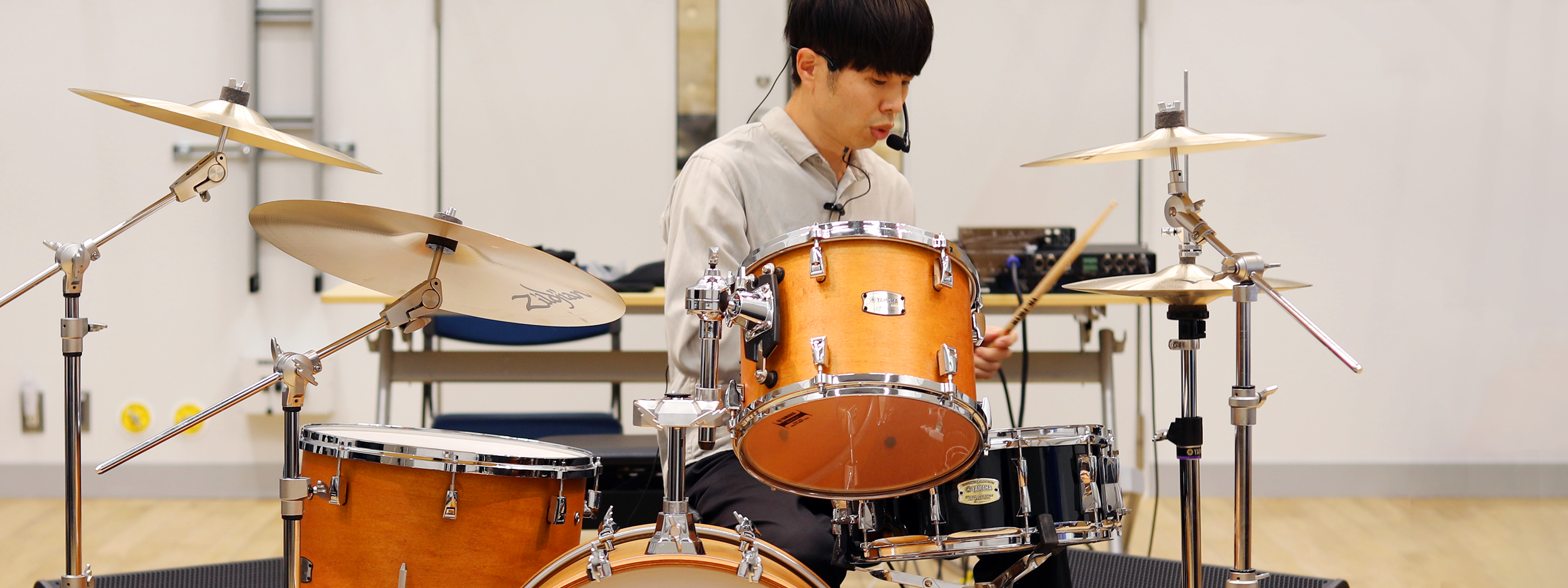
The VXD project, a joint research project between Yamaha and Keio University that began in July 2024, is exploring the possibilities and performance feel of using voice triggers to play a bass drum. This project began when Satoshi Yamaguchi, drummer for the band RADWIMPS, who is currently taking a break from performing due to musician’s dystonia, was researching his condition while studying at Keio University. He has long been a fan of Yamaha musical instruments, and this project was made possible by his great effort.
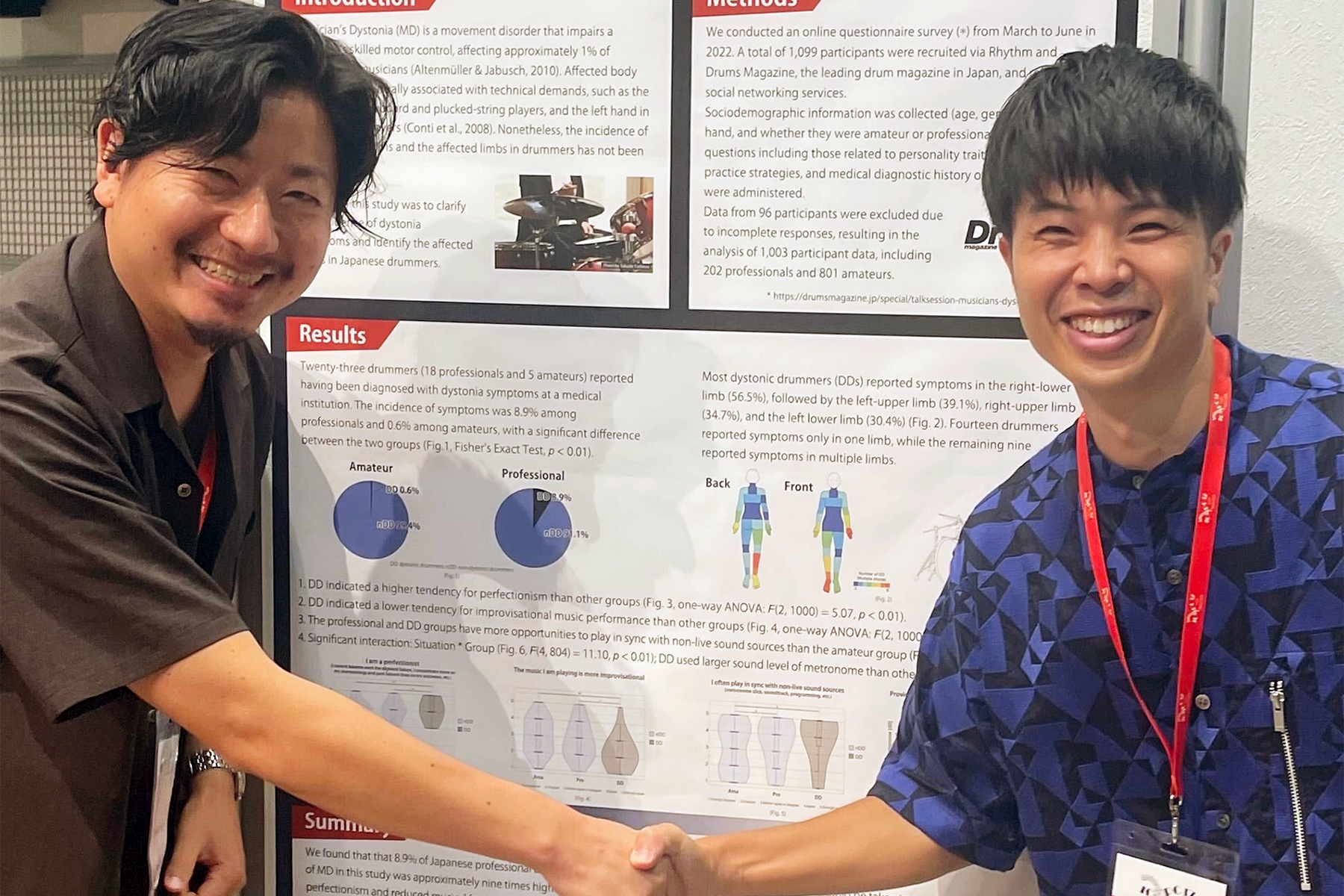
Mr. Yamaguchi developed musician’s dystonia in his right foot in 2009. Musician’s dystonia is a disease in which the muscles involuntarily stiffen and cannot be controlled, only when playing music. After developing the disease, Mr. Yamaguchi became unable to play the bass drum normally, and he stopped playing the drums indefinitely in 2015. Wanting to learn anything he could about dystonia in drummers, he joined the laboratory of Associate Professor Shinya Fujii at Keio University in 2021 and began his own research. While continuing his research to understand the true nature of dystonia, he also began to consider whether it would be possible to play the drums using movements other than his foot, because he wanted to play the drums again. At first, he tried using finger and head-banging movements. However, since this was far from the type of performance that he had in mind and didn’t allow him to enjoy playing drums, he had trouble finding a method that was quite right.
While going through a process of trial and error, Mr. Yamaguchi recalled the oral tradition of Japanese drumming that he had experienced in the past, as well as the teaching he had learned from his beloved Shuichi “Ponta” Murakami, that “you should practice making sounds with your mouth before you play.” He began to think that it might be possible to use his voice to play the drums. He came to us with the proposal of developing a “bass drum that can be played with performer’s voice,” and that is when our joint research began.
How VXD Works
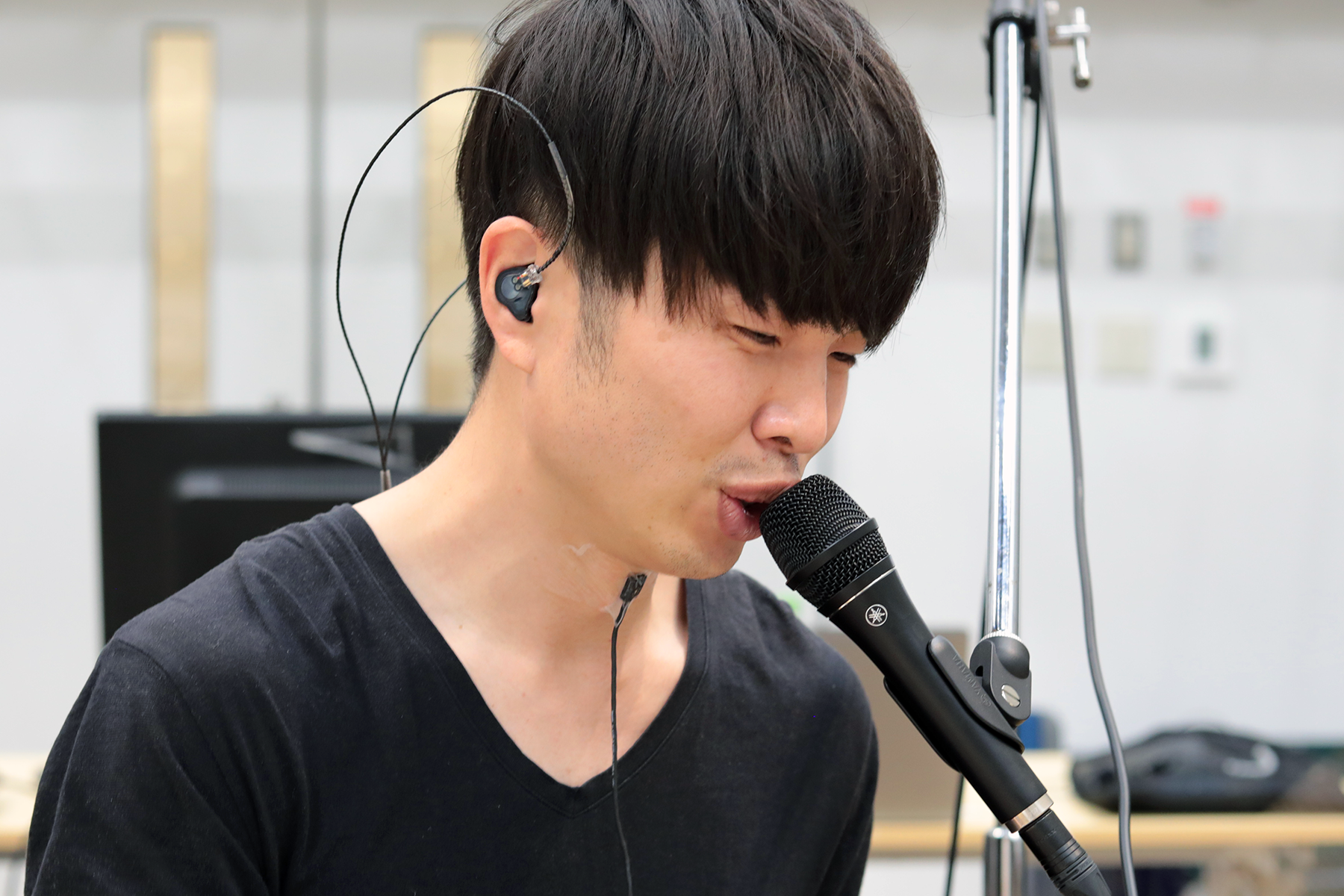
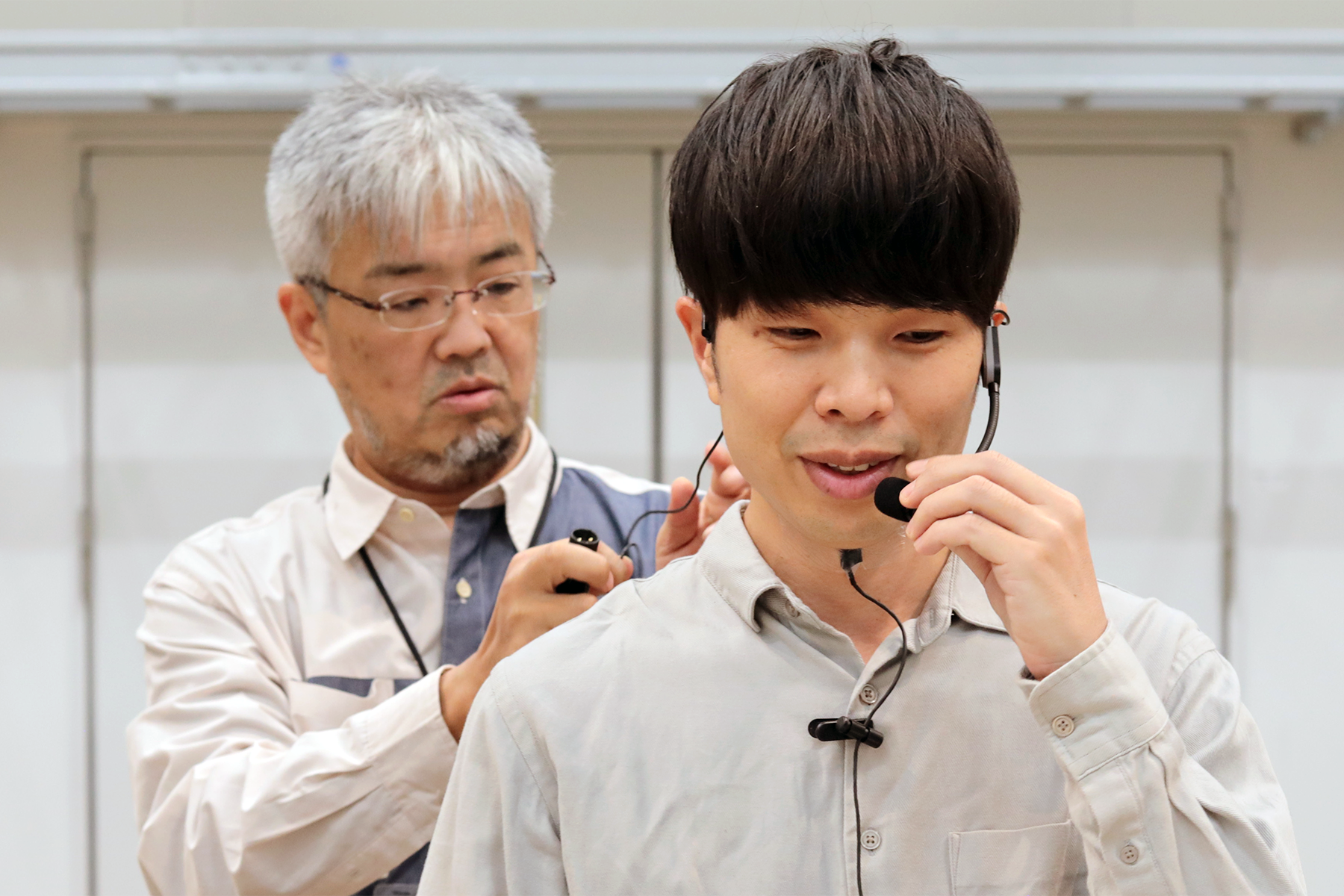
The VXD system causes the bass drum to sound the moment the performer says “don” (short sound indicating a bass drum sound.) A microphone and sensor detect his voice, and this triggers a vibration motor inside the bass drum.
Using a microphone and sensor to detect his voice
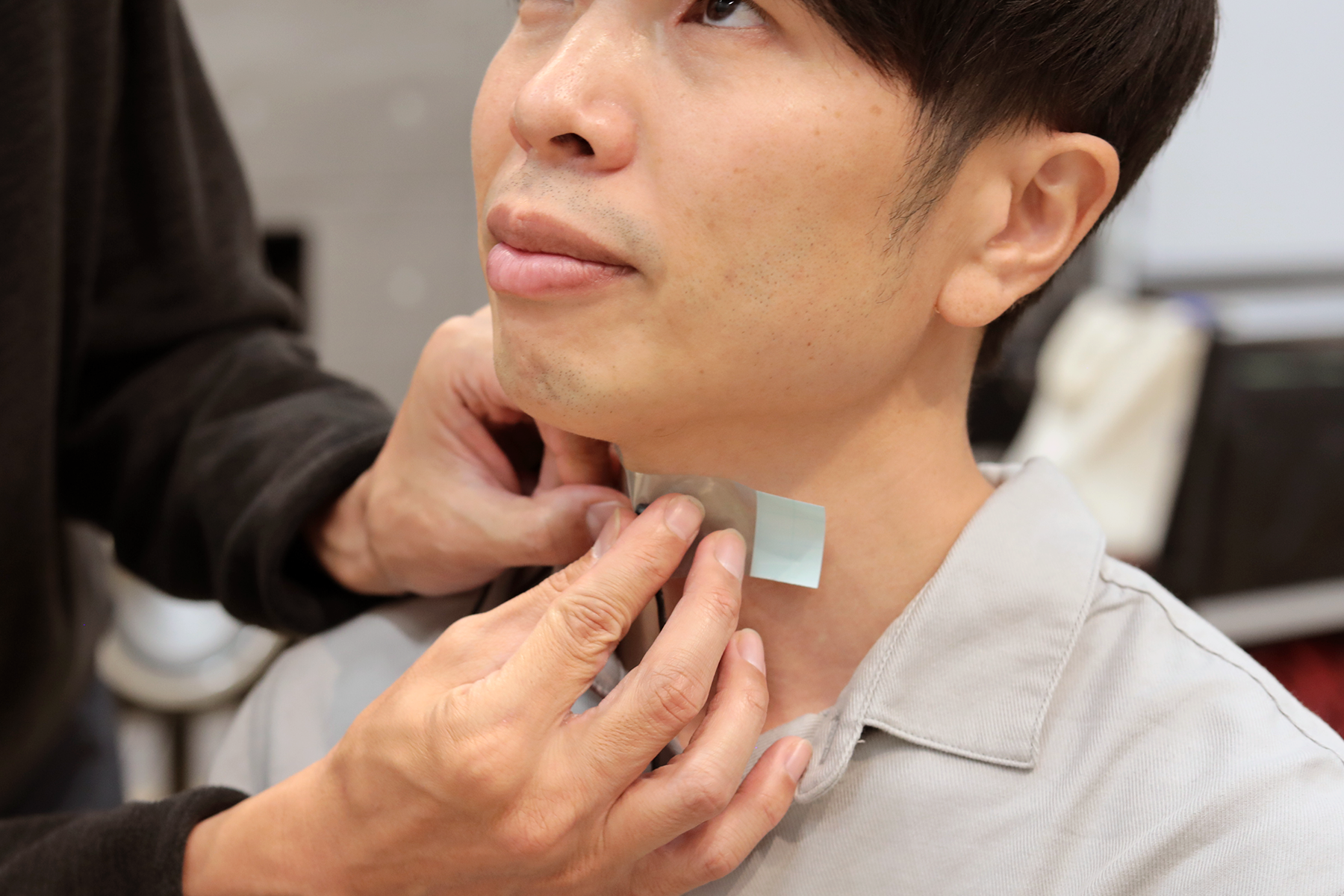
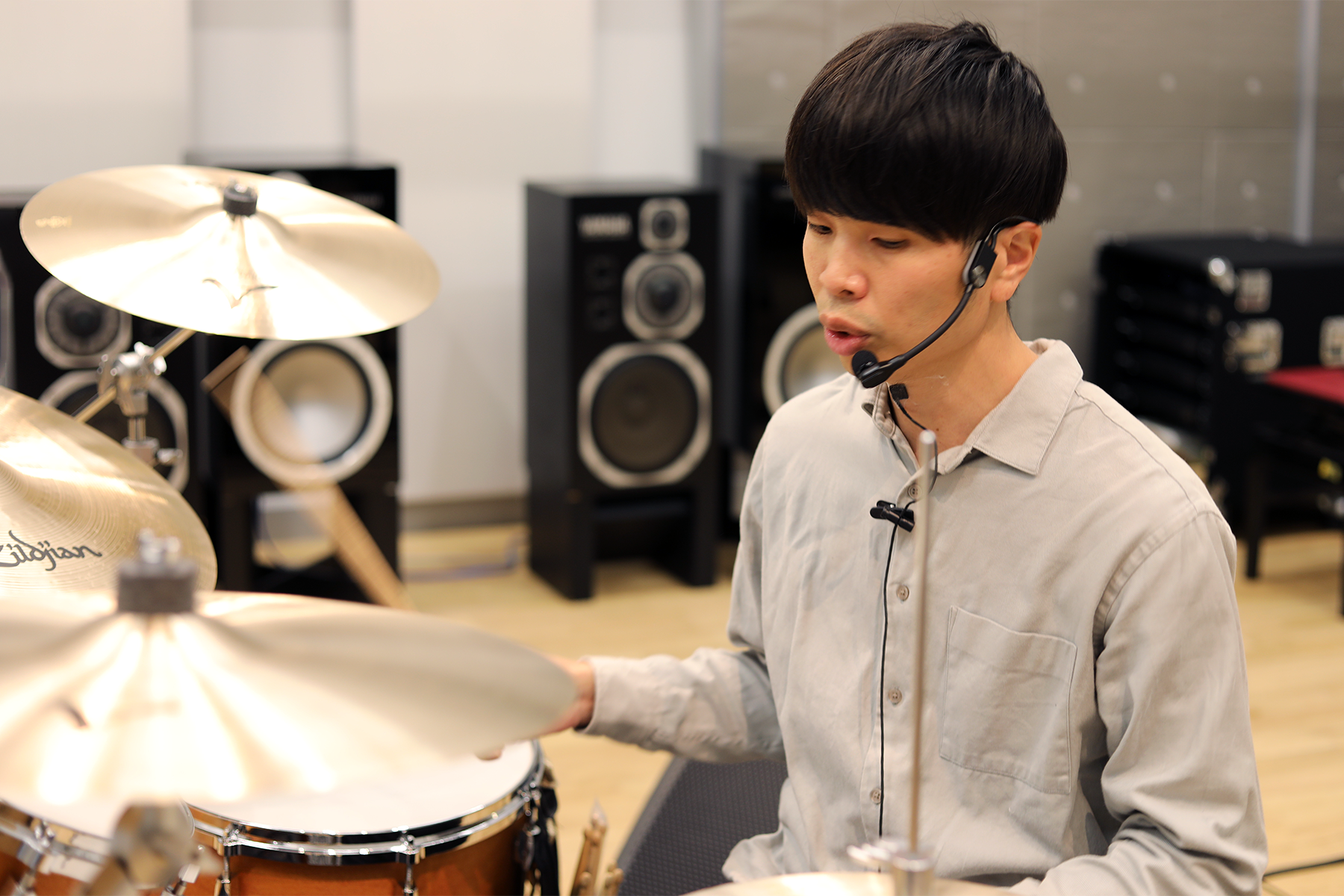
VXD plays the bass drum when the performer says “don” into the microphone and the sensor attached to his throat detects movement. The frequency of the sound picked up by the microphone is analyzed to determine if he said “don.” At the same time, the sensor attached to his throat detects movement to determine whether the sound was actually spoken. By using these two methods at the same time, it is possible to more accurately identify when “don” is spoken.
Using Real Sound Viewing to reproduce drum sounds
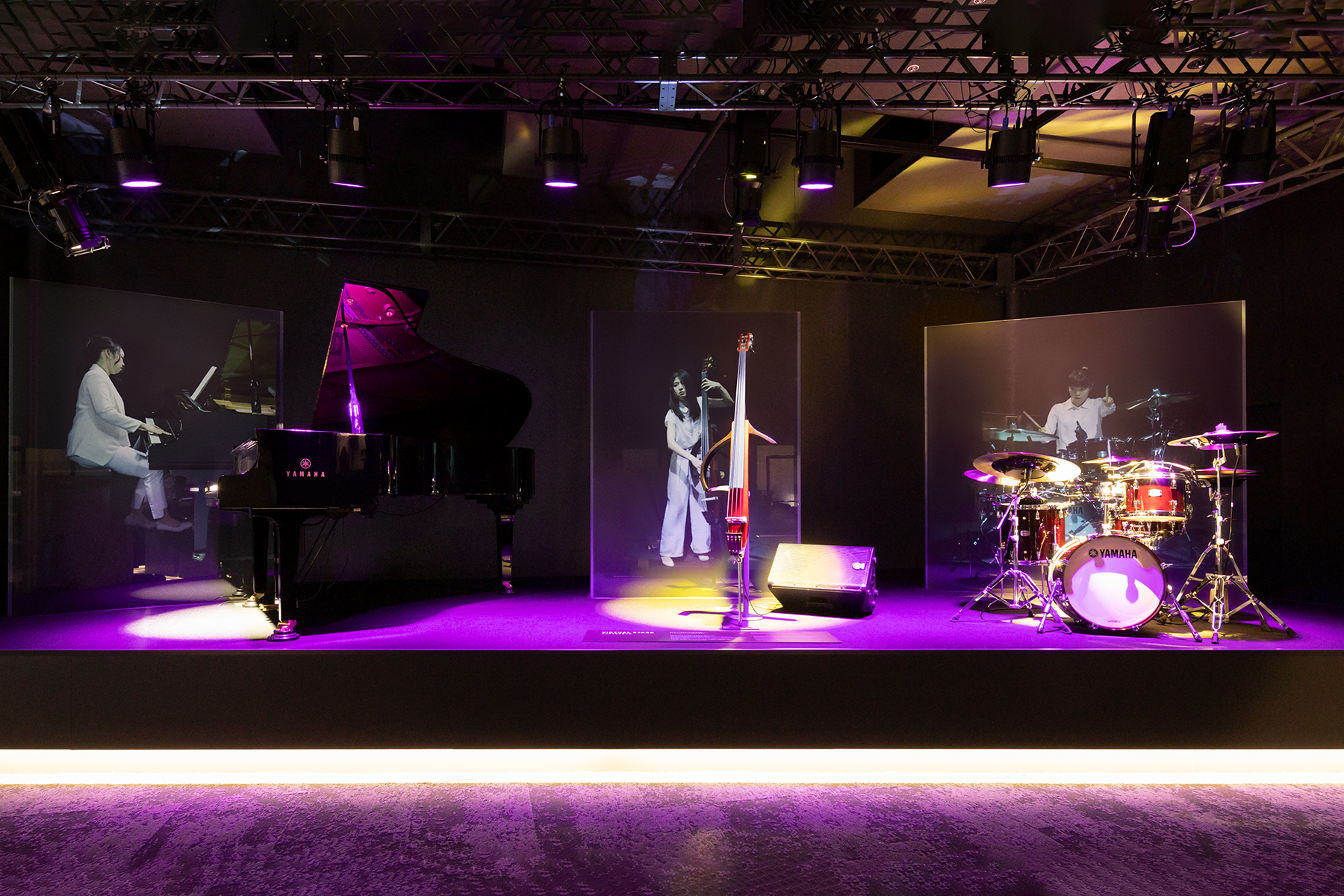
Yamaha is developing “Real Sound Viewing”, which uses digital data from live performances to generate sound from acoustic instruments. Mr. Yamaguchi approached us because Professor Fujii of Keio University felt that Real Sound Viewing had the potential to trigger an acoustic drum.
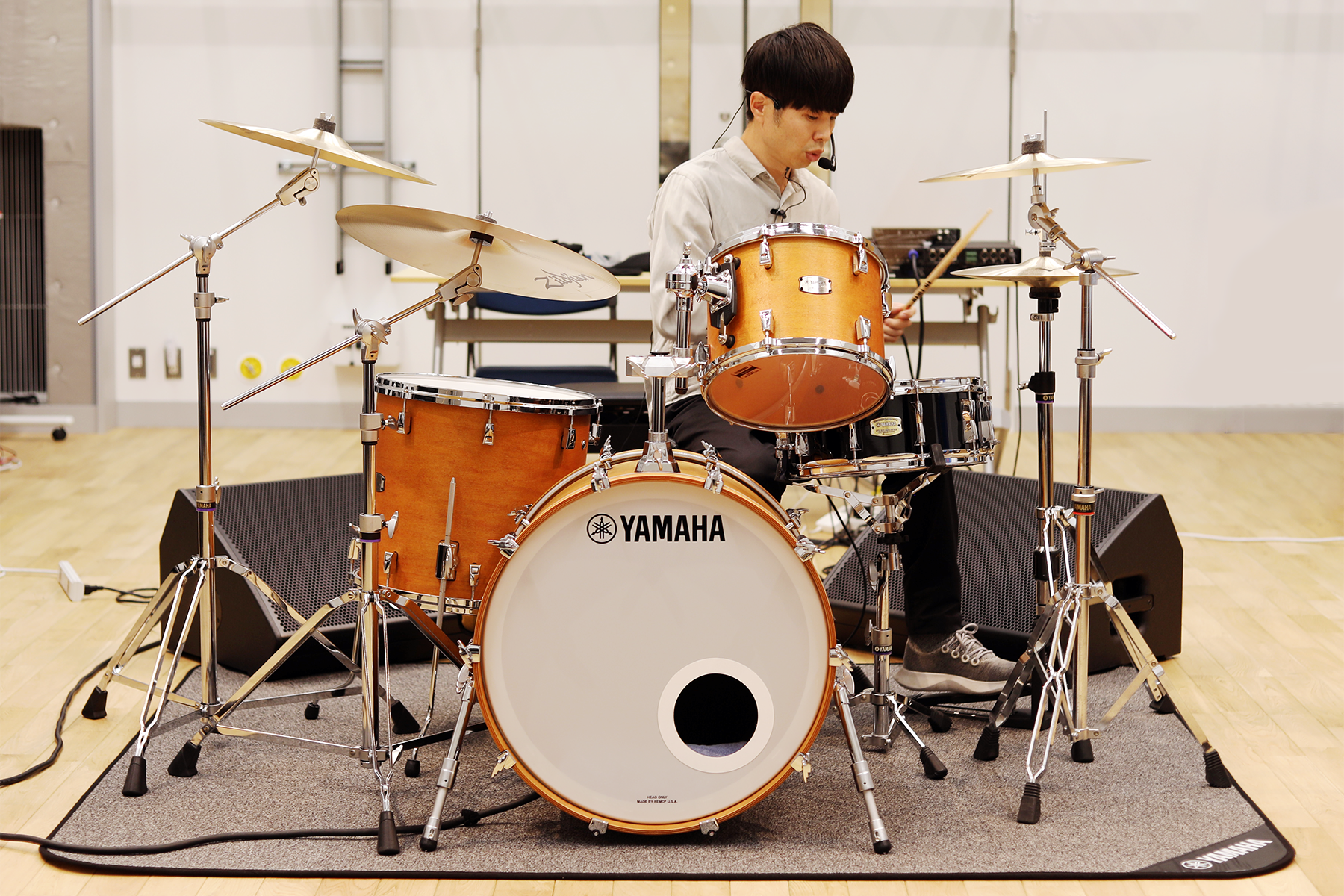
In Real Sound Viewing, the sound of a bass drum is reproduced by attaching a specially developed vibrating motor to the bass drum. We modified this technology so that it could be used by performers, and have made further adjustments to the way the sound is generated.
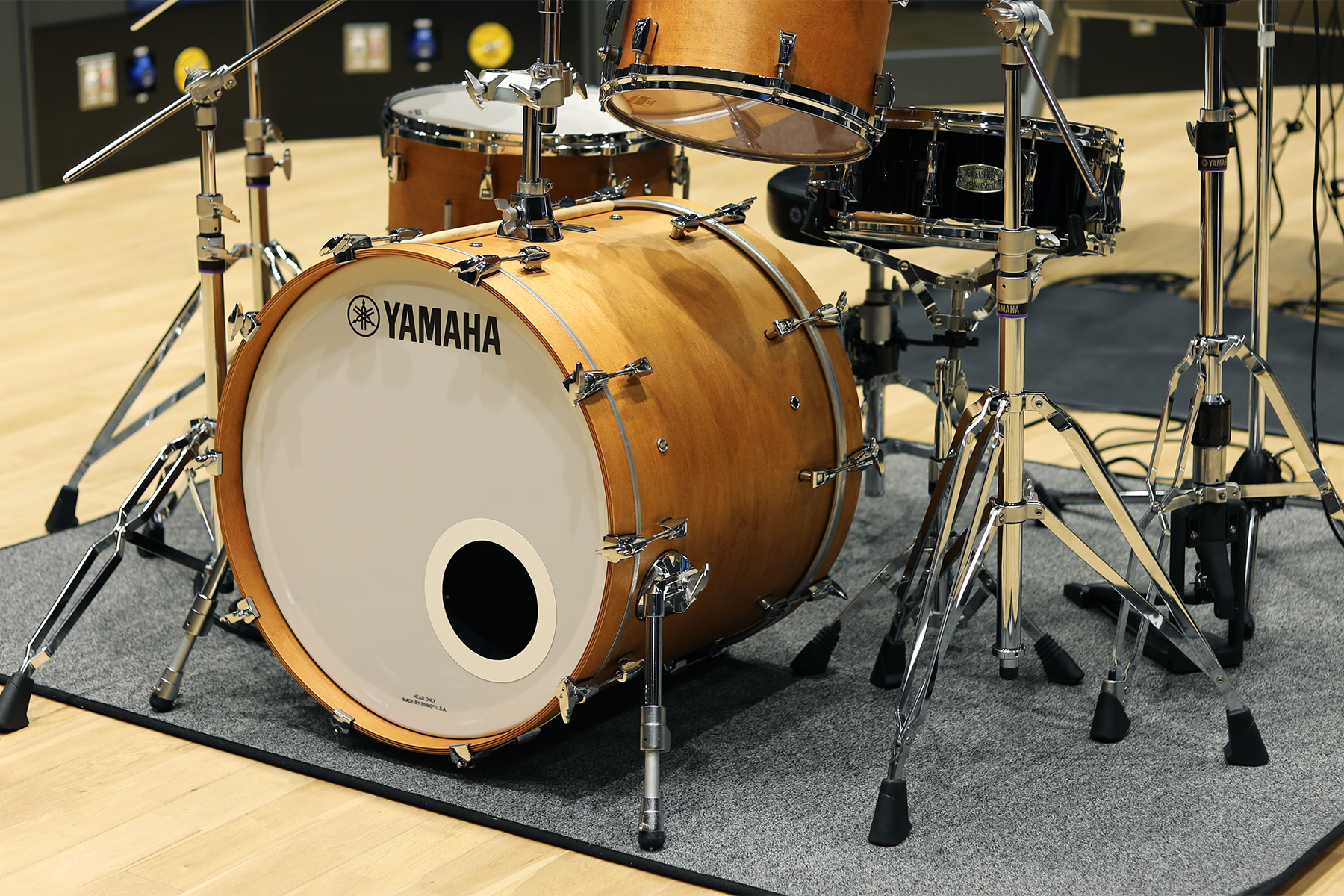
Response is the highest priority
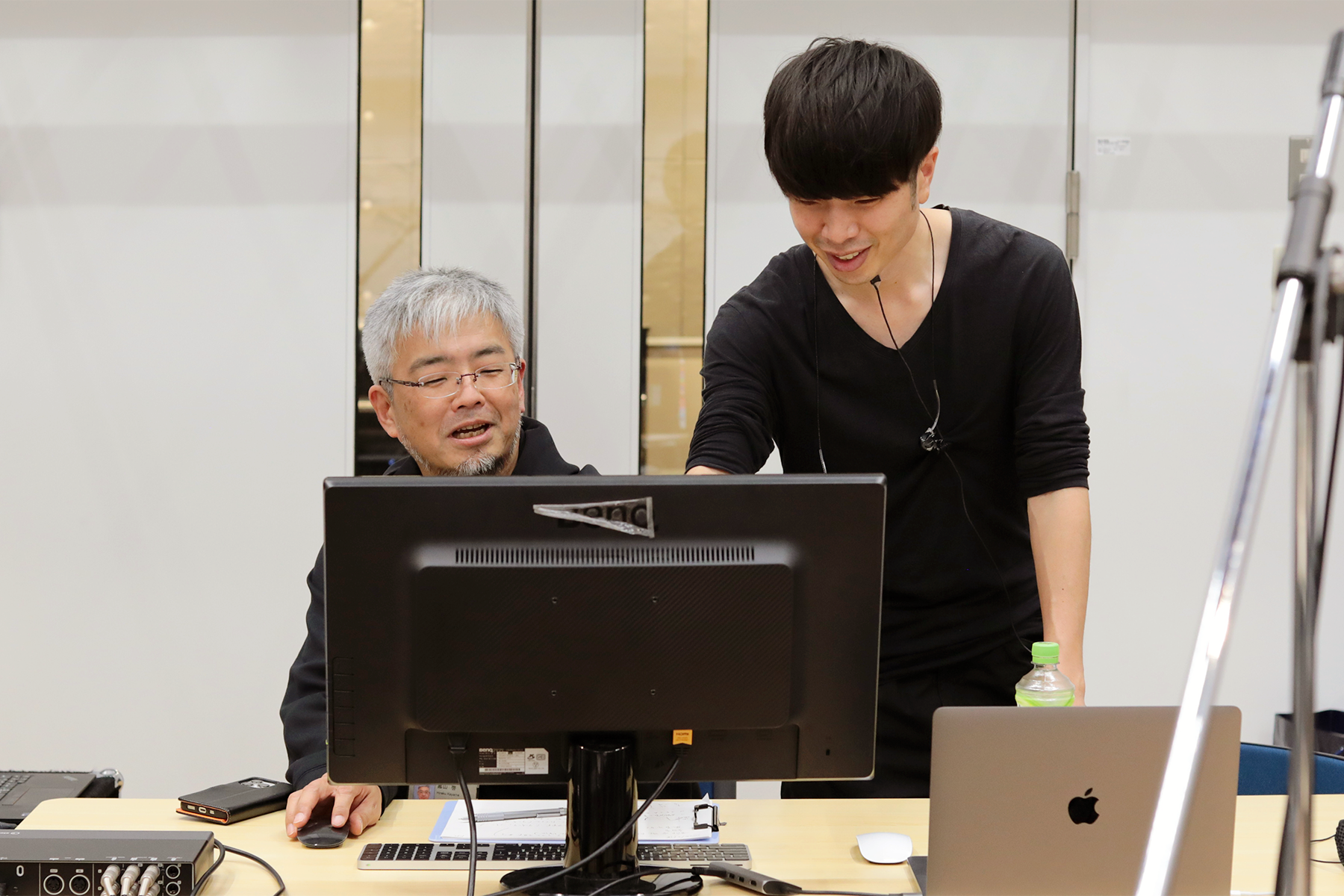
In drumming, the timing of each individual sound is extremely critical, to keep the beat and rhythm. Like many other instrumentalists, Mr. Yamaguchi, the drummer for RADWIMPS, is very particular in his rhythm and sound. By utilizing the audio signal processing technology, we have cultivated through our experience in making musical instruments, we have achieved extremely fast response times and can make easy adjustments to suit the artist. Based on the knowledge and know-how accumulated by Yamaha, we have repeatedly adjusted the response so that Mr. Yamaguchi can perform at a high level without any feeling of unnaturalness.
Development Process
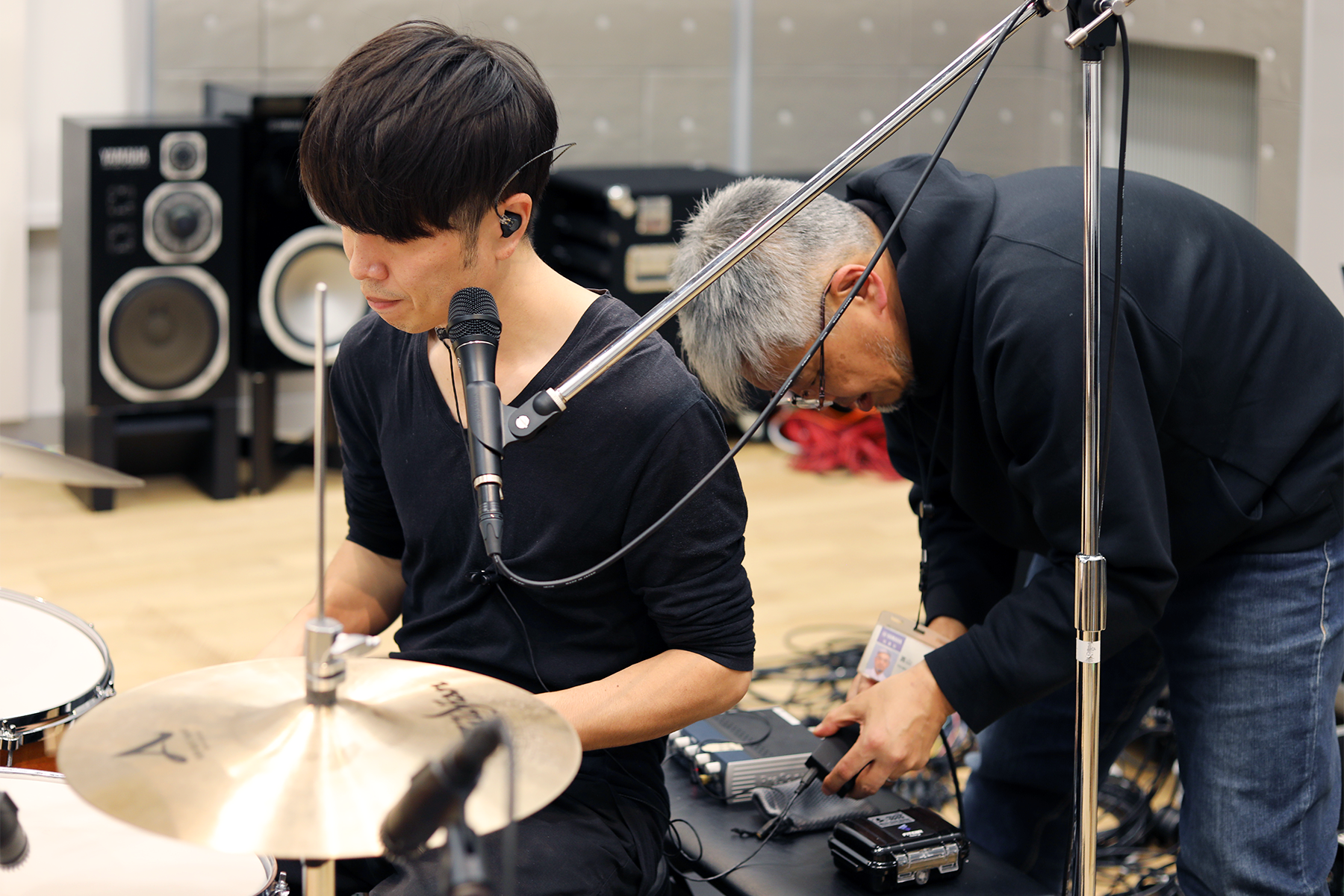
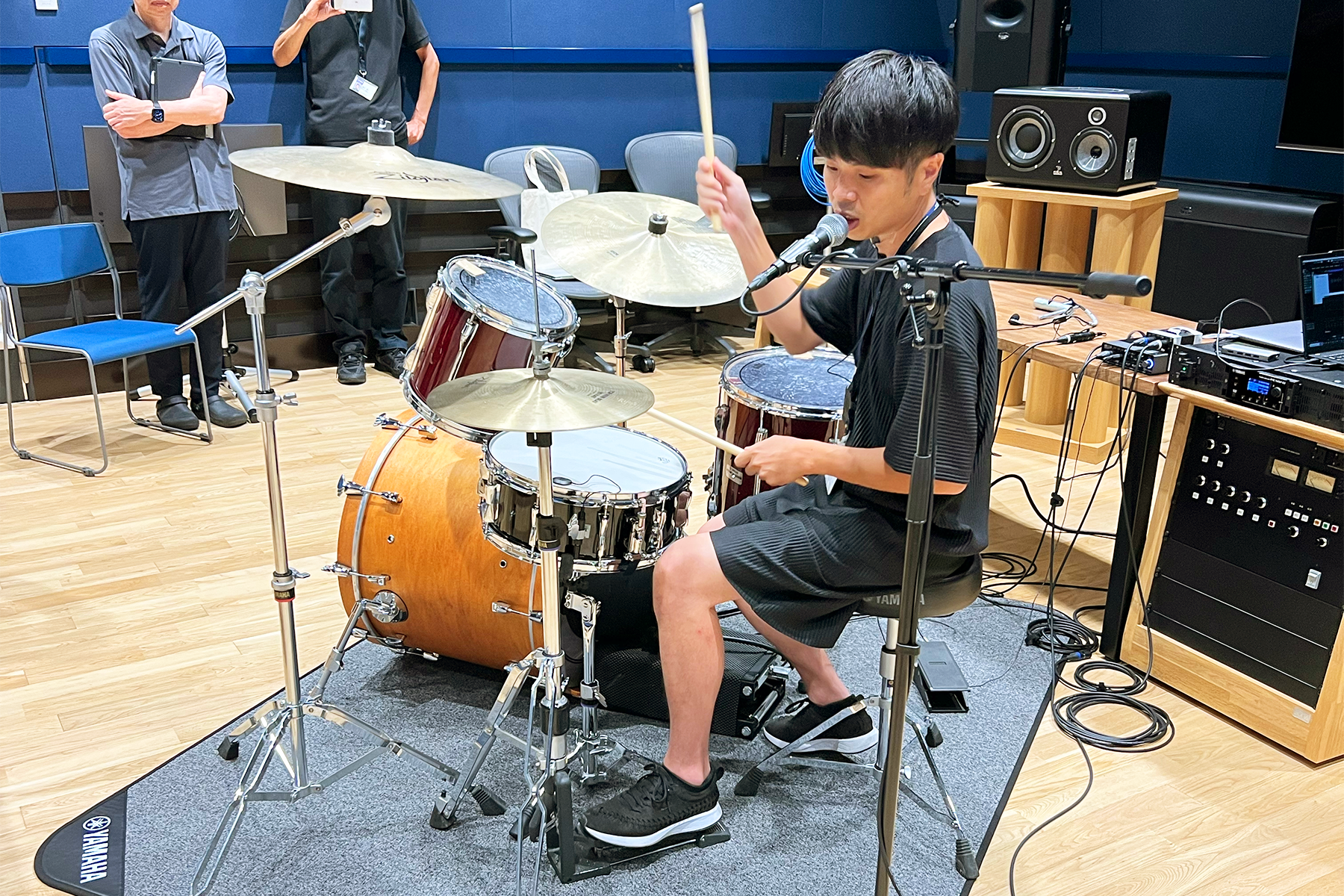
The current system is not how the system started in the beginning. Through a process of trial and error with Mr. Yamaguchi, we made three prototypes, numbered 1, 2, and 3. As a result of various improvements made together with Mr. Yamaguchi, he finally said “this is fun” for the first time with Prototype 3.
Prototype 1: In response to a request from Keio University, we developed a system that would generate the sound of a bass drum using a vibrating motor triggered when the word “don” was spoken. However, in some cases the sound of the bass drum would be triggered when other sounds were detected. In particular, the sound of a tom, which is similar to “don,” would trigger the bass drum by mistake.
Prototype 2: Investigations by the developers led to improved accuracy in recognizing a spoken “don” through analysis of the frequency characteristics of the sound captured by the microphone and the incorporation of a sensor for movement of the throat. This made it possible to use a voice to play the instrument. However, Mr. Yamaguchi felt that there was “something lacking” in terms of playability. Issues with the instrument began to emerge, such as the functionality, volume, and other issues related to feel, which needed to be resolved in order to achieve the feeling of actually playing the instrument.
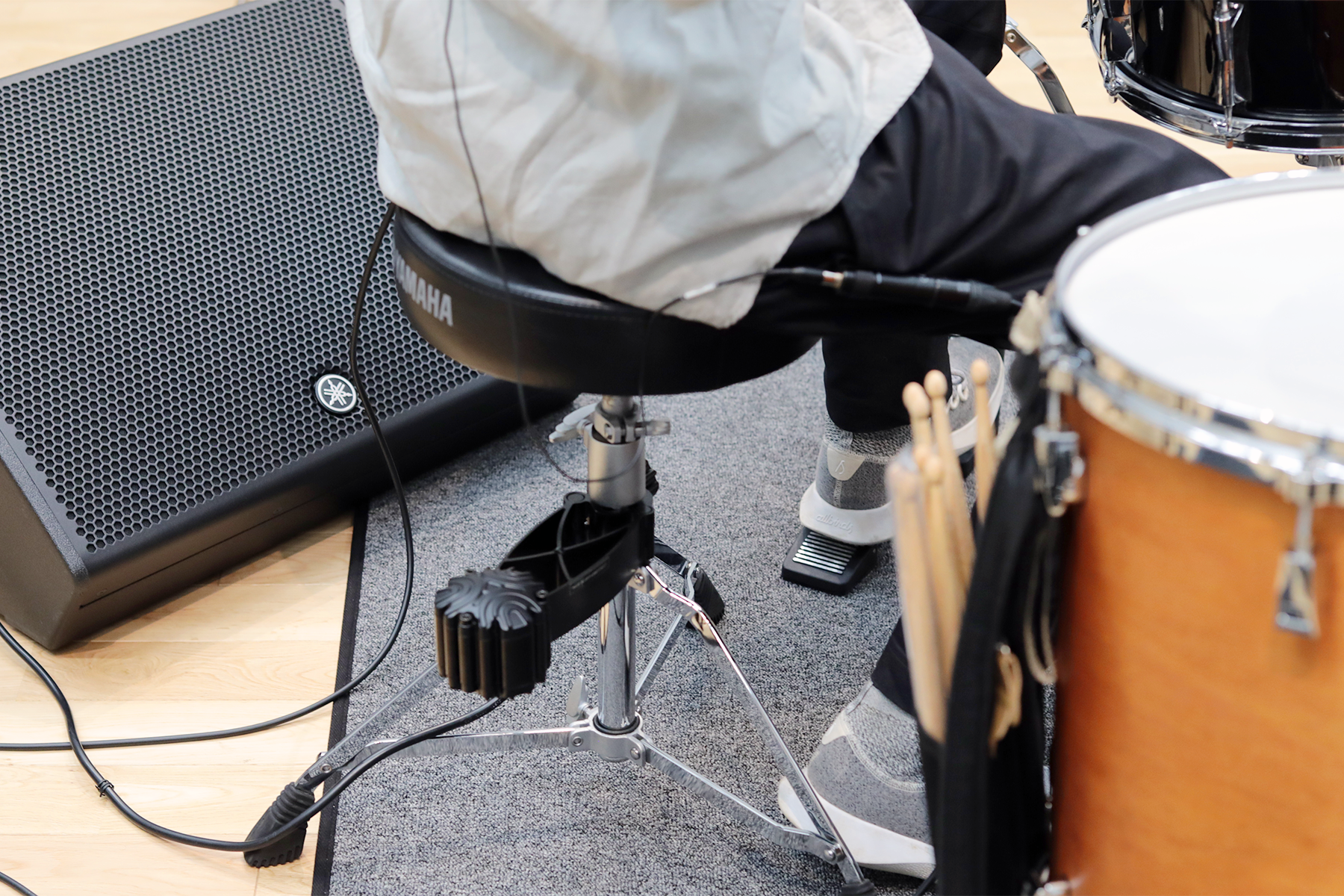
Prototype 3: In order to improve the feeling of the performance, we adjusted the placement of the vibrating motor and the drive signal, and made the stool vibrate in sync with the sound of the bass drum. Mr. Yamaguchi’s response was, “This is so much fun!” He was so excited that he played at a greater volume than expected, causing the sensor on his throat to be triggered mistakenly by the sound of the performance.
Public Debut of VXD
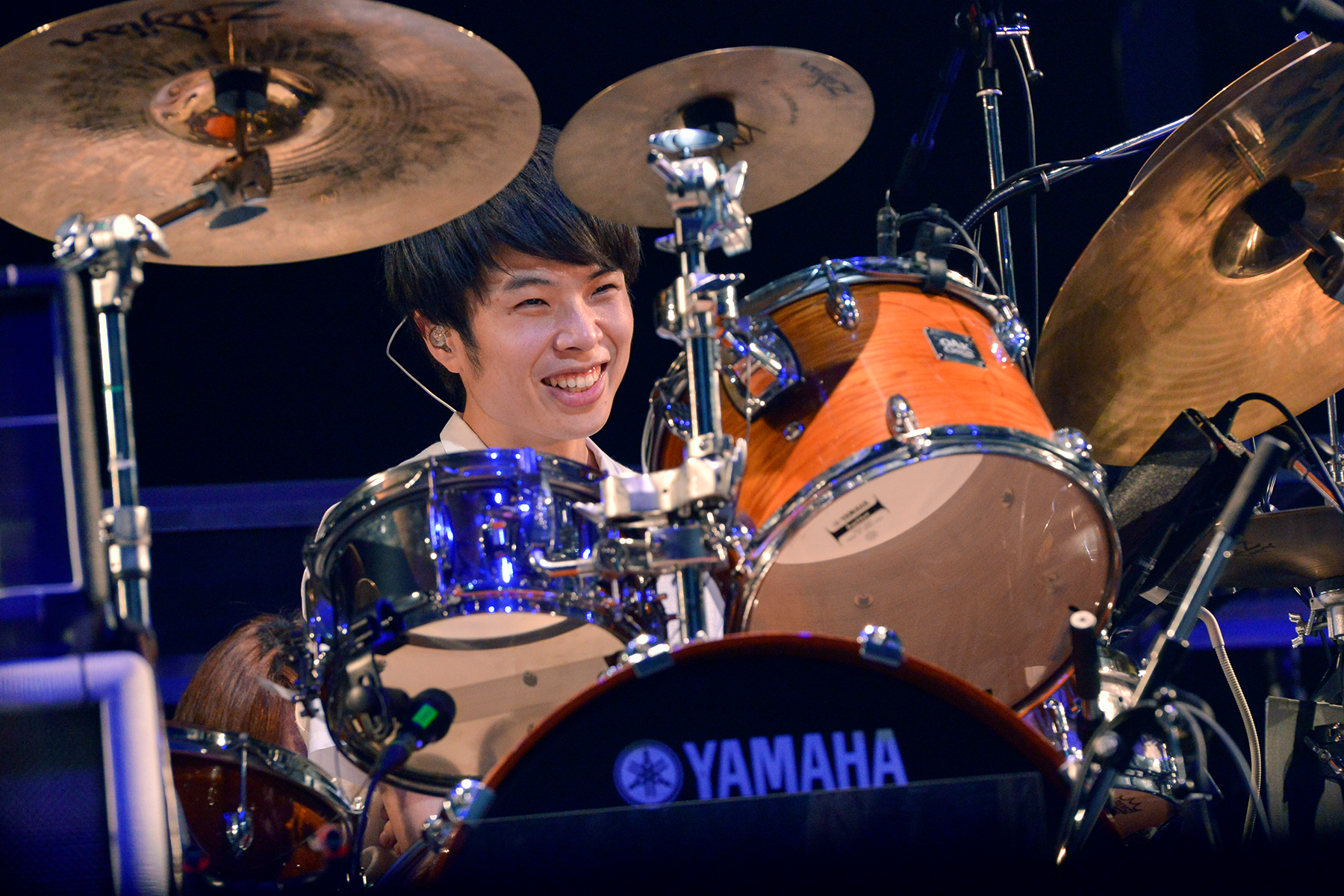
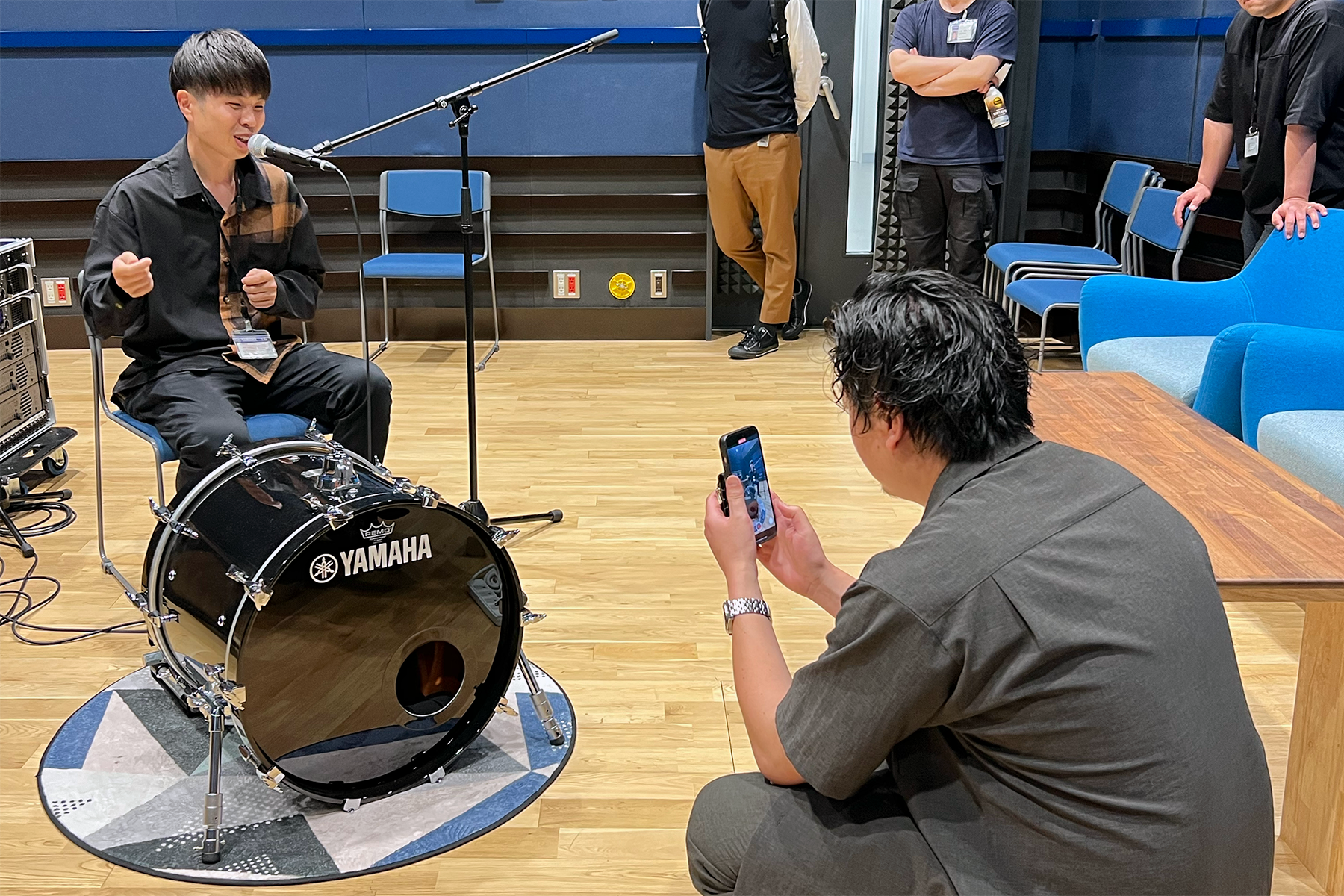
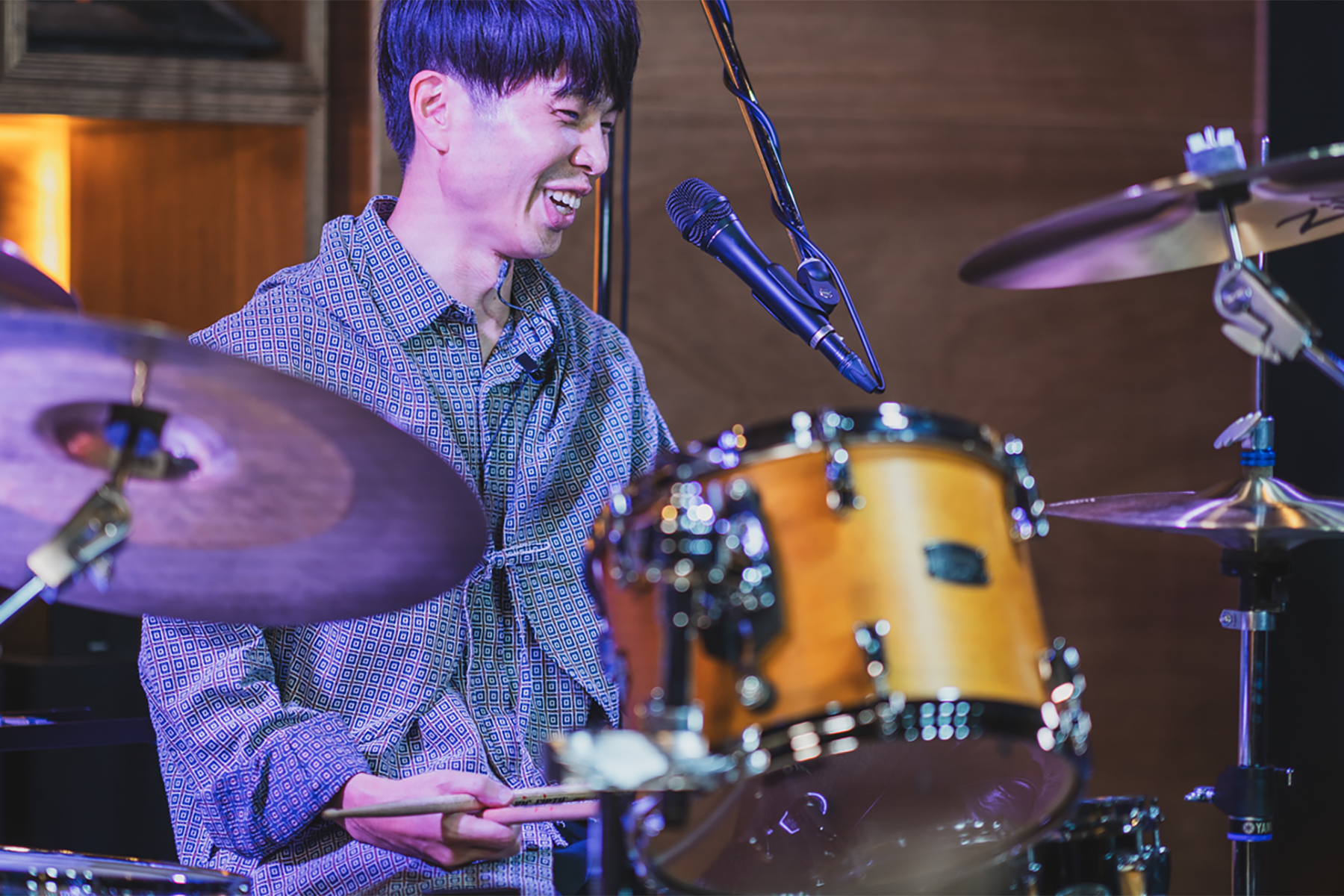
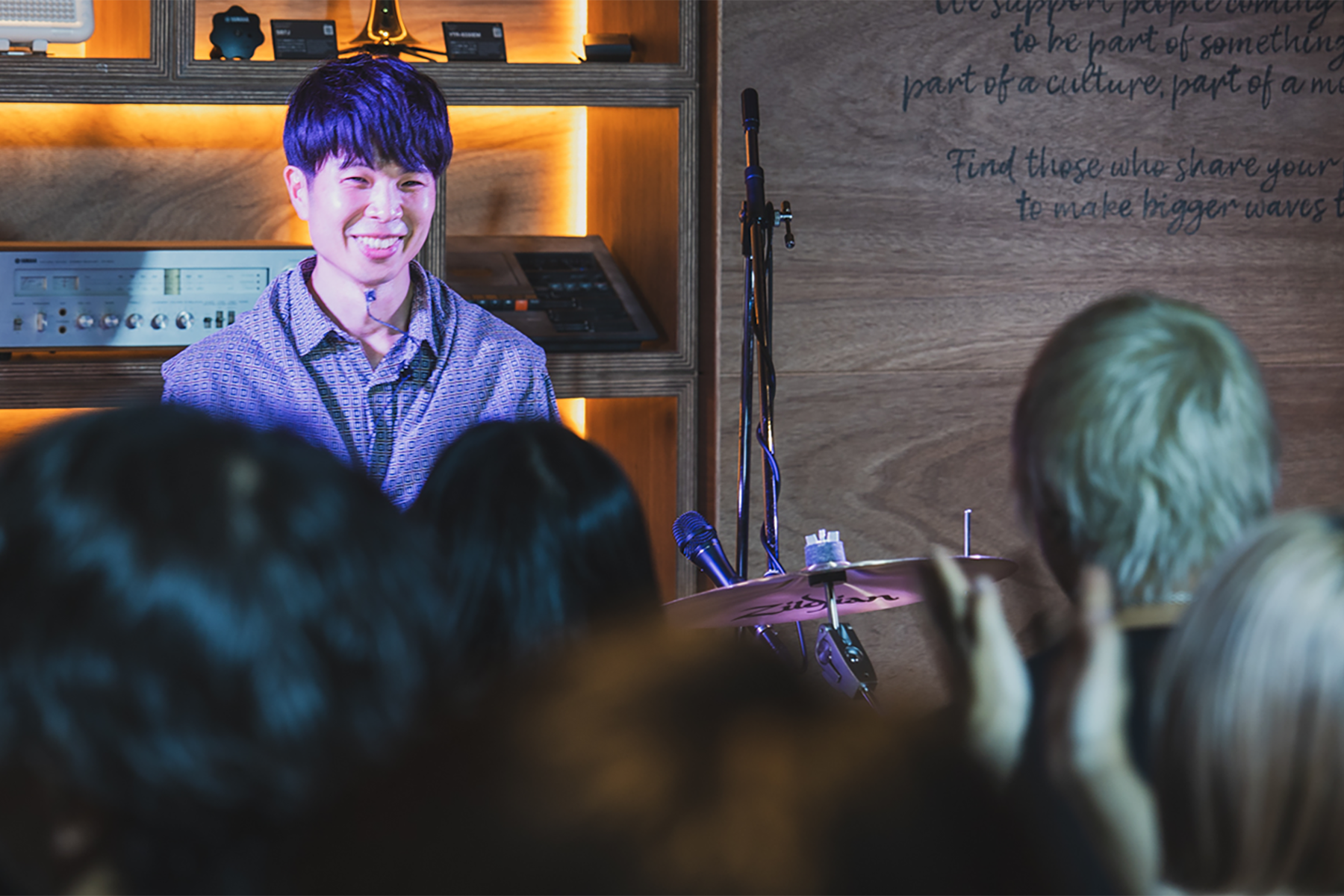
In December 2024, Yamaha held “Future Tech Week” at Yamaha Sound Crossing Shibuya, Tokyo. This was an event for the general public to join us in thinking about the future of music and musical instruments. On December 21st, we welcomed Mr. Yamaguchi to the event as a guest for Yamaha Lab Vol. 3, and he performed with the VXD prototype in public for the first time. He played RADWIMPS’s “25kome No Senshokutai” and “September San” on a drum set equipped with VXD, using the drumsticks in his hands while playing the bass drum by saying “don , don” into the microphone.
This event was not simply an opportunity to share this technology with the public. It was also a chance for Mr. Yamaguchi to share his drum performance with everyone who has supported him, for the first time since he had stopped playing. He invited his family, friends, and music industry colleagues, and was able to show them his newfound ability to play the drums again, while expressing his gratitude for their support. All the guests were deeply moved, and everyone from Yamaha was also very happy to be able to witness this touching moment.
Future Plans
More information about dystonia is being uncovered through research, and yet the general public remains largely unaware while many patients endure suffering without knowing the cause. Furthermore, it is unfortunate that numerous musicians are compelled to abandon their performing careers due to symptoms. This matter is of significant concern for Yamaha.
When we initially learned of Mr. Yamaguchi’s wish to play the drums using his voice, we were somewhat skeptical. However, as we became more acquainted with his background, we understood his strong desire to “get back to the joy of playing music again.” We are dedicated to this project, aiming not merely to replicate drum performances but to recapture the exhilaration of playing. This endeavor, pairing our R&D division with an artist to create a new instrument, is both unique and important. Developer Hiraku Kayama said, “I can’t imagine how painful it would be for a professional musician to be deprived of music.” This sentiment resonates with us deeply, and is why we have continued to develop this system with Mr. Yamaguchi.
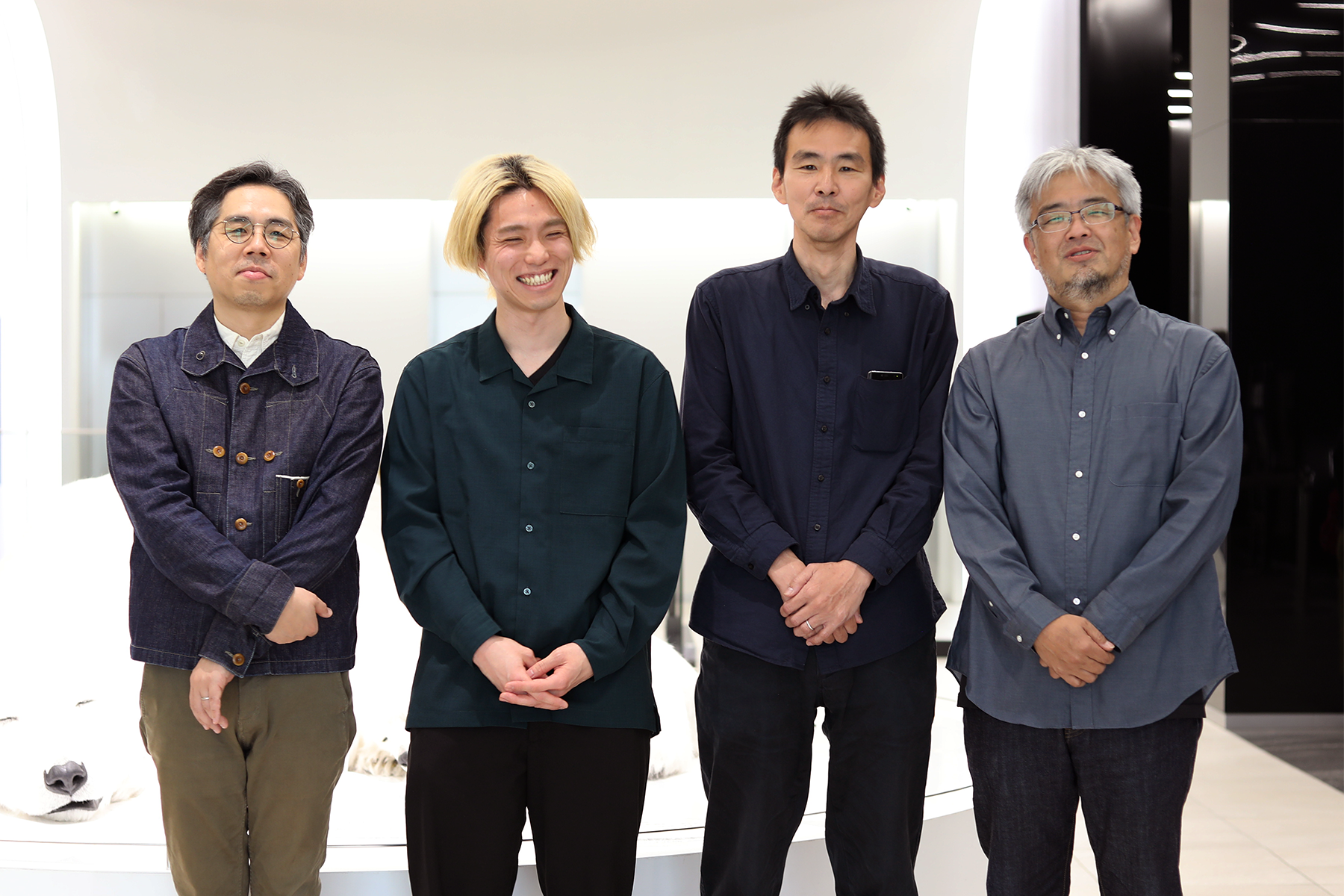
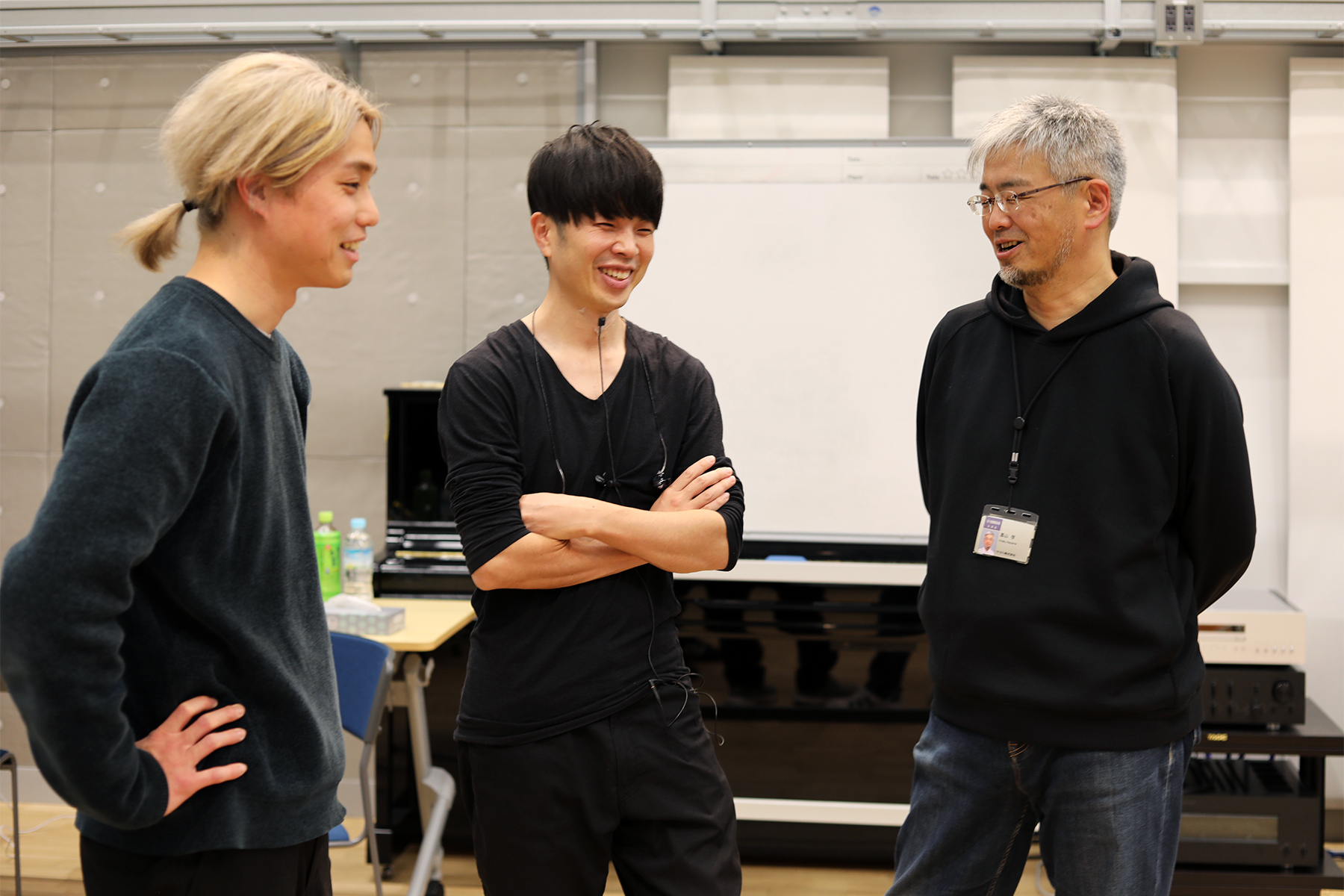
We are planning to make further enhancements to VXD. As Mr. Yamaguchi is still acquainting himself with its full functionality, we intend to continue making improvements as he gains mastery. The December 2024 unveiling captured the interest of other professional drummers, signaling to us that VXD has broader applications.
Our current journey reflects the connections between Yamaha and various individuals. We participate in the Yamaha ethos of “Sharing Passion & Performance” together with Mr. Yamaguchi. Although we have concentrated on the visions of a specific artist during this project, we are convinced that such a deep, focused approach can yield insights into fundamental values and address a spectrum of societal issues. Our project goal remains distant, but we are not focused on an endpoint. Rather, we will persistently explore and embrace new challenges that form an integral part of our commitment to innovation.