Yamaha Tech Showcase in Shibuya
Showcasing Yamaha’s Core Technologies and Cutting-Edge Research
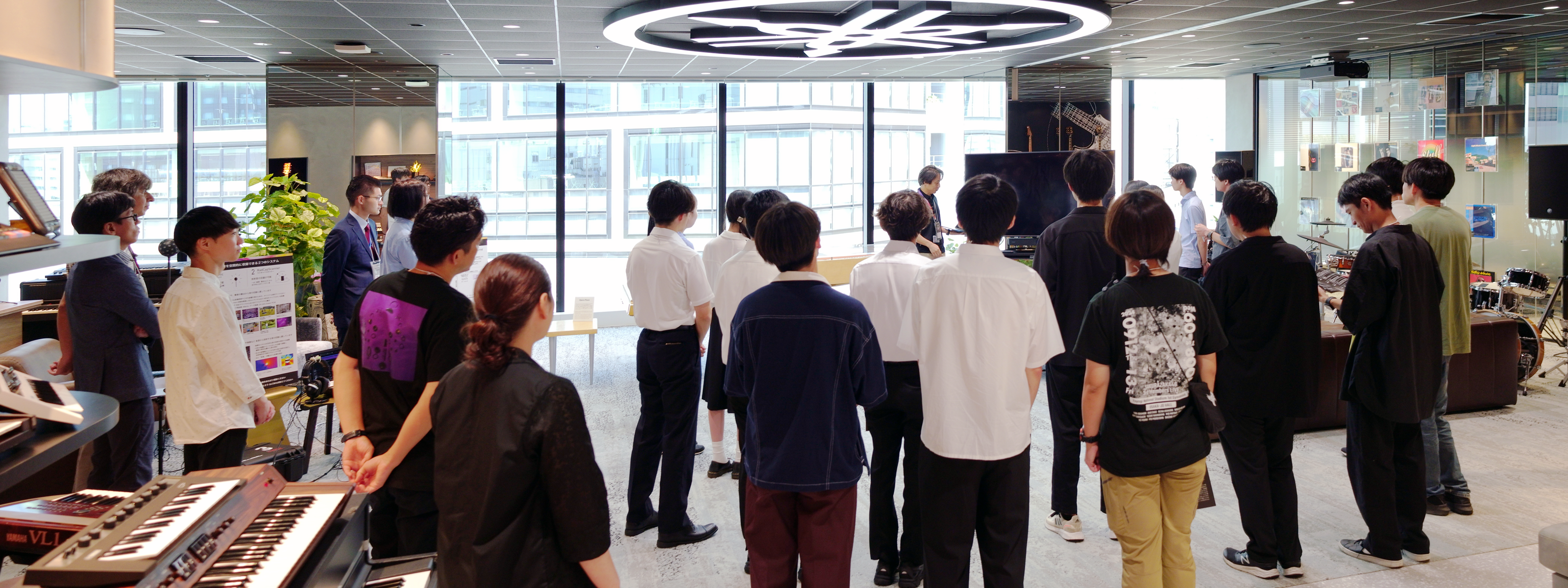
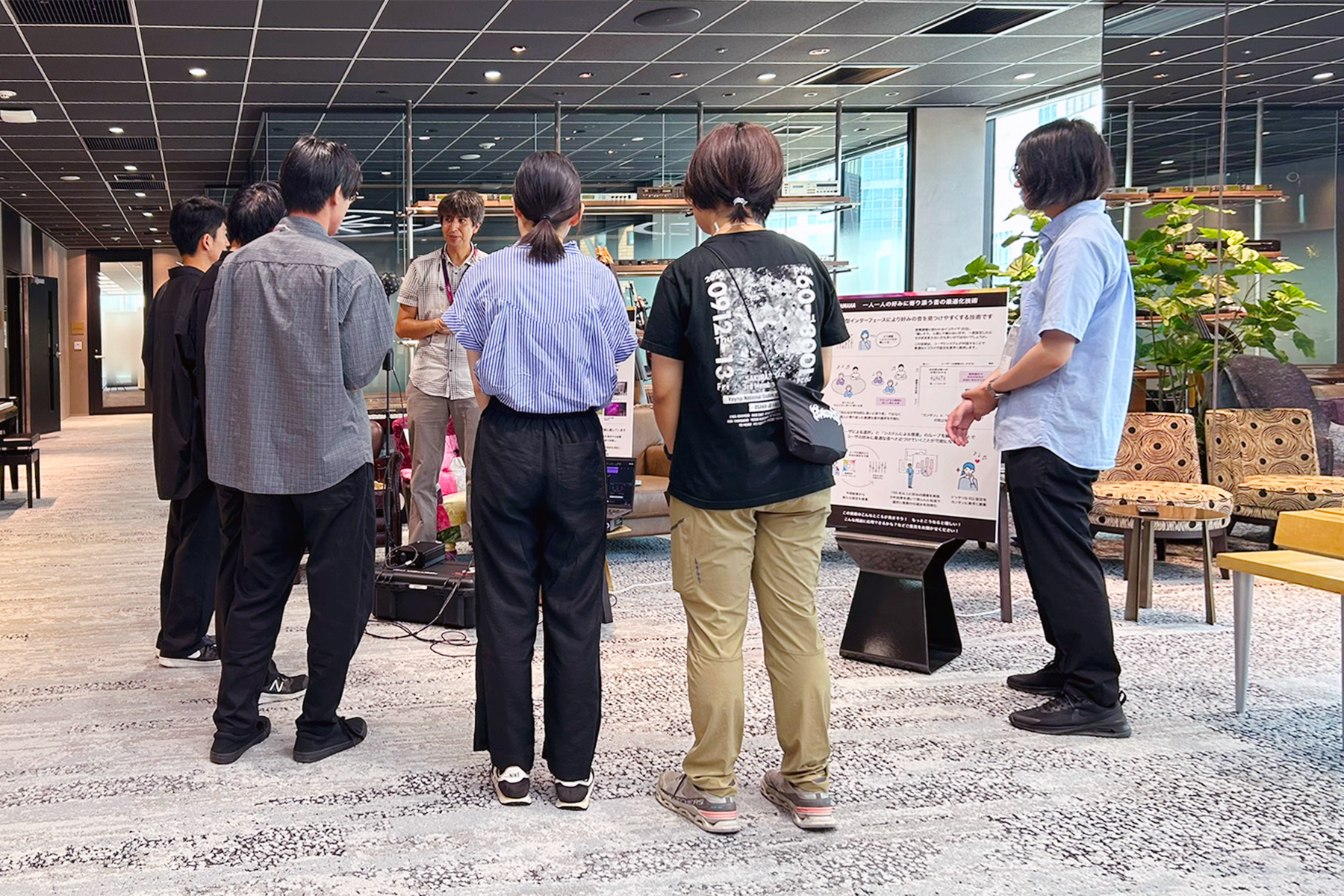
Yamaha once again held the “Yamaha Tech Showcase in Shibuya,” a technology experience event for businesses and students, from August 27 to 29, 2025. This event took place at the “LOUNGE,” a research and development satellite facility of “Yamaha Sound Crossing Shibuya,” which opened in November 2024. Although normally closed to the public, the venue opened its doors for this event. We showcased numerous core Yamaha technologies, allowing guests to experience the future of music, instruments, and sound. In this article we will share the significance of this event and the newest research and technologies showcased there.
Creating Unprecedented Value through Conversation
Yamaha is committed to collaborative research with external organizations to explore technologies and ideas for the future. The Yamaha Tech Showcase is held to introduce Yamaha’s accumulated technologies and expertise, as well as current collaborative projects, to the external community. Through conversations with a diverse range of guests, we aim to create unprecedented value. This second iteration allowed us to communicate with numerous companies, research institutes, and students, exploring new insights and potential collaborations.
We also received concrete feedback from guests on our activities and positive suggestions for new co-creation initiatives. For example, we received comments such as: “Your approach to clarifying the axes of value judgment in human sensibility through various methods was impressive,” “Many elements aligned well with the perspective of scientifically examining emotional value,” and “We would like to explore collaborations that lead to future opportunities.” Yamaha intends to continue sharing our technologies and initiatives through such open events, collaborating with external partners to create new technologies and value.
For more information about each exhibit, please refer to the links on this page.
- Content Experiences Focused on Voice Quality and Singing Voice (Otoha Tsukitsuka Voice-Acting Experience)
- Making Specialized Technology More Accessible (Sound optimization technology tailored to individual preferences, Technology capturing the spatial properties of sound)
- Yamaha’s Continuously Evolving Instrument Design and Development
- Utilizing Technologies Such as AI to Make Playing Instruments Even More Enjoyable (Saxophone-playing avatar support package, Guitar-playing support system)
- Unique Initiatives Born from Collaboration (Kurumi Minato Production Experience, sound biptope, Leisure Encyclopedia, MINA Lab)
Content Experiences Focused on Voice Quality and Singing Voice
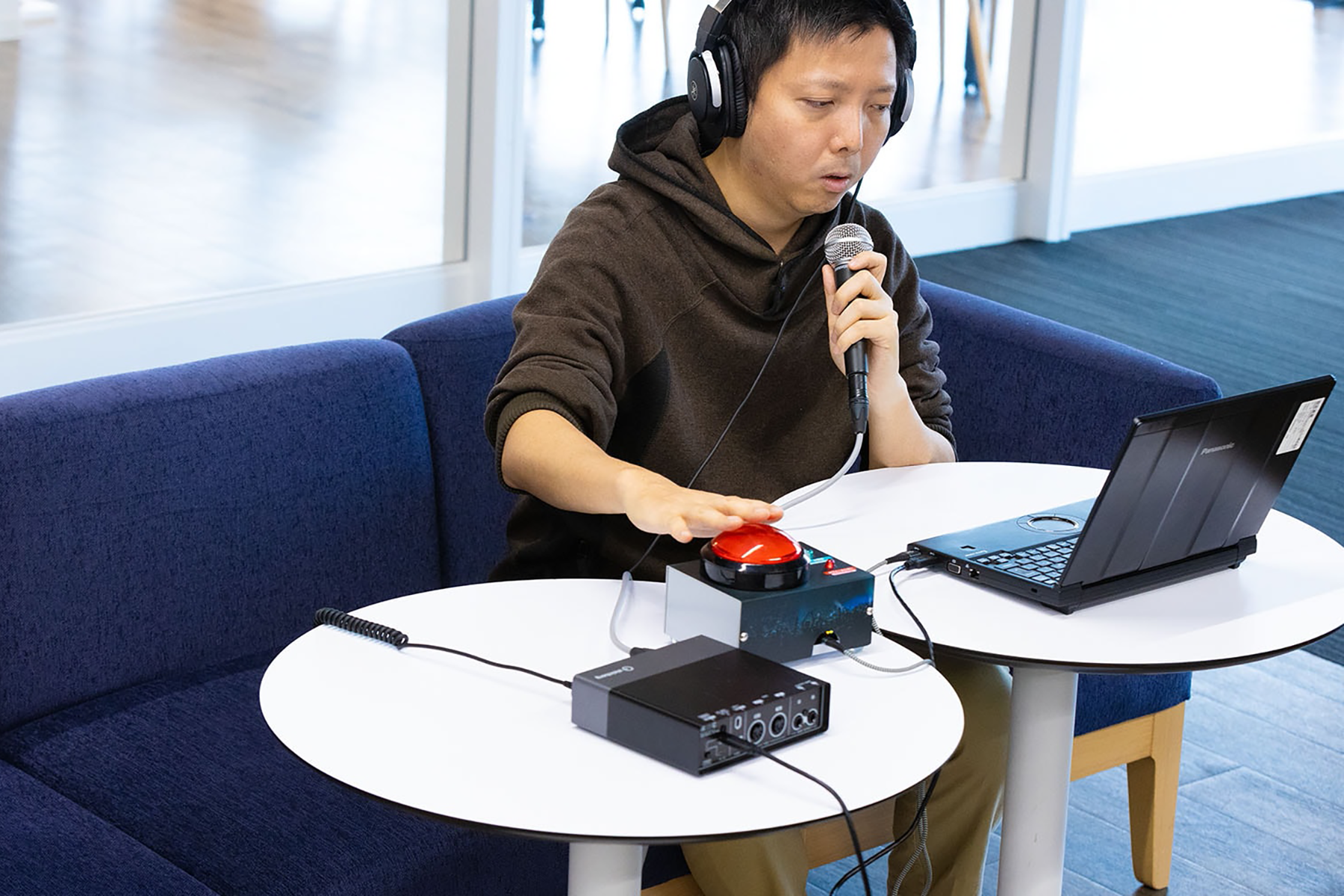
TransVox™ converts a person’s voice quality into that of a completely different individual. At this event, we offered an immersion experience where guests’ words spoken through a microphone were converted almost in real time into the voice of virtual idol Otoha Tsukitsuka. This technology is envisioned not only as a tool for entertainment applications like VTubers, but also as a tool to assist individuals with speech impediments.
Many guests had never encountered such technology before. They were surprised to hear their own voices transformed instantly on the spot, and some even recorded videos of their co-workers enjoying the experience.
Making Specialized Technology More Accessible
An equalizer (EQ) is a device or software that you can use to create the optimal sound quality for your environment. While equalizers are typically used for sound adjustment, many people find them complex and difficult to operate. Yamaha has developed technology that allows users to find their preferred sound quality through intuitive, non-traditional operation, and then suggests the optimal equalizer settings.
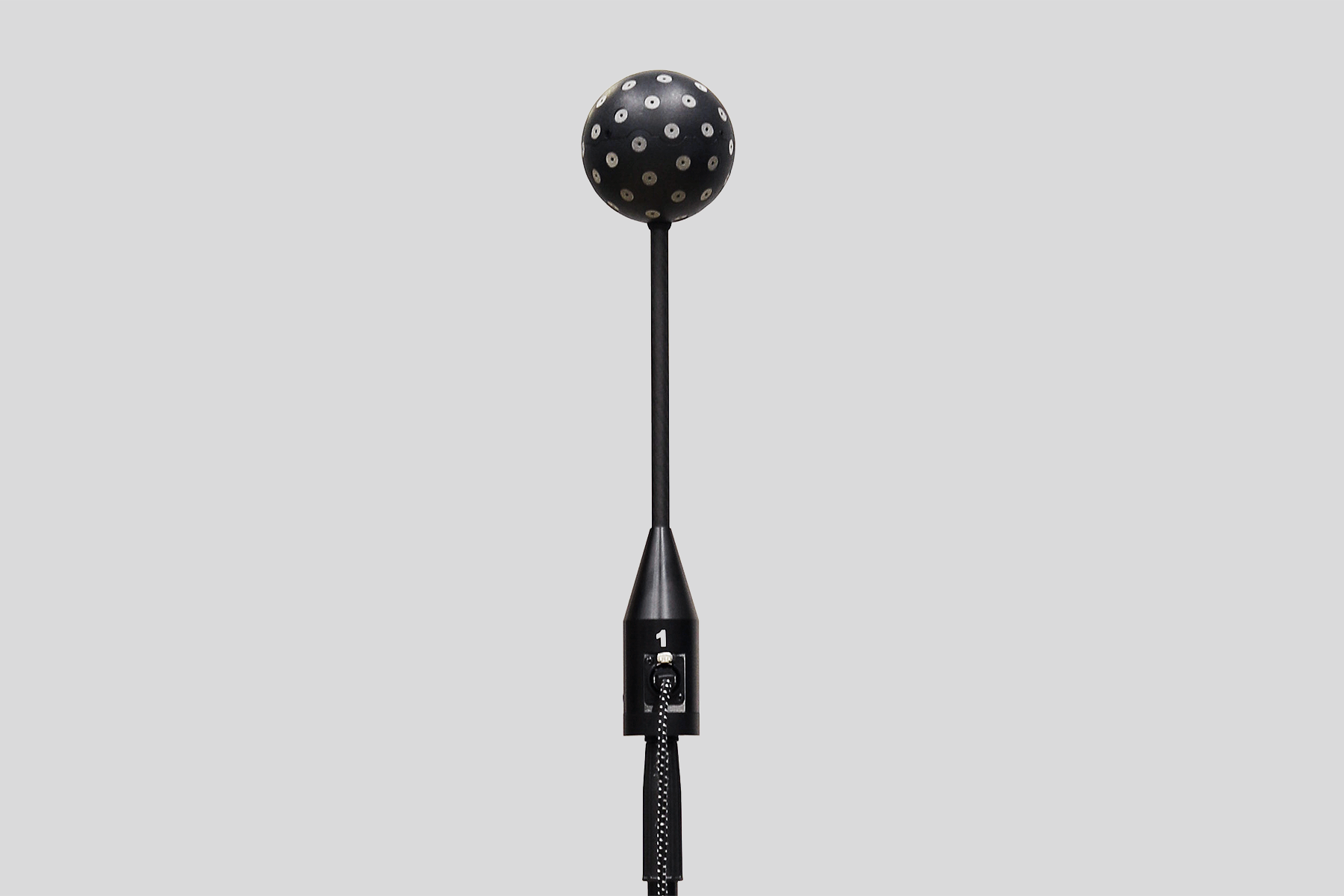
Yamaha is also focusing its efforts on researching sound recording technology. The “ViReal Mic” uses a spherical microphone to capture sound from multiple directions. For example, when recording thunder outdoors, it can capture the variations in the intensity of the sound depending on its direction. Similarly, the “RadCapScanner” device focuses on the spatial spread and the variations in directional intensity of sound. It visualizes the variations in intensity of sound radiation within a space for instruments and other sound sources.
The guests were able to listen to actual recordings made with the ViReal Mic. They were amazed by the realism and made comments like, “I want to measure something with this,” and “I want this array.”
Yamaha’s Continuously Evolving Instrument Design and Development
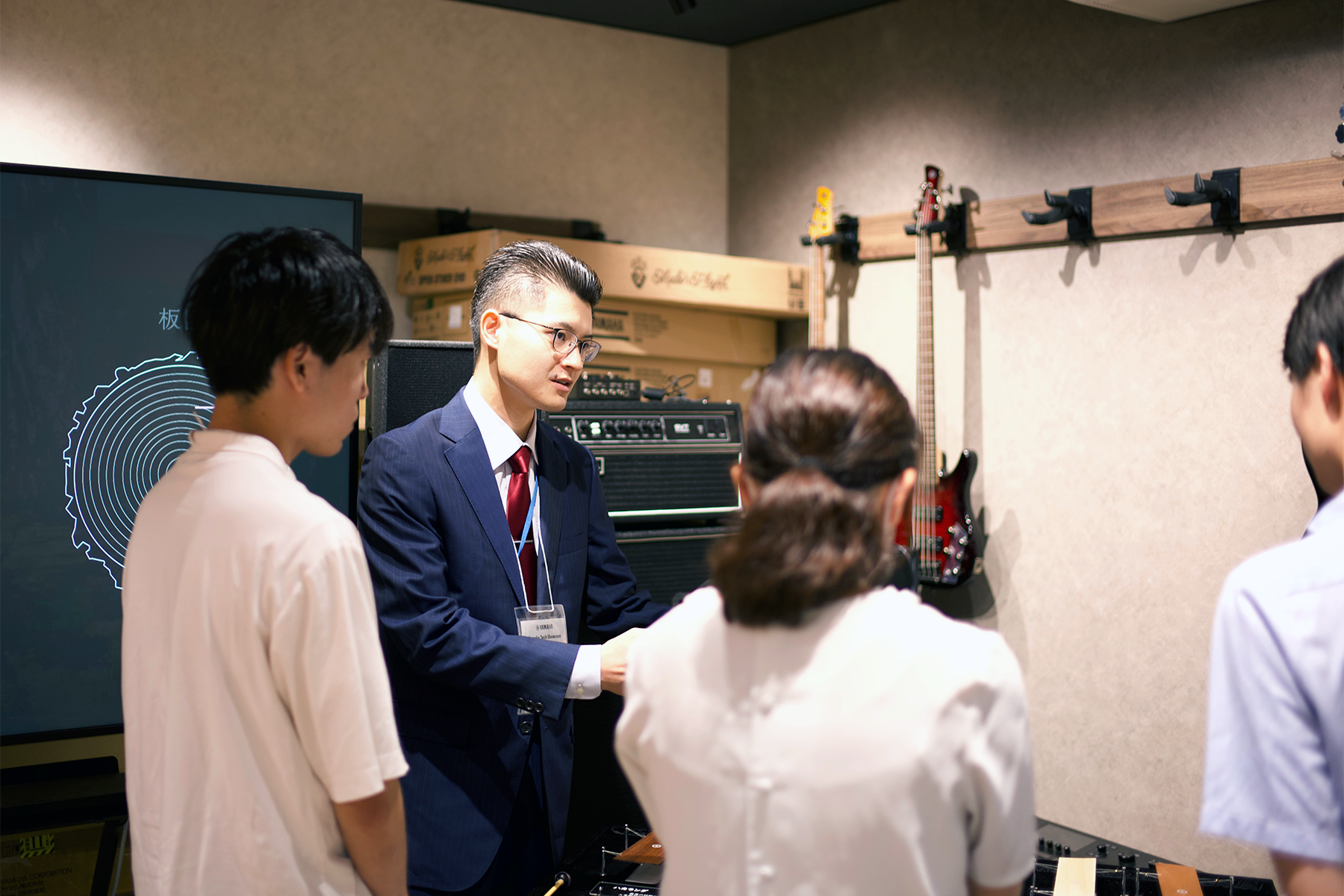
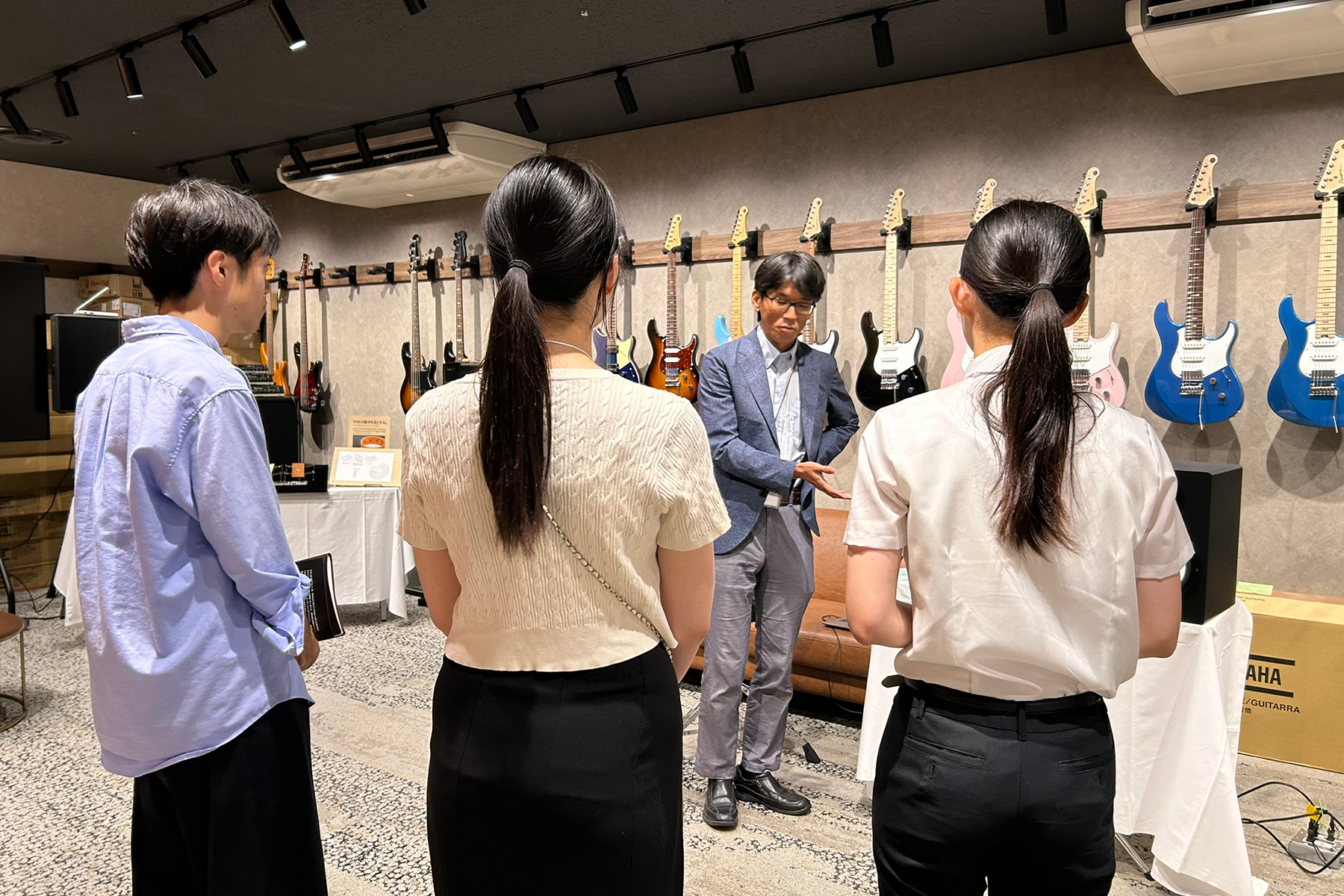
Yamaha’s proprietary instrument design and development technologies are constantly evolving. For example, research is advancing toward practical applications, including efforts to quantify our impressions of the sounds we hear, and technology that simulates the sound of a guitar after you have specified its design and materials. Furthermore, research into instrument materials is essential for sustainability. Using wood for acoustic guitars as an example, research is advancing on the differences in sound produced by various wood species and efforts to reproduce the sound of rare woods using alternative materials.
The guests provided high praise, such as “The approach to scientifically capture individual sensibility—a value judgment axis that is difficult to visualize or verbalize—was impressive. I also felt a sense of pride in the engineers’ attitude, demonstrating they have thoroughly mastered experiential learning by observing their mentors,” and “It was clear they are actively trying various approaches towards sustainable manufacturing.”
Utilizing Technology Such as AI to Make Playing Instruments Even More Enjoyable
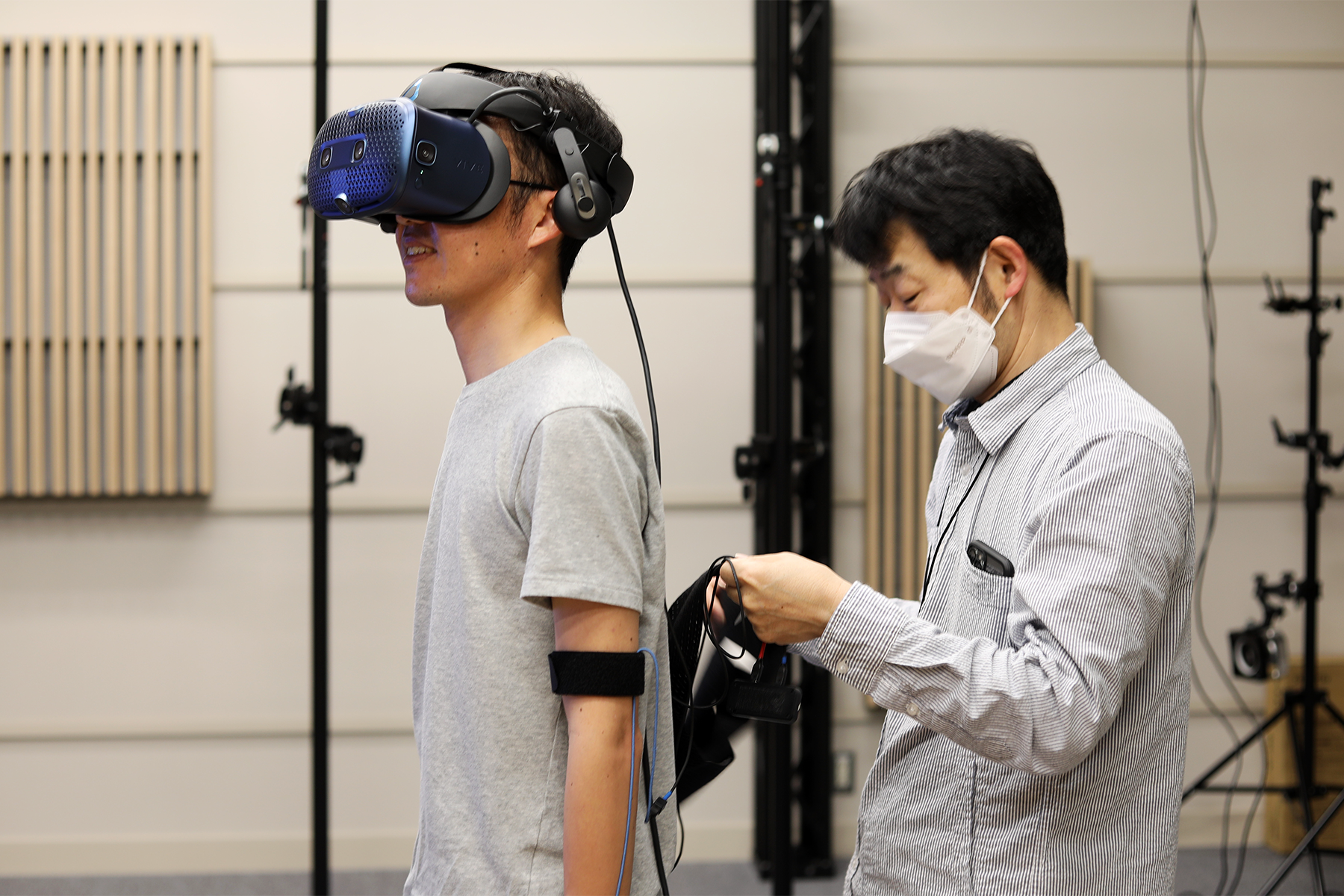
Yamaha is also focusing on technologies that enhance the enjoyment of playing musical instruments. For example, the “Saxophone-playing avatar support package” provides a system where an avatar mirrors a saxophone player’s movements. When the player performs on Yamaha’s digital saxophone, sensors built into the instrument capture the movement, and the software synchronizes these motions with an on-screen avatar. It opens up various potential applications, including saxophone performances by VTubers.
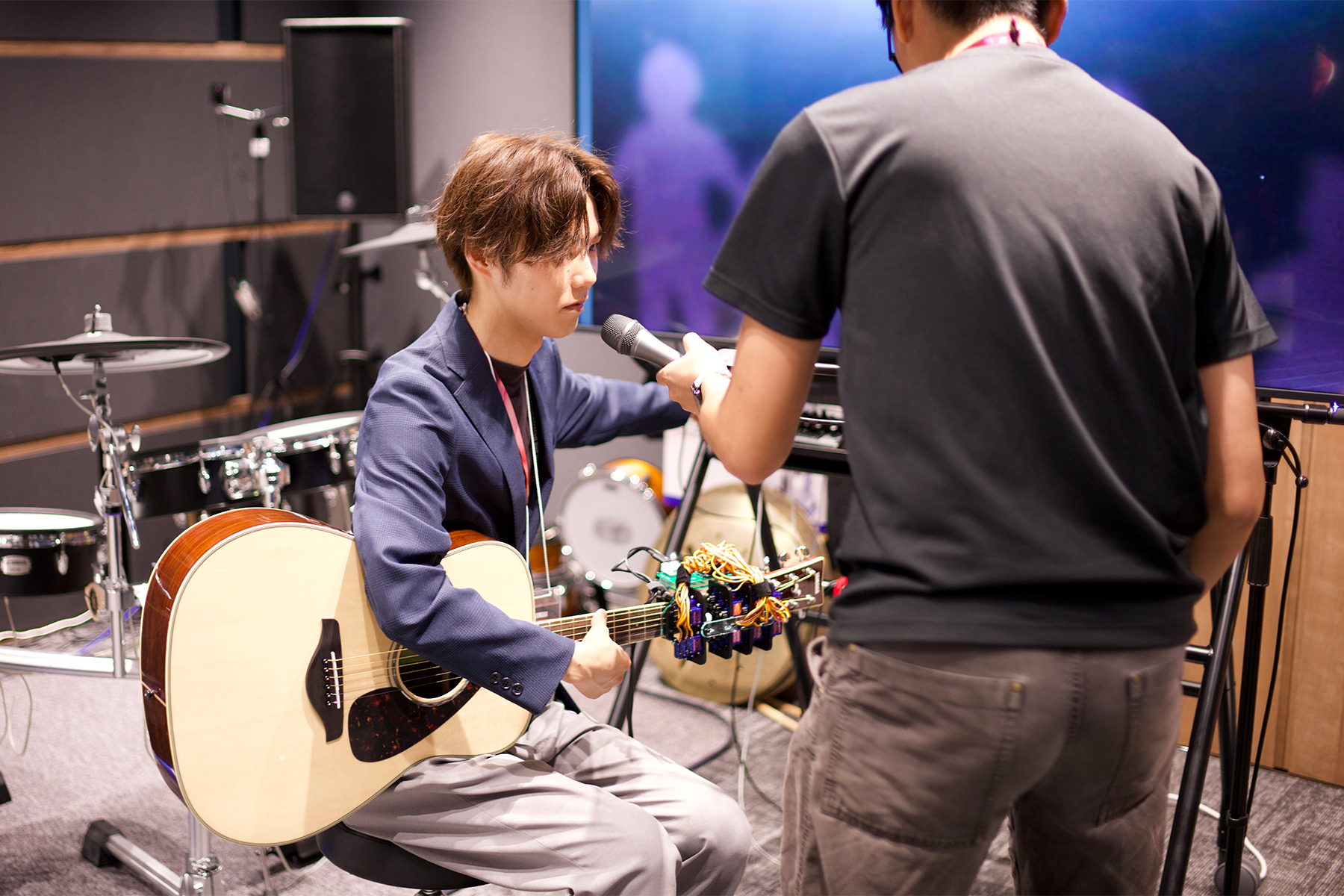
Additionally, the “Guitar-playing support system” allows you to enjoy singing while playing the guitar even without knowing chords. Based on the player’s singing voice, AI detects which part is being sung and a special device presses the strings to make the corresponding chords. The singer can play a song even if they do not know the chords, with just one hand strumming the strings. This system was realized through collaboration: Kumamoto University developed the device that holds the chords, while Yamaha developed the AI technology that detects and tracks the part being played.
Unique Initiatives Born from Collaboration
In addition to technology, numerous unique initiatives born from collaboration have also emerged.
“Yokohama AI Idol Kurumi Minato Production Experience” allows you the freedom to produce content based on the AI idol Kurumi Minato and the music she sings—adjusting the tone of her singing voice, changing the musical style, or altering the performance environment. We created this new musical experience by combining “Harmony Sensor,” a music-based inquiry learning system from DATTARUJIN Inc., with Yamaha’s vocal synthesis technology. The guests offered concrete suggestions for future applications, such as “This could be combined with our own content to create something interesting” and “This initiative could be the basis for a new business model.”
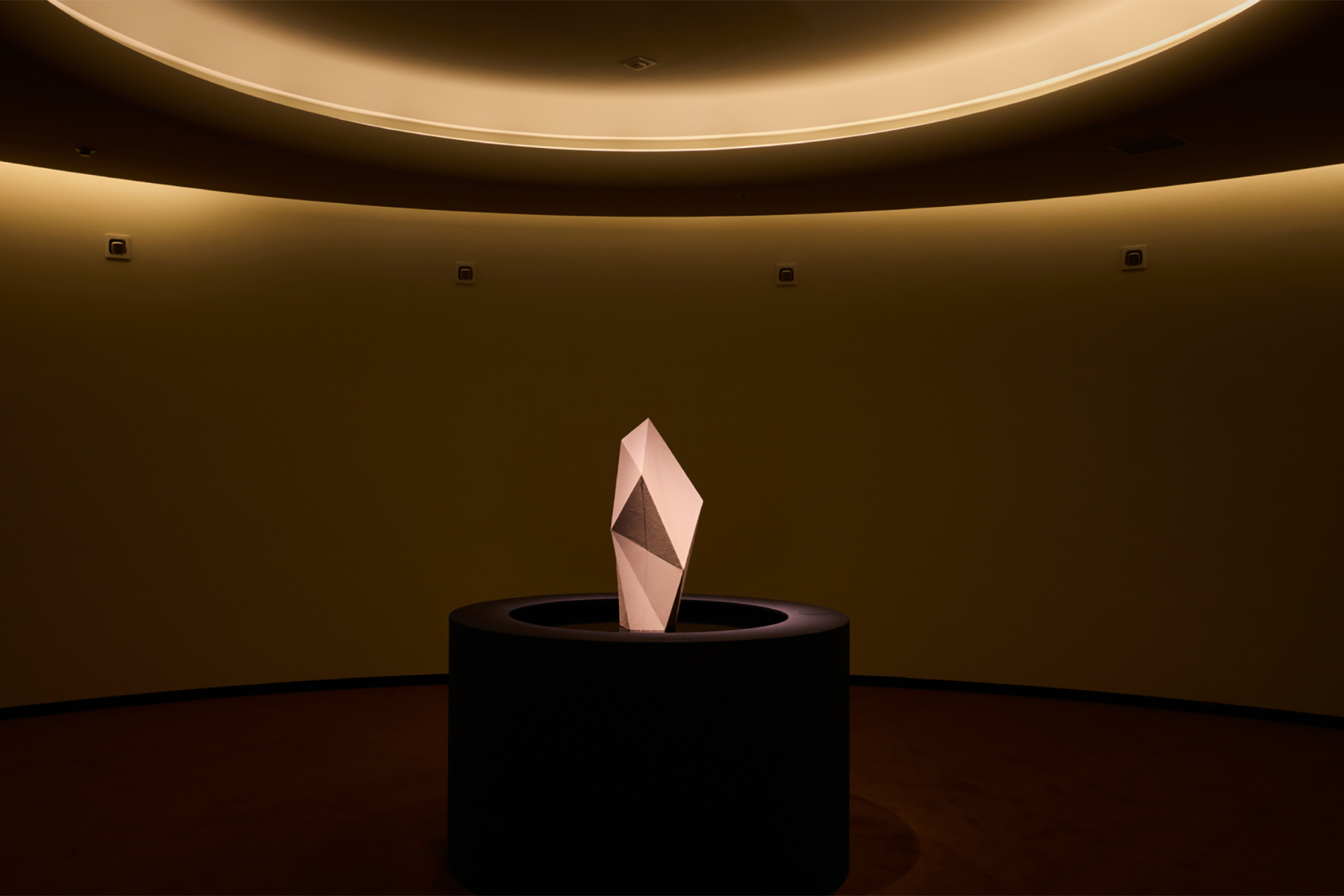
“sound biotope,” a co-creation project that enhances creativity through sound, is a collaboration with the creative collective Konel Inc. Within “magmabooks,” a new concept from Maruzen Junkudo Bookstores Co., Ltd., we have created a space in which sound eases your thoughts and soothes your mind. Utilizing the principle of suikinkutsu, a technique from Japanese gardens, the space is filled with the sound of dripping water.

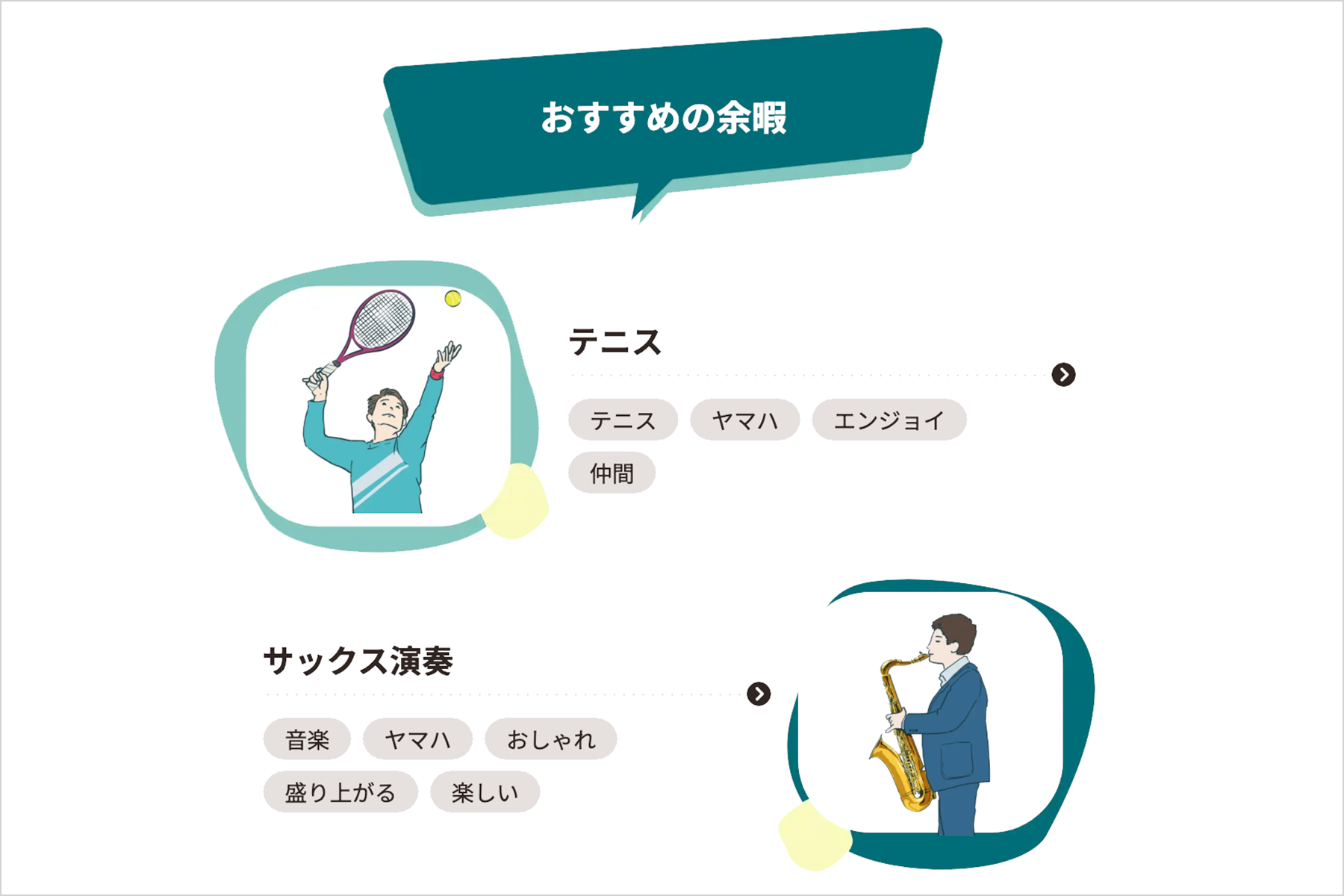
Additionally, “Leisure Encyclopedia,” our joint research project with Shizuoka University, represents a new initiative extending beyond the fields of sound and music. While career education for students has become widespread in recent years, much of it tends to focus heavily on work. This project, therefore, puts the spotlight on “leisure” and creates web content and other materials to convey the breadth of life.
We also introduced “MINA Lab,” a Yokohama-based development hub where we collaborate with external partners to advance research in AI-centered music information retrieval technologies. Utilizing the previously mentioned “performance-following AI,” open proof-of-concept experiments are underway, including “Daredemo Piano,” which automatically generates accompaniment for melodies played with one hand. The guests expressed interest in our AI initiatives and the measurement systems under development, with several stating they would like to explore concrete opportunities for collaboration.