
PARSLEY - Milan Design Week 2026

Showcasing six visionary works that redefine ornamentation in contemporary design.
![[ Image ] The exhibition venue #1](report/pict_001.jpg)
The exhibition venue #1
![[ Image ] The exhibition venue #2](report/pict_002.jpg)
The exhibition venue #2
![[ Image ] The exhibition venue #3](report/pict_003.jpg)
The exhibition venue #3
![[ Image ] The exhibition venue #4](report/pict_004.jpg)
The exhibition venue #4
![[ Image ] The exhibition venue #5](report/pict_005.jpg)
The exhibition venue #5
![[ Image ] The exhibition venue #6](report/pict_006.jpg)
The exhibition venue #6
![[ Image ] The exhibition venue #7](report/pict_007.jpg)
The exhibition venue #7
![[ Image ] The exhibition venue #8](report/pict_008.jpg)
The exhibition venue #8
![[ Image ] The exhibition venue #9](report/pict_009.jpg)
The exhibition venue #9
![[ Image ] The exhibition venue #10](report/pict_010.jpg)
The exhibition venue #10
![[ Image ] The exhibition venue #11](report/pict_011.jpg)
The exhibition venue #11
![[ Image ] The exhibition venue #12](report/pict_012.jpg)
The exhibition venue #12
Overview
Decorating our lives
Yamaha Corporation is a Japanese company that makes and sells a wide variety of musical instruments and audio equipment. As we industrialize musical instruments, which were once precious works of art, treasures of humanity with a history that stretches back to ancient times, we are striving to pay homage to that culture and tradition while leveraging new ideas and techniques to give them a modern interpretation and enhance their value. One theme that constantly confronts us in this process is that of ornamentation. Although it would be difficult to say that musical instruments make our life more convenient, music brings fulfillment by adding color and richness to everyday life, and in that sense one could say that both music and musical instruments decorate our existence.
What is ornamentation, and what does it mean to us? Is it decorative? Are there such things as functional and non-functional ornamentation? Is ornamentation a tradition or a trend? Is it frivolous? Is removing ornamentation to create a minimalist appearance itself another act of ornamentation? Is ornamentation only visual beauty? Who defines what beauty is and is it actually something we should define? What exactly is its allure?
Reflecting on ornamentation again reveals a variety of different perspectives, and there are aspects that cannot be explained by logic alone or understood completely by others. A person’s interpretation of ornamentation may offer a glimpse of their true nature—or that may just be a fleeting illusion that changes with their mood or circumstances. Perhaps, in ornamentation we find something that stirs the senses; an expression of sensitivity that leads to joy, beauty, confidence, and then maybe, to new discoveries.
Although there may be no single answer to these questions, I find myself thinking about ornamentation constantly. These works trace the journeys of individual designers who have contemplated ornamentation from a variety of different perspectives. With the utmost sincerity—and with delight and anticipation—I hope that music and musical instruments will continue to decorate our lives, nourish our souls, and adorn our existence with richness and diversity.
Exhibition Concept
You may be surprised to hear that in Japan, parsley is often used as a garnish. For the members of our group who had been pondering the particular value and significance of ornamentation and adornment, the sight of a sprig of parsley on a dish was a curiously captivating presence that seemed to imply something. Parsley is perceived and appreciated in different ways by different people and cultures. It is an essential ingredient in some cuisines, while in others its aroma, bitterness, and fresh green appearance are used to balance a dish. In still others, parsley is nothing more than a simple garnish. This diversity of roles seems to mirror that of ornamentation in our lives. The simple, silent presence of the parsley at our dinner party seemed to be an eloquent expression of its multifaceted value. We are sure that ornamentation, too, has a special value and significance. Perhaps, in that sense, it is like parsley.
Exhibited Works
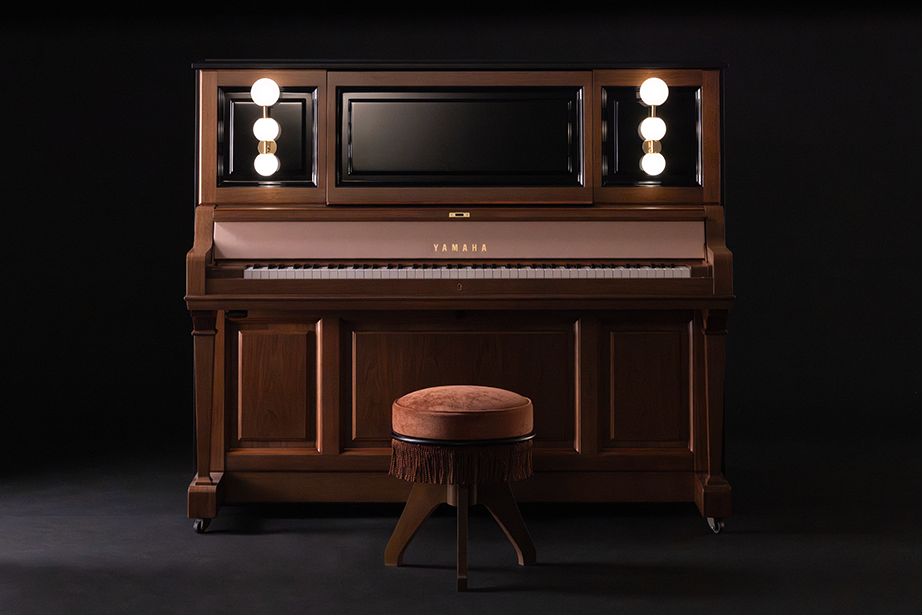
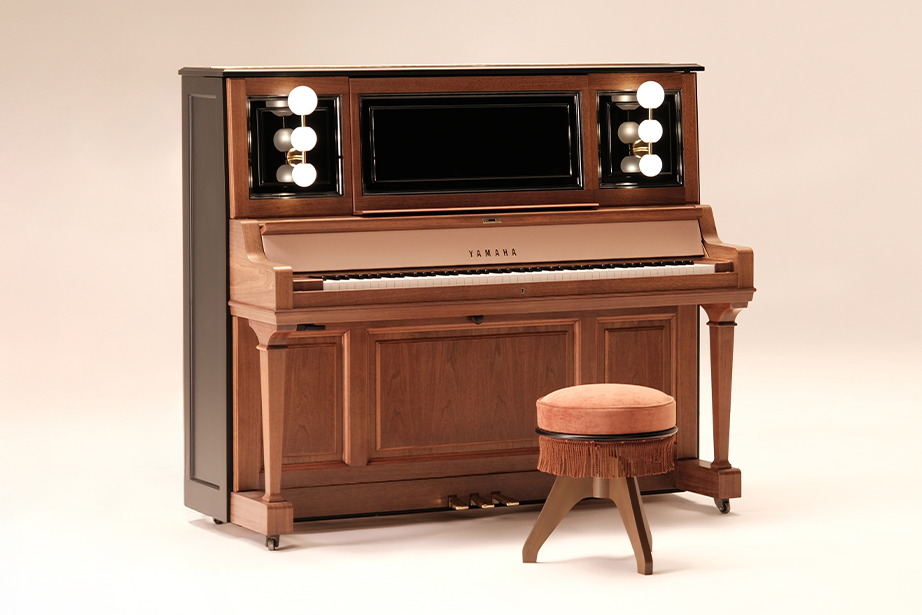
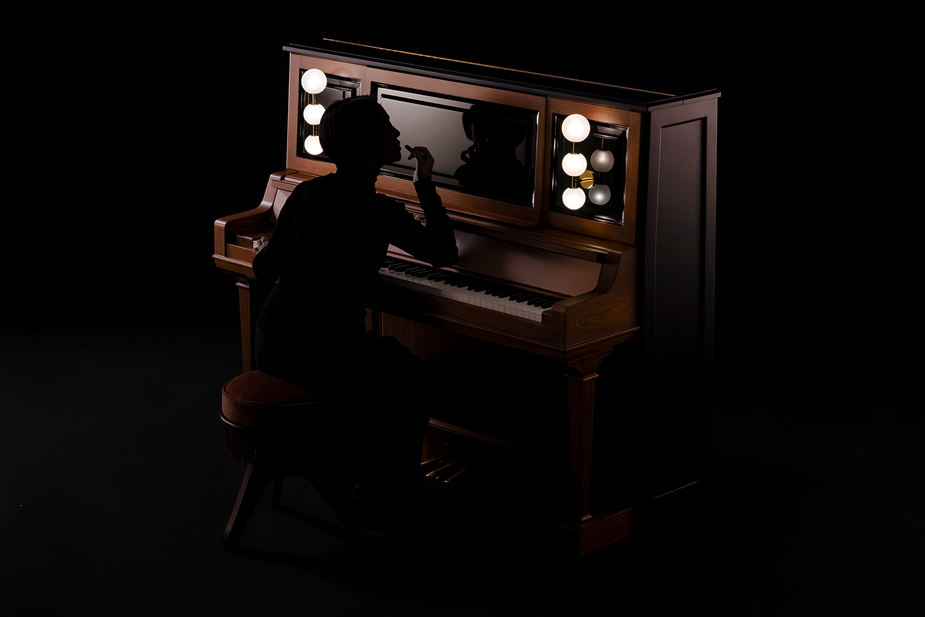
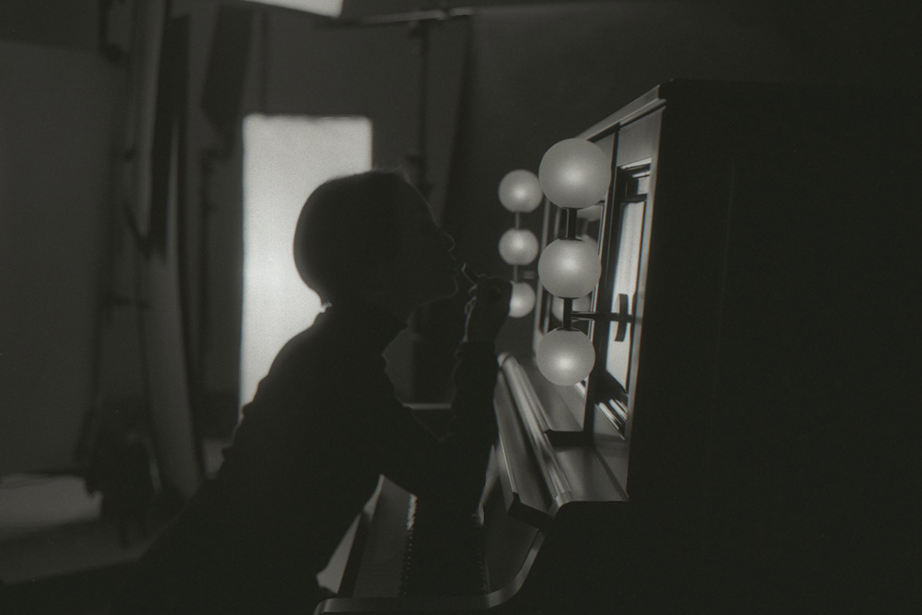
DRESSING
Originally made in 1983, this piano was carefully repaired by skilled artisans to take on the aspect of a dresser, featuring a modern reinterpretation of the candleholders once attached to old pianos. Lights turn on when you open the lid, heightening the anticipation felt before performing.
The mirror-like polished piano black surface reflects the performer’s appearance, capturing gestures and actions that change with daily practice. In this design, we sought to create a presence that transforms time spent at the instrument into something truly special.
In the days when there were candleholders on instruments, rooms were only dimly lit, and candlelight was necessary when playing at night. As technology progressed, rooms became lighter, changing the value that we attach to light, and now gentle, beautiful light lifts our spirits every day. Perhaps dressing up is what lies at the very heart of ornamentation.
SPARKLING
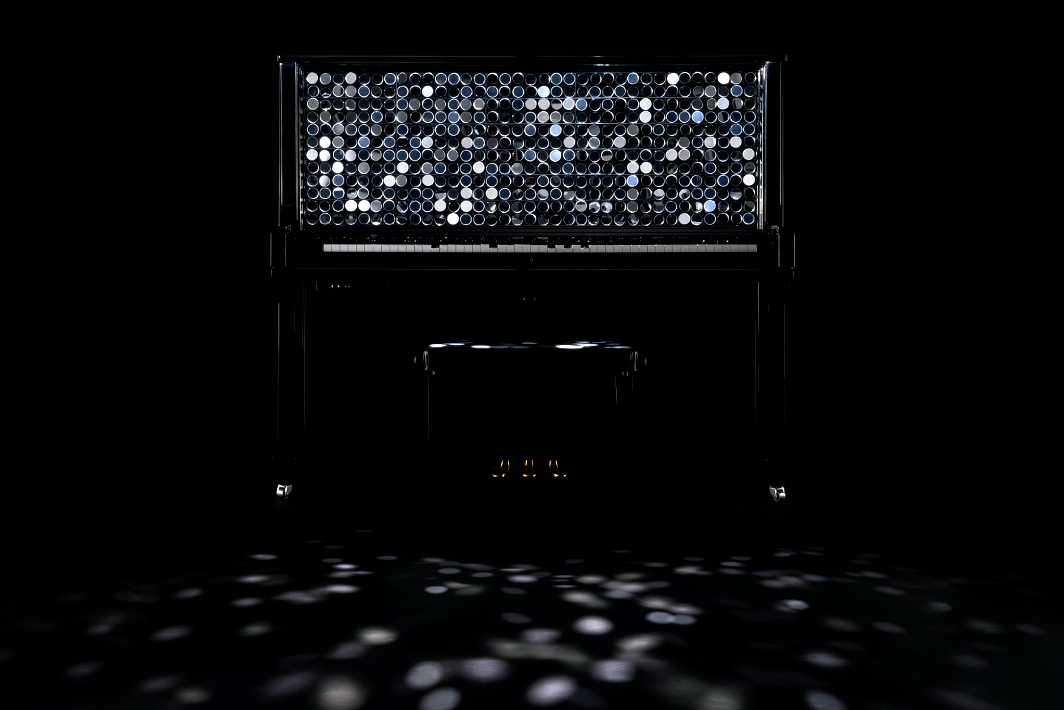
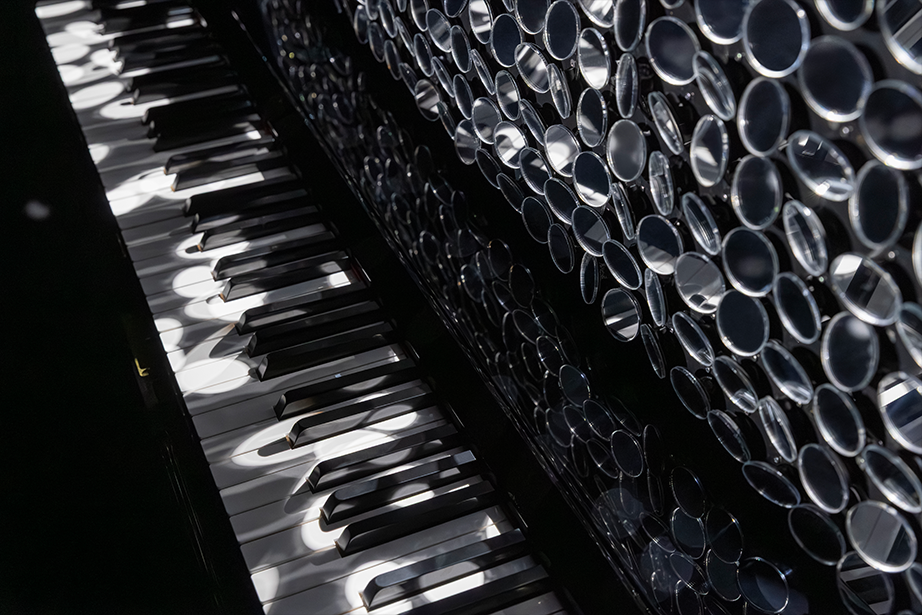
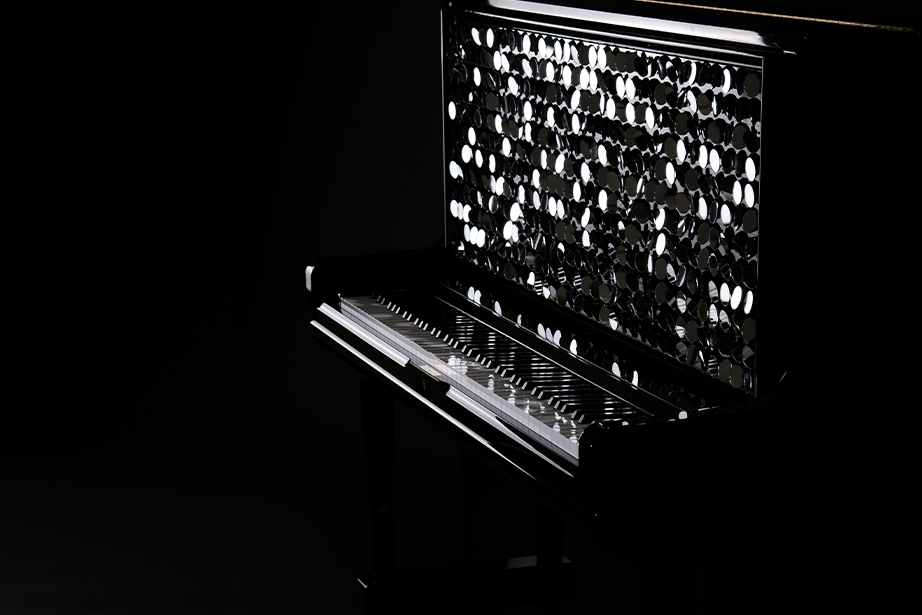
A piano adorned with more than 400 independently moving mirrors. When lit with a spotlight the instrument sparkles with countless points of light that fill any space, enveloping everyone present in the experience.
The lights flicker in response to the piano’s automatic performance, materializing and vanishing in an instant like shooting stars. Listeners follow the lights as they wait for the next note, their gaze and awareness drawn to the music, transforming the act of listening into something deeper and more immersive.
The sparkling mirrors are an enthralling sight that transform the room into a sky full of stars, each with edges that twinkle like tiny jewels in the night. If a mirror ball is a device to spread excitement, then this piano is one that turns your awareness inward. Experience the enchanting sensation of being immersed into happiness.
SEASONING
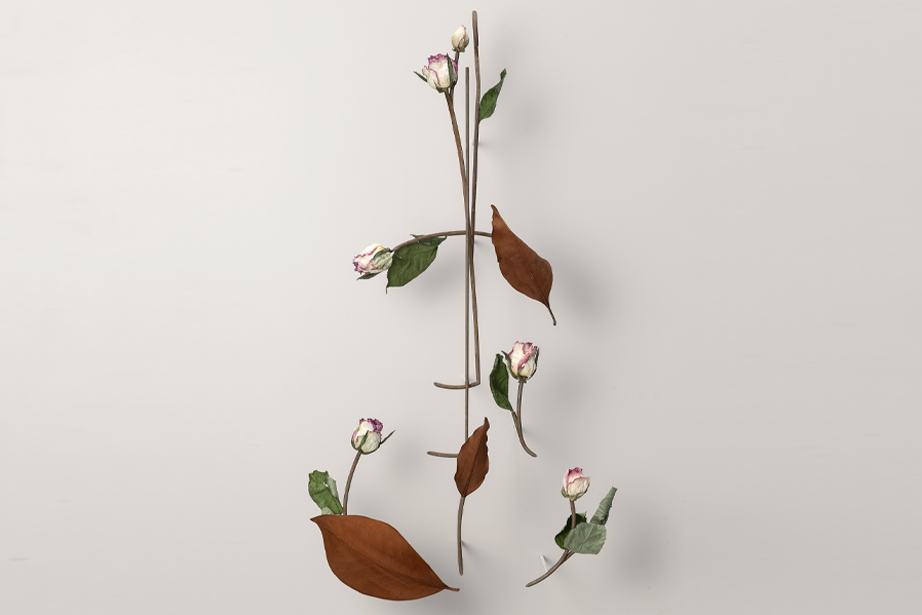
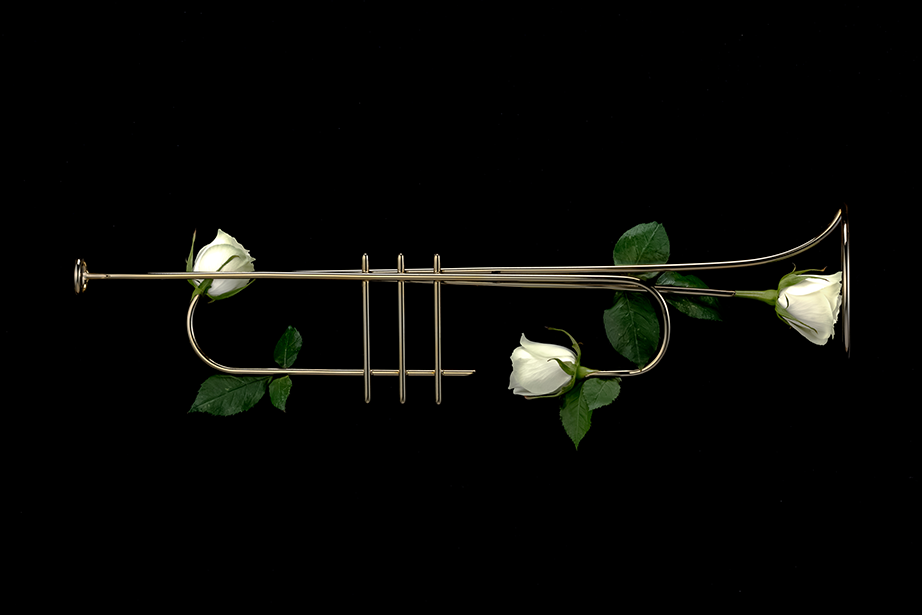
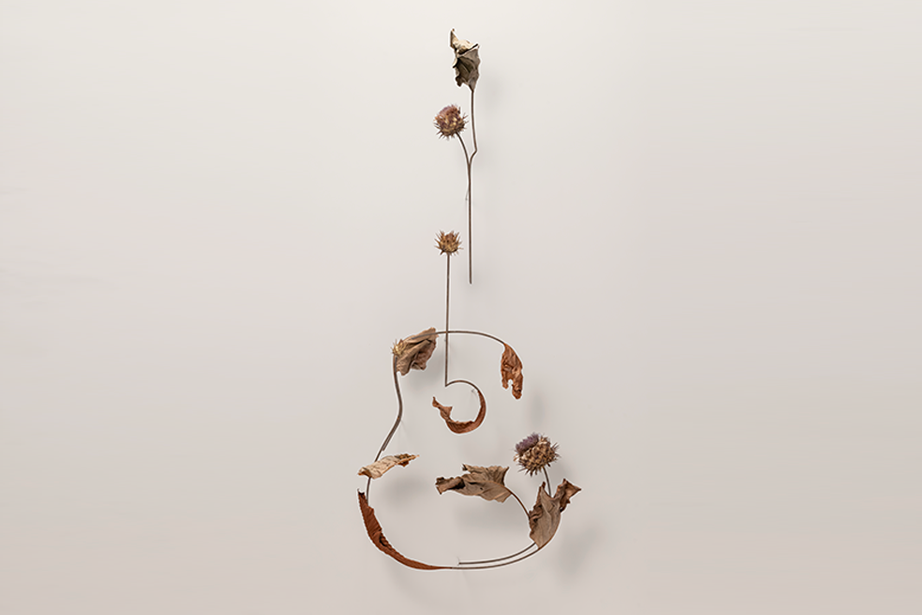
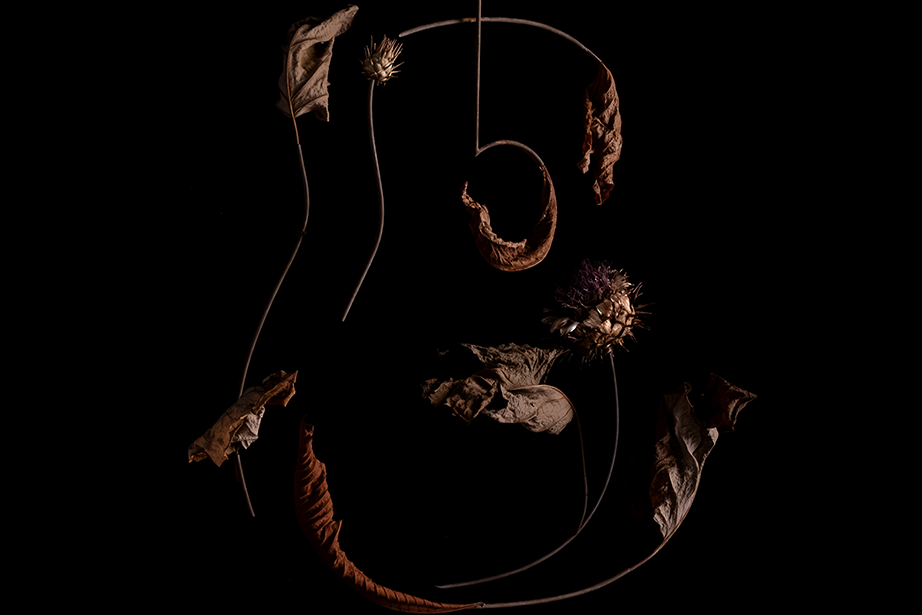
It is said that the custom of arranging flowers has its origins in ancient civilizations. Plants have been used as decorative motifs and standards of beauty since time immemorial, and cultures around the world now delight in the unique flora of each season.
Flowers and music add pleasing accents to everyday life, but their beauty is ephemeral and transitory, eventually coming to an end. The fleeting nature of that attraction is precisely what makes it precious—it may be that we sense the beauty in each moment of continual change.
Musical instruments are used to perform music—an art which is centered on time—and the temporal nature of such performances evokes the ever-changing beauty of plants.
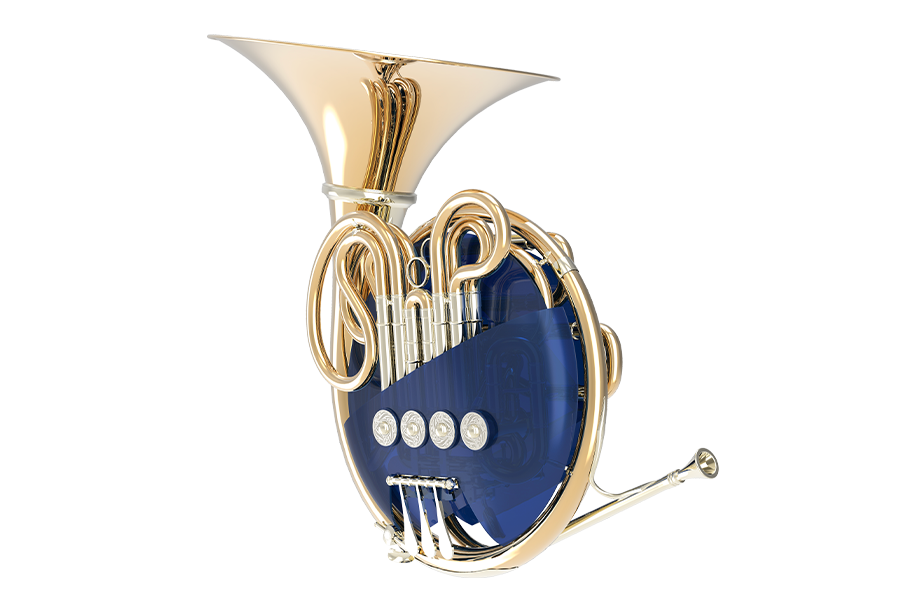
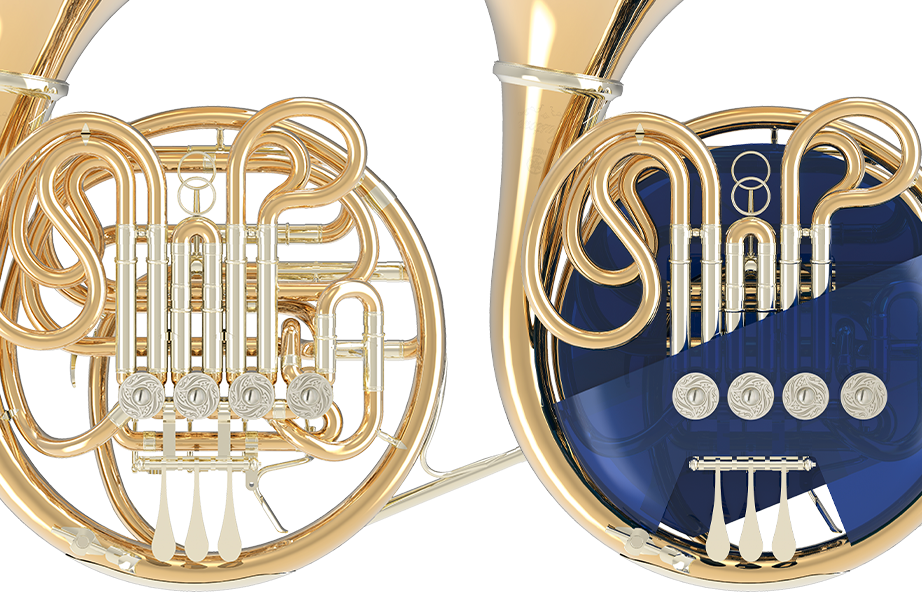
VEILING
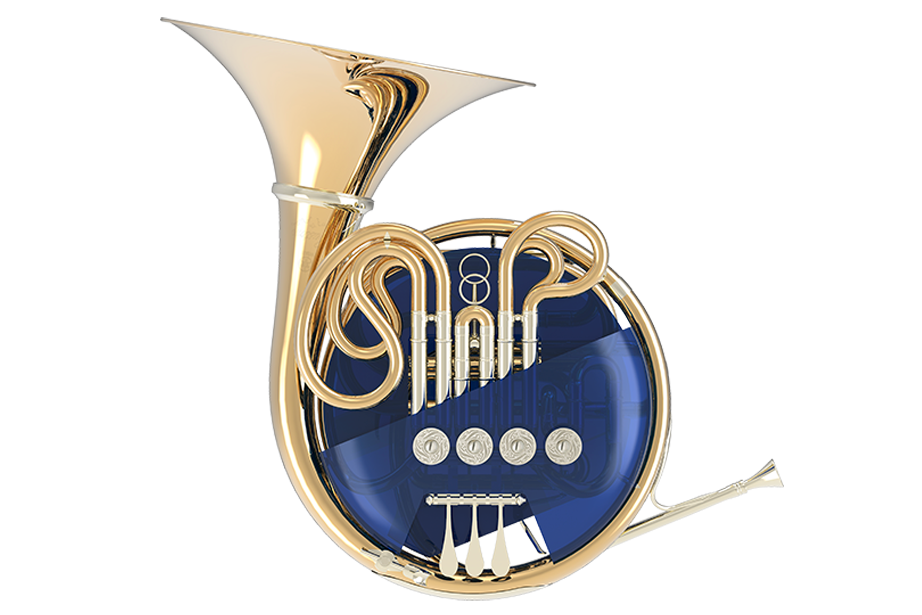
In many cases, wind, string, and percussion instruments are constructed in a way that allows you to see their internal workings, with functional components contributing to the overall beauty of the instrument. What would change if we deliberately hid part of the body that is normally exposed? One of the works of the Zeami Motokiyo, a prominent 15th-century writer on aesthetics, includes the words, “What is hidden becomes a flower.”
Italian has the expression, “vedo non vedo,” which implies that the concept of half-hiding something to create an air of mystery is one we all share. The very fact of not being able to see something stimulates the imagination.
A mere cover becomes ornamentation, and when we realize that a complex, beautiful instrument has taken on a simpler aspect, the way we look at the instrument itself may change.
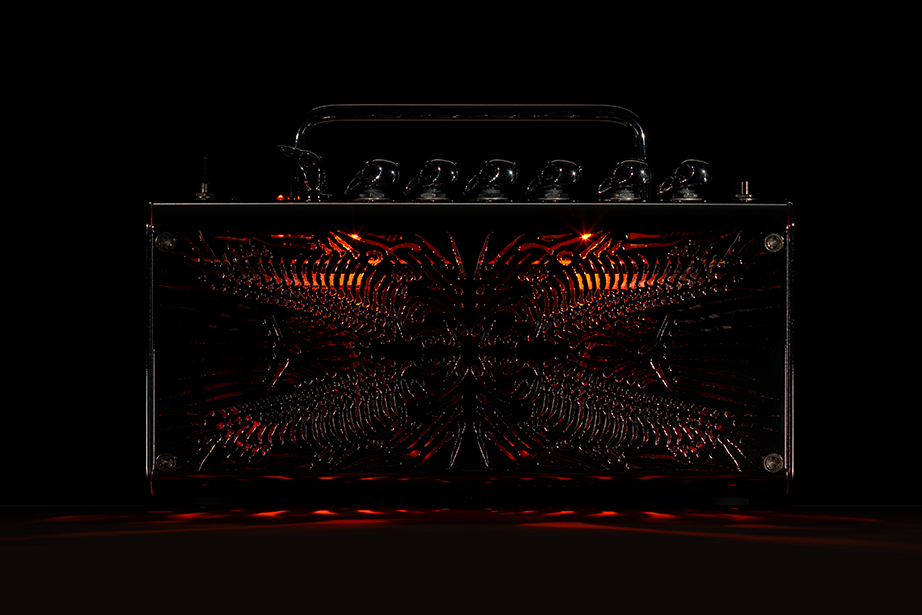
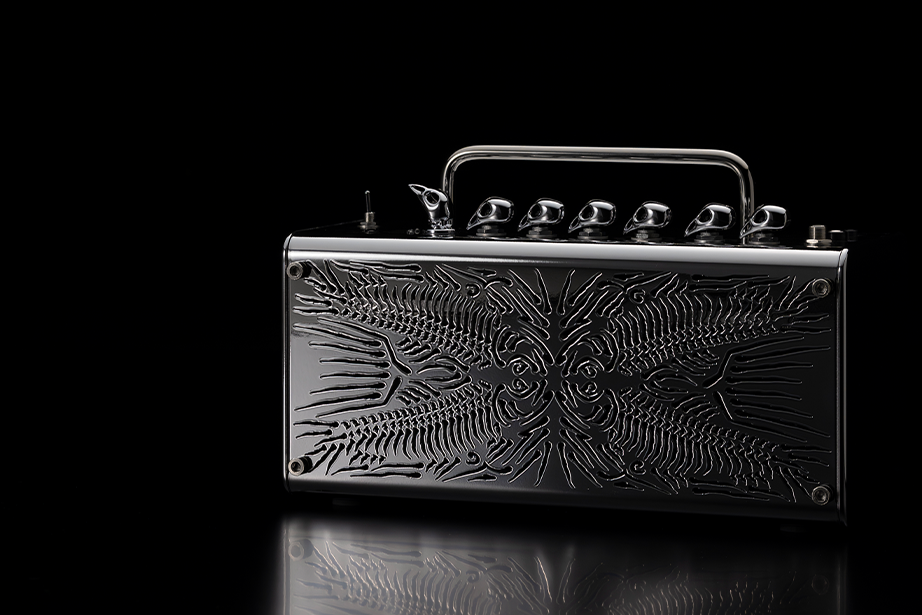
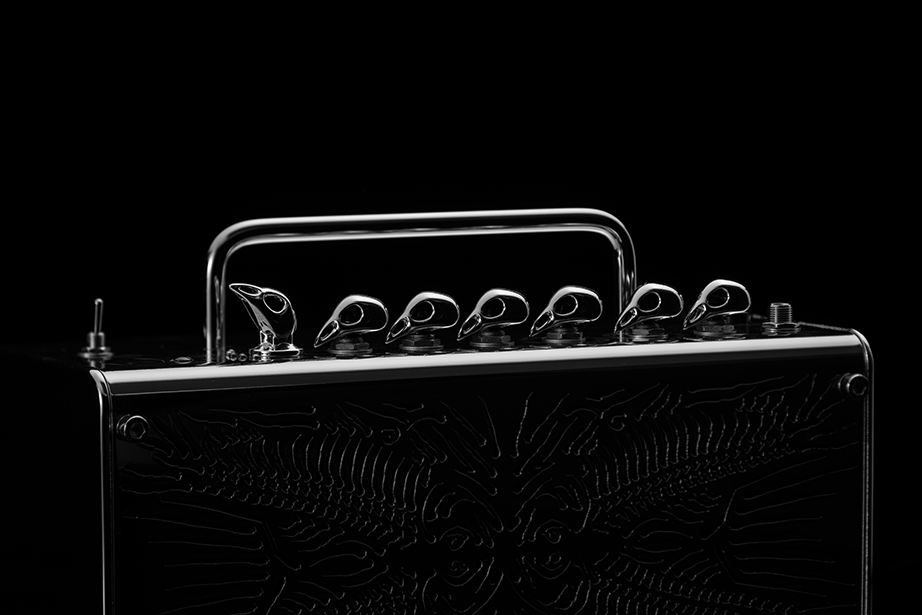
HERRING
Herringbone is the name of a type of pattern featuring a repeating V-shaped motif that is often seen in floors and fabrics. Both functional and beautiful, this pattern was apparently named for its similarity to the shape of the bones of a herring. The knobs used on guitar amps and effects pedals are called chicken heads for a similar reason.
Striking names like this can enhance the appeal of the object itself, adding further value and meaning to its shape. Nicknames might even be said to be a form of decoration.
Here I mused on the origins of names. It might be interesting to look at these products—which were created by reversing the stylization process—in the same way we look at fossils in a museum.
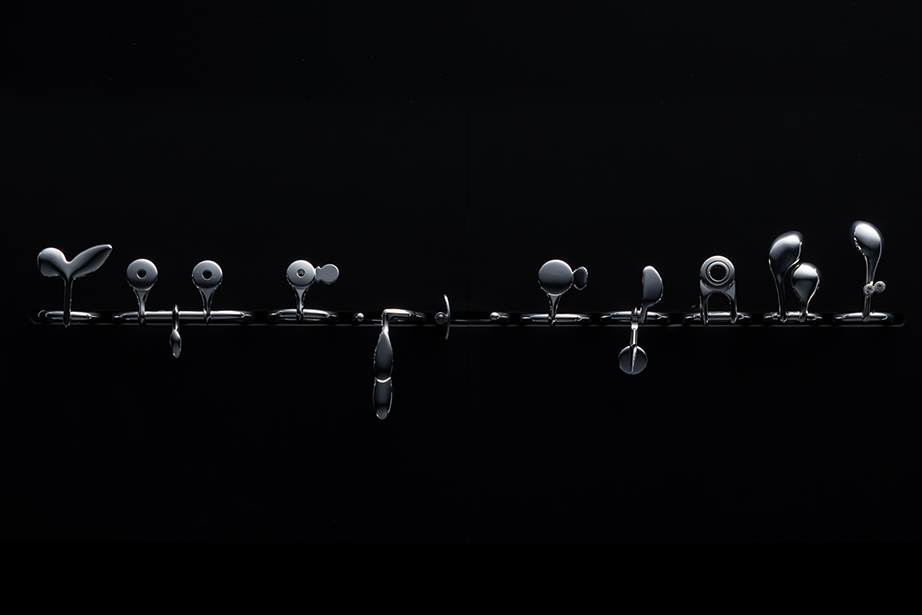

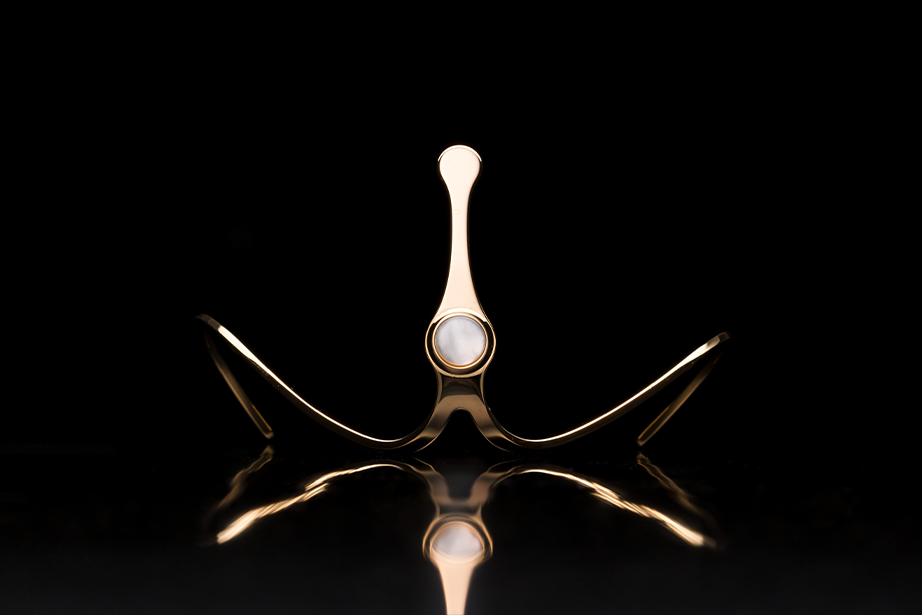
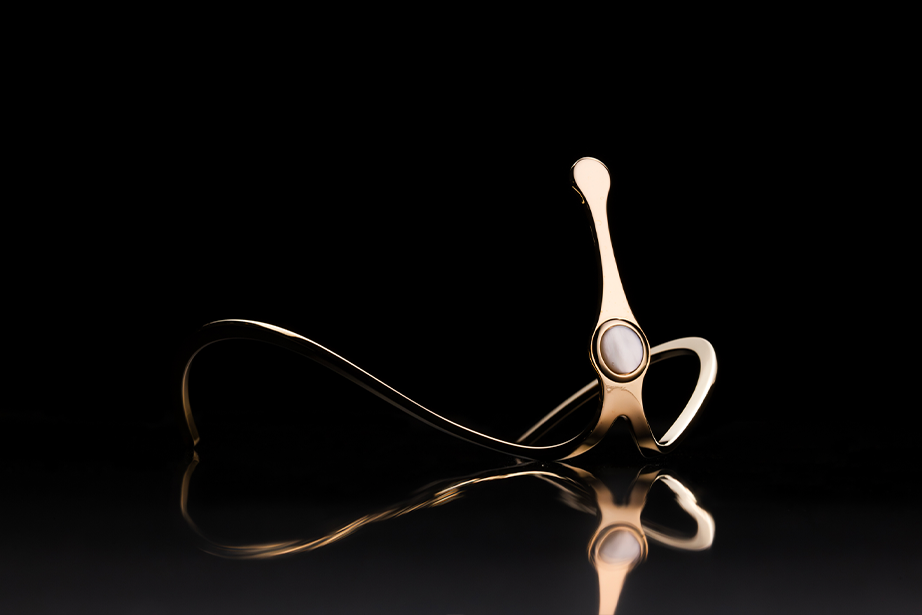


PAIRING
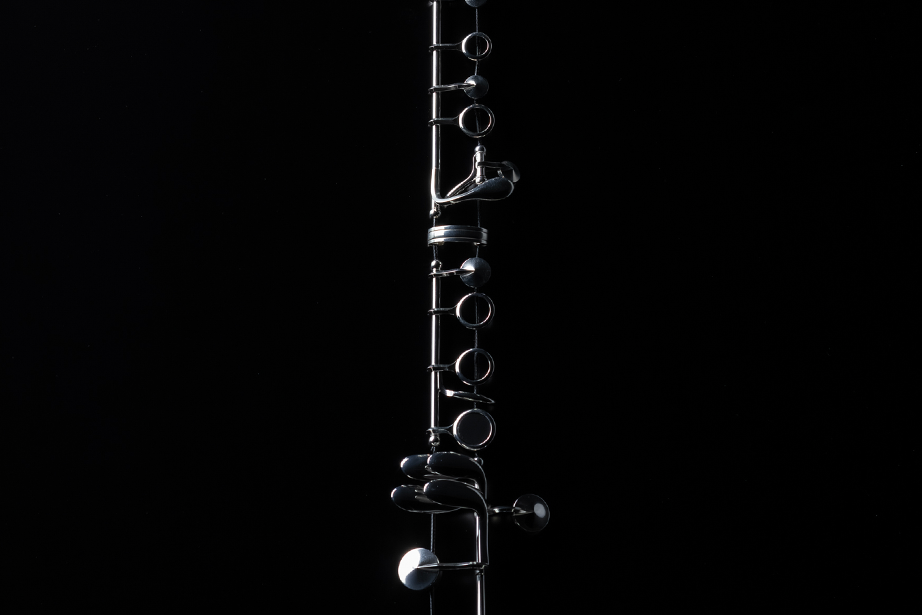
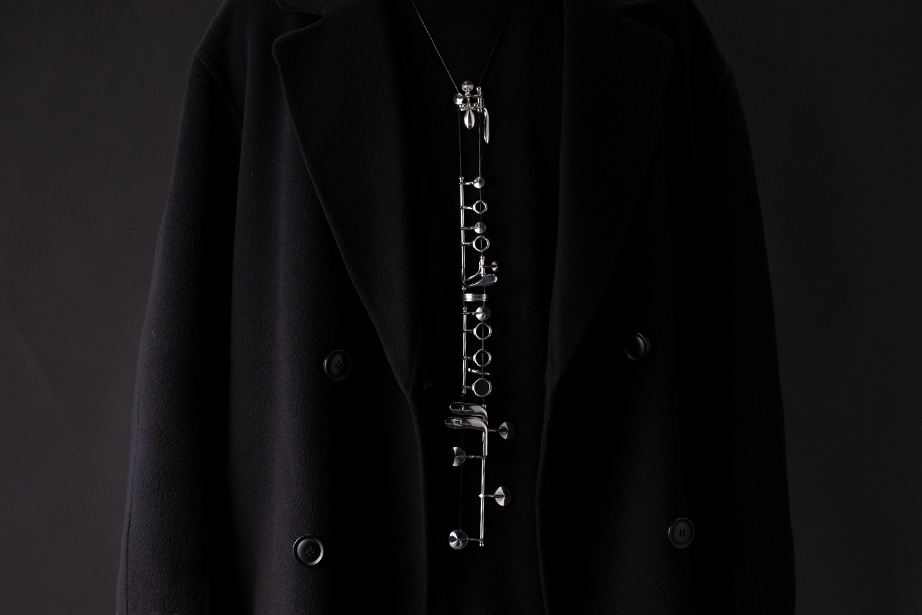
A musical instrument takes in the breath and body heat of the player as it transforms into sound their emotions and thoughts—the subtle inner fluctuations that cannot be put into words. Garments and fashion accessories are the ornamentation with which we adorn that which is closest to us—our own bodies—and may be the most direct reflection of our values and sensibilities.
Pairing is the concept of using combinations of items to create synergies to enhance qualities, such as we do when matching wine and food to bring out flavor and aroma. This mutually beneficial association is an ideal tool for us; here we give form to a relationship in which sound and attire work in synergy to allow the instrument and body to resonate in harmony.
Information
| Title | PARSLEY |
|---|---|
| Dates | April 20 (Mon.) to 26 (Sun.) 11am-7pm (local times) *until 5pm on final day |
| Venue | [Brera District] Via Goito 7, 20121 Milan, Italy |
| Entry fee | Free |
