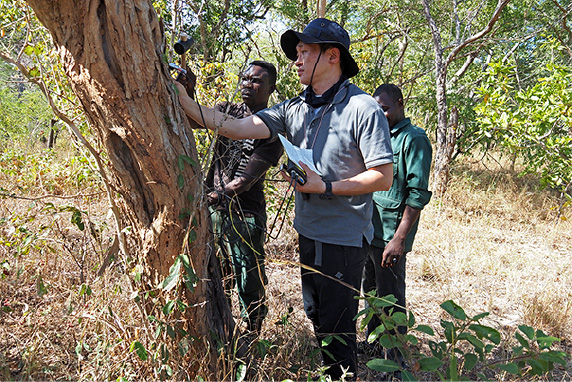
What kind of wood is suitable for musical instruments?
Wood suitable for musical instruments has the properties sought in these instruments, such as sound and workability. Such trees take a long time to grow thick and straight, and produce straight, beautiful wood that results in an instrument with a delicate sound and feel, heightening the expression of the player.
The growth process, which takes many years, is recorded within the tree in various ways. Changes in the environment create tree rings, knots appear where branches were, and places where wounds have healed appear as scars. Internal strain also accumulate where the tree needed extra stress due to the speed of growth or its location on a slope. These records are proof that the tree survived in the forest, but can lead to defects such as cracks or warps during processing. Even tiny changes in the wood become big changes in sound. We select the most beautiful parts of the wood, where the grain is straight, the growth rings even, and there are no knots or scars. This ends up being only a small portion of the materials, and results in instruments that sound wonderful, have a beautiful appearance, and can sway the hearts of listeners.